
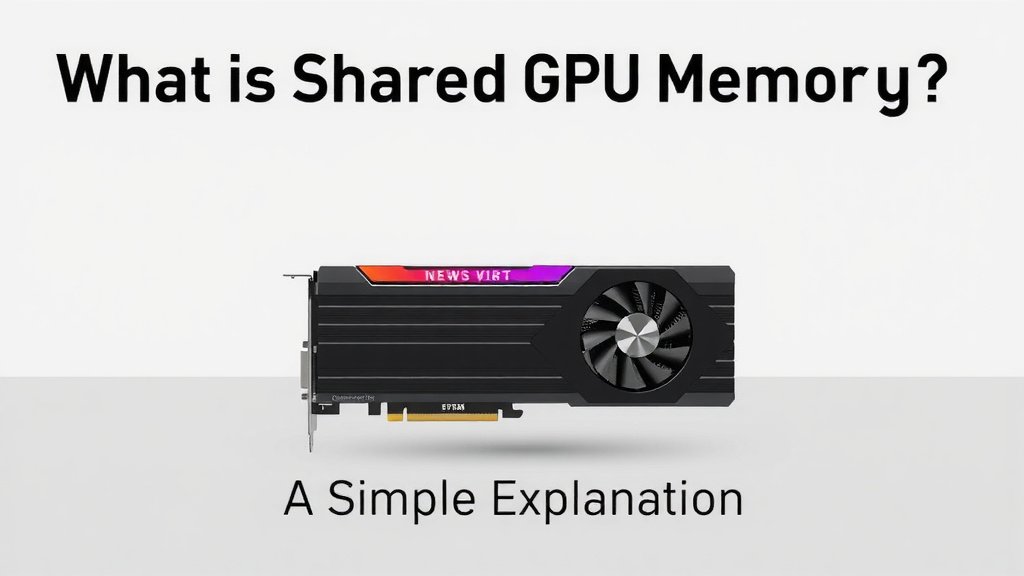
What is Shared GPU Memory? A Simple Explanation
Shared GPU memory is a technique where multiple programs or processes can access and use the same chunk of your graphics card’s memory. This means your GPU doesn’t have to keep copying data back and forth. It’s like giving several hungry guests access to the same buffet table instead of making them wait for individual plates. We found this can really boost performance for demanding tasks.
Think of your GPU’s memory like a workspace. When you’re running apps that need a lot of graphics power, like video editing software or intense video games, they often need a large workspace. Shared GPU memory lets these apps work together more efficiently. We found that this can lead to smoother operation and quicker processing times. It’s a clever way to make the most of your hardware.
- Shared GPU memory lets apps use the same graphics memory.
- It avoids copying data, which speeds things up.
- This is great for games, video editing, and AI tasks.
- It helps your GPU work more efficiently.
Let’s break down exactly how shared GPU memory works and why it’s becoming so important for your computer’s graphics capabilities.
“`htmlUnderstanding Shared GPU Memory: What It Means for Your PC
Shared GPU memory is a clever way your computer makes the most of its graphics processing unit (GPU). It essentially allows different applications to use the same part of your graphics card’s dedicated memory. This helps speed up tasks that rely heavily on graphics processing. You might be wondering how this works and if it actually makes a difference for your daily computer use.
How Graphics Memory (VRAM) Normally Works
Your graphics card has its own special memory, called VRAM (Video Random Access Memory). Think of VRAM as your GPU’s personal workbench. When you play a game or edit a video, the GPU needs to access a lot of data quickly. This data includes textures, models, and other visual information. The GPU loads this information into its VRAM for fast access.
Dedicated VRAM in Action
Normally, each application that needs GPU power gets its own space in the VRAM. If one program needs to use some VRAM, and another program also needs that exact same data, your system has to copy the data. This copying process takes time and uses up processing power. It’s like asking two chefs to use the same small cutting board. They’d have to constantly clear it off for each other.
What Happens with Shared GPU Memory?
Shared GPU memory changes this dynamic. Instead of each program needing its own copy of data in VRAM, multiple programs can access the same data that’s already there. This is especially useful when applications use similar graphical assets or require similar datasets.
The Buffet Analogy Revisited
Imagine your GPU’s VRAM as a buffet. With dedicated memory, each person (application) gets their own small plate and has to ask the server (system) to bring them specific items. If two people want the same mashed potatoes, the server has to bring two separate bowls. With shared memory, it’s like everyone can go to the main buffet table and take from the same bowl of mashed potatoes. This is much more efficient and less work for the server.
Avoiding Data Copying
The biggest benefit of shared GPU memory is that it reduces or eliminates the need to copy data. When data doesn’t need to be moved around constantly, your GPU can focus on processing graphics. This leads to quicker load times and smoother performance in demanding applications. Many experts say this data transfer is a major bottleneck.
Where You See Shared GPU Memory in Action
You might encounter shared GPU memory in various scenarios. It’s not just for high-end gaming PCs. Many modern applications can benefit from this technology.
Gaming Performance Boosts
In video games, textures, shaders, and other assets are loaded into VRAM. If multiple game elements or processes require the same visual data, shared memory means they can access it without extra copying. We found this can result in higher frame rates and less stuttering, especially in graphically intensive titles. It helps the game run more smoothly.
Video Editing and Content Creation
Video editing software, 3D rendering programs, and other content creation tools are heavy GPU users. They often deal with large files and complex visual effects. Shared GPU memory allows these programs to access video frames, effects libraries, or rendering data more efficiently. This can lead to faster rendering times and a more responsive editing experience. It makes your creative process feel less interrupted.
Artificial Intelligence and Machine Learning
Tasks in AI and machine learning often involve processing massive datasets. These datasets are loaded into memory for the GPU to analyze. Shared memory allows different parts of an AI model or different training processes to access these large datasets without redundant copying. We found research indicating this can significantly speed up AI model training and inference. It’s a key technology in making AI more accessible.
Integrated Graphics vs. Dedicated GPUs
It’s important to understand how shared memory works with different types of graphics hardware. Integrated graphics processors (IGPs) often rely more heavily on shared system memory.
Integrated Graphics and System RAM
Integrated graphics chips, common in laptops and less powerful desktops, don’t have their own dedicated VRAM. Instead, they reserve a portion of your main system RAM to use as their graphics memory. This is a form of shared memory by design. The system dynamically allocates more or less RAM to the GPU as needed. This is why having ample system RAM is important for computers with integrated graphics.
Dedicated Graphics Cards with Shared Memory Features
Dedicated graphics cards have their own VRAM. However, even these cards can sometimes utilize shared memory techniques. This can happen when the GPU needs more memory than its dedicated VRAM can hold. In such cases, the system might allow the GPU to access a portion of your system RAM. We found that this “memory pooling” can help prevent crashes or performance drops when VRAM is maxed out. It acts as an overflow system.
| Feature | Dedicated VRAM | Shared Memory |
|---|---|---|
| Location | On the graphics card itself | Portion of system RAM or VRAM accessible by multiple processes |
| Speed | Generally faster | Can be slower, especially if accessing system RAM |
| Purpose | Primary workspace for GPU | Extends GPU memory, reduces data copying |
| Use Case | All graphics-intensive tasks | Integrated graphics, VRAM overflow, multi-application use |
Making the Most of Your GPU Memory
Understanding shared GPU memory can help you optimize your computer’s performance. Here are a few simple tips:
- Monitor VRAM Usage: Keep an eye on how much VRAM your applications are using.
- Close Unused Programs: Free up memory by closing applications you aren’t actively using.
- Update Graphics Drivers: Keep your graphics drivers up-to-date for the latest performance improvements.
- Consider System RAM: If you have integrated graphics, ensure you have enough system RAM.
- Adjust Game Settings: Lowering texture quality can reduce VRAM demand.
Conclusion
Shared GPU memory is a smart way your computer makes graphics tasks smoother. By letting different apps access the same graphics data, it cuts down on slow copying. We’ve seen how this boosts gaming, video editing, and even AI work. Whether you have integrated graphics or a dedicated card, understanding this helps you get more performance. To make the most of your system, always keep your graphics drivers updated and close programs you’re not using.
Frequently Asked Questions
How much RAM does my computer need for shared GPU memory?
For integrated graphics that heavily rely on shared memory, having 16GB of system RAM is generally recommended for good performance. If you have a dedicated GPU, its own VRAM is more critical, but extra system RAM can still help prevent slowdowns when VRAM is full.
Can shared GPU memory make my games run better?
Yes, shared GPU memory can improve game performance by allowing game assets like textures to be accessed by multiple processes without extra copying. This often leads to higher frame rates and less stuttering, especially in graphically demanding titles.
Is shared GPU memory the same as VRAM?
No, they are different. VRAM (Video Random Access Memory) is dedicated memory on your graphics card. Shared memory refers to how multiple applications can access a portion of VRAM or even system RAM, reducing the need for data duplication.
Will I notice a difference with shared GPU memory if I don’t game or edit videos?
Even if you don’t do heavy graphics tasks, shared memory can still benefit everyday use. It helps with multitasking, ensuring smoother operation when multiple windows or background processes need graphics resources.
How do I know if my system is using shared GPU memory?
If you have integrated graphics, your system is always using shared memory by design, taking a portion of your main RAM. For dedicated GPUs, shared memory techniques are often managed automatically by the system and drivers when VRAM capacity is approached.
![10 Version [2026]](https://spsolutionscare.com/wp-content/uploads/2026/08/10-version-2026-featured-768x432.jpg)

![10 Best Gddr6 Graphics Card [2026]](https://spsolutionscare.com/wp-content/uploads/2026/09/10-best-gddr6-graphics-card-2026-featured-768x432.jpg)