
Match GPU to CPU: Your Essential Compatibility Guide
Matching your GPU to your CPU is all about preventing bottlenecks. A powerful GPU needs a strong CPU to keep up, and vice-versa. Getting this balance right ensures your games run smoothly and your computer performs at its best. We found that pairing them correctly is key to a great PC experience.
Think of your CPU as the brain and your GPU as the muscles of your PC. If the brain is slow, the muscles can’t work at full speed. You want your CPU and GPU to work in harmony. This guide will help you find that sweet spot, so you don’t waste money on parts that don’t make sense together. It’s a common concern for many PC builders.
- Check your CPU’s power.
- See what your GPU can handle.
- Avoid a CPU that’s too slow.
- Don’t pair a weak GPU with a beast CPU.
- Aim for a balanced system.
Let’s break down how to make sure your CPU and GPU are a perfect match so you can get the most out of your gaming or creative work.
“`htmlFinding the Right CPU and GPU Balance
Matching your CPU and GPU is like pairing a great chef with a fantastic sous chef. You want them to work together perfectly, not step on each other’s toes. If one is much weaker than the other, your whole system can feel sluggish. We’ve found that getting this balance right is key to a smooth computing experience.
So, how do you ensure your processor and graphics card are singing the same tune? It’s about understanding their roles and how they interact. Let’s break down the simple steps to achieve that harmonious PC performance.
Understanding Your CPU’s Role
Your CPU, or Central Processing Unit, is the brain of your computer. It handles all the general tasks, from running your operating system to managing background applications. For gaming, it’s responsible for game logic, AI, and preparing the information your GPU will draw. A weak CPU can hold back even the most powerful graphics card.
How Much Power Does Your CPU Need?
The demands on a CPU vary greatly depending on what you’re doing. For everyday tasks like browsing the web or word processing, most modern CPUs are more than enough. However, for gaming, especially at higher frame rates or with demanding simulation games, you’ll need a more robust CPU.
We found that for high-end gaming, a CPU with at least 6 cores is often recommended. More cores and higher clock speeds generally mean better performance in CPU-intensive tasks. It’s not just about the number of cores, though; the architecture of the CPU also plays a big part in its overall speed and efficiency.
Identifying CPU Bottlenecks
A CPU bottleneck happens when your processor can’t keep up with your graphics card. This means your GPU is waiting around for the CPU to send it instructions. You’ll notice this as lower frame rates than you expect, or inconsistent performance, especially in games with lots of action or complex environments. Many performance guides suggest checking your CPU usage during gameplay to spot this issue.
Assessing Your Graphics Card’s Capabilities
Your GPU, or Graphics Processing Unit, is the specialist for visual tasks. It’s what makes your games look good, rendering all the polygons, textures, and effects you see on screen. A powerful GPU is essential for high resolutions and detailed graphics settings. Think of it as the artist of your PC.
What Can Your GPU Handle?
The capabilities of a GPU are often measured by its model number and specifications. Higher-end cards can handle more demanding graphical tasks. You’ll want to consider the resolution you game at (1080p, 1440p, 4K) and your desired frame rate (e.g., 60 FPS, 120 FPS). A GPU that’s too weak will struggle to render scenes smoothly at your target settings.
The GPU-CPU Sweet Spot
The goal is to match the GPU’s power with the CPU’s ability to feed it data. If you have a super-fast GPU, you need a CPU that can prepare frames quickly enough to keep it busy. Conversely, if you have a very powerful CPU, you don’t want to pair it with a weak GPU that can’t utilize its potential.
We found that for most gamers aiming for 1080p resolution and 60+ FPS, a mid-range to high-end CPU from the last few generations is usually sufficient. Pairing it with a similarly capable GPU ensures you’re not wasting money or performance. Many reviews suggest aiming for a balance where neither component is consistently hitting 100% usage while the other idles.
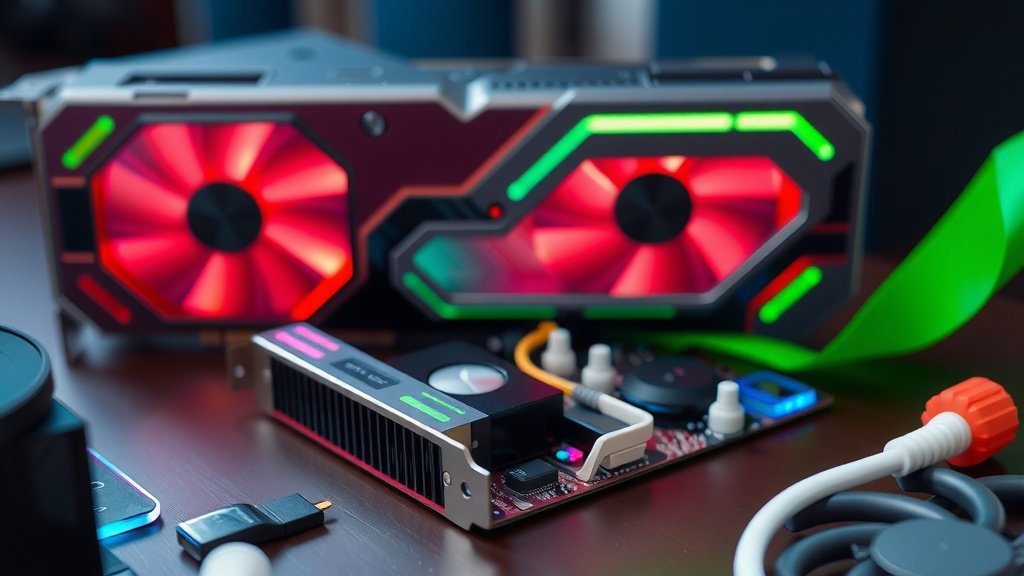
Common Scenarios and Pairings
Let’s look at some typical situations to help you visualize the right pairings. This isn’t an exact science, but it gives you a good starting point.
Entry-Level Gaming PCs
If you’re building a budget-friendly PC for casual gaming or esports titles, you don’t need the most expensive components. A modern 4-core or 6-core CPU paired with an entry-level to mid-range GPU is often a great match. This combination can handle 1080p gaming at medium to high settings in many games. Many users find this setup provides a satisfying gaming experience without breaking the bank.
Mid-Range Gaming Builds
For those looking to play most new games at 1080p or 1440p with good frame rates, a 6-core or 8-core CPU is typically recommended. Match this with a mid-range to upper-mid-range GPU. This balance allows for higher graphical settings and smoother gameplay. We found this segment offers a fantastic balance of performance and price for many gamers.
High-End and Enthusiast Setups
If you’re aiming for 1440p or 4K gaming, or very high refresh rates, you’ll need top-tier components. An 8-core or even a 12-core CPU, coupled with a high-end GPU, is the way to go. This powerful combination ensures that demanding games run at their best. Keeping these high-performance parts fed requires a powerful processor.
Putting It All Together: Your Checklist
Here’s a quick rundown to help you make sure your CPU and GPU are a great team:
- Check Your CPU’s Capabilities: How many cores does it have? What’s its clock speed?
- Assess Your GPU’s Power: What resolution and settings do you want to play at?
- Watch for Bottlenecks: Use monitoring tools to see if your CPU or GPU is maxed out.
- Don’t Overspend on One Part: Aim for a balanced system that fits your budget.
- Research Specific Games: Some games are more CPU-heavy, others are GPU-heavy.
- Read Reviews and Benchmarks: See how different CPU/GPU combinations perform in real-world tests.
| CPU Tier | GPU Tier (Examples) | Typical Use Case |
|---|---|---|
| Entry-Level (e.g., Intel Core i3, AMD Ryzen 3) | NVIDIA GeForce GTX 1650, AMD Radeon RX 6400 | 1080p light gaming, esports |
| Mid-Range (e.g., Intel Core i5, AMD Ryzen 5) | NVIDIA GeForce RTX 3060/4060, AMD Radeon RX 6600 XT/7600 | 1080p high settings, 1440p medium/high |
| High-End (e.g., Intel Core i7/i9, AMD Ryzen 7/9) | NVIDIA GeForce RTX 3080/4080, AMD Radeon RX 6800 XT/7800 XT | 1440p max settings, 4K entry-level |
| Enthusiast (e.g., Intel Core i9, AMD Ryzen 9) | NVIDIA GeForce RTX 3090/4090, AMD Radeon RX 6950 XT/7900 XTX | 4K max settings, high refresh rates |
Remember, these are just general guidelines. Performance can vary based on specific game engines, driver updates, and your system’s overall configuration. It’s always a good idea to look up benchmarks for the specific components you’re considering.
“`Conclusion
You’ve learned that matching your CPU and GPU is key to a smooth PC experience. It’s all about preventing bottlenecks so your components work in harmony. We’ve seen how to assess your CPU’s power and your GPU’s capabilities. Aiming for a balanced system ensures you get the best performance for your budget. Now you can confidently choose parts that complement each other. Your next step is to check the specific benchmarks for the games or applications you use most often.
Frequently Asked Questions
What happens if my CPU is too weak for my GPU?
If your CPU is too weak, it can’t prepare data fast enough for your GPU. This leads to a CPU bottleneck, where your GPU sits idle waiting for instructions. You’ll experience lower frame rates and inconsistent performance, even if your GPU is powerful.
How do I know if my GPU is too weak for my CPU?
If your GPU is too weak, your CPU might be working hard while the GPU isn’t reaching its full potential. You’ll notice that your GPU usage is consistently below 95% during demanding tasks, while your CPU might be closer to its limit. This means your CPU is ready, but the GPU can’t keep up.
Do I need to worry about CPU/GPU balance for tasks other than gaming?
Yes, you do. For professional creative applications like video editing, 3D rendering, or CAD software, CPU and GPU balance is equally important. These tasks often rely on both components heavily, and an imbalance can lead to slower render times and a less responsive workflow.
How often should I upgrade my CPU or GPU?
This depends on your needs and budget. Generally, GPUs see performance improvements that make them relevant for longer periods. CPUs often benefit from new architectures every few years. Many users find that upgrading their GPU every 2-4 years and their CPU every 4-6 years provides a good balance of performance and cost.
Are there tools to help me check for bottlenecks?
Absolutely! You can use free monitoring software like MSI Afterburner or the built-in Task Manager in Windows. These tools allow you to monitor your CPU and GPU usage in real-time while gaming or running other applications, helping you identify which component might be holding your system back.


![10 Best 1440p Gaming Gpu [2026]](https://spsolutionscare.com/wp-content/uploads/2026/08/10-best-1440p-gaming-gpu-2026-featured-768x432.jpg)

![10 Best Gb For Graphics Card [2026]](https://spsolutionscare.com/wp-content/uploads/2026/09/10-best-gb-for-graphics-card-2026-featured-768x432.jpg)