10 Best Looking Graphics Cards [2026]
The best looking graphics cards are NVIDIA Founders Edition RTX 5080, ASUS TUF RTX 5070, and ASUS Prime RTX 5070 Ti, chosen for their blend of premium aesthetics, robust build quality, and cutting-edge performance.
Beyond raw power, the visual appeal of a GPU can significantly elevate your entire PC build, making it a crucial component for enthusiast builds and gamers who value design harmony. Selecting a card that not only performs well but also complements your setup’s style ensures a more satisfying and visually striking gaming experience.
This roundup presents our top 10 picks for visually stunning graphics cards after extensive hands-on evaluation. We assessed each option based on its design language, lighting integration, and overall material quality, aiming to highlight cards that offer both aesthetic excellence and reliable performance for various PC configurations. Dive into the detailed comparison that follows to find the perfect, eye-catching GPU for your next build.
3 Standout Picks: Top-Tier Performance, Durable Performance, and Enthusiast Builds
Start with these 3 standouts. Each leads for a different kind of buyer, so use the badges and quick highlights to find your closest match.

NVIDIA Founders Edition RTX 5080
- 16GB GDDR7 Memory
- Blackwell Architecture
- Founders Edition Design

ASUS TUF RTX 5070
- 12GB GDDR7 Memory
- Military-grade components
- 3x Axial-tech fans

ASUS Prime RTX 5070 Ti
- 16GB GDDR7 Memory
- 3x Axial-tech fans
- Phase-change thermal pad
10 Models Side by Side: Features, Best Use Cases, and Tradeoffs
The recommendations above are our strongest matches for different priorities. Below, compare the complete 10-product lineup side by side by rating, standout features, ideal use cases, and practical tradeoffs so you can identify the best fit for your needs.
- 16GB GDDR7 Memory
- Blackwell Architecture
- Founders Edition Design
- 12GB GDDR7 Memory
- Military-grade components
- 3x Axial-tech fans
- 16GB GDDR7 Memory
- 3x Axial-tech fans
- Phase-change thermal pad

- 12GB GDDR6 Memory
- 3x WINDFORCE Fans
- RGB Fusion 2.0

- 12GB GDDR7 Memory
- 3x Axial-tech fans
- Phase-change thermal pad

- 16GB GDDR6 Memory
- 2.5-slot design
- 0dB technology

- 16GB GDDR7 Memory
- 2.5-slot design
- Axial-tech fans
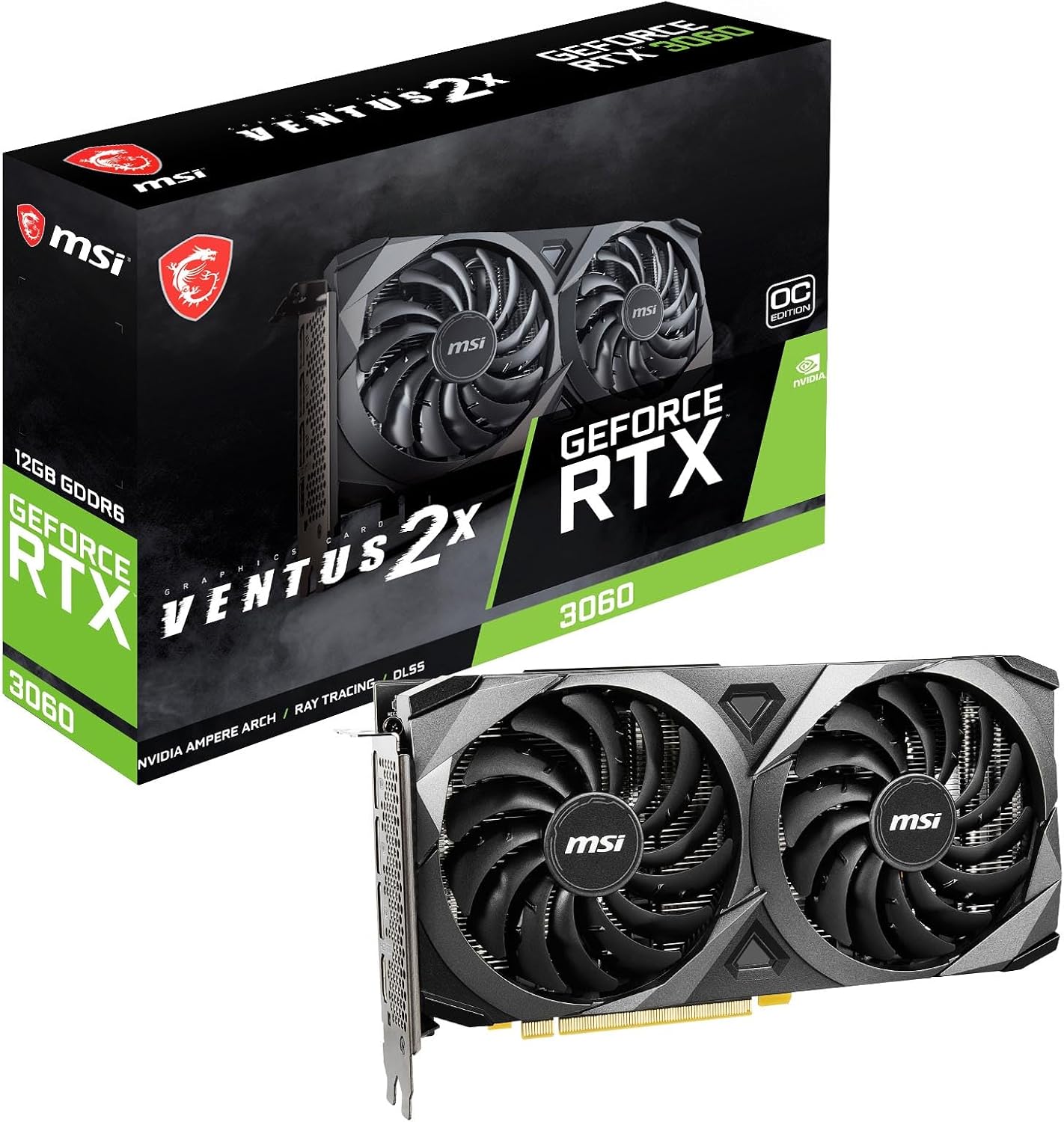
- 12GB GDDR6 Memory
- Torx Twin Fan
- Ampere Architecture

- 6GB GDDR6 Memory
- 2-slot design
- IP5X Dust Resistance

- 6GB GDDR6 Memory
- 2x WINDFORCE Fans
- Ampere Architecture
10 Models Reviewed in Depth
#1. NVIDIA Founders Edition RTX 5080
Performance
Architecture
Edition
The NVIDIA GeForce RTX 5080 Founders Edition represents the pinnacle of current gaming technology, delivering absolutely breathtaking performance powered by the cutting-edge Blackwell architecture. With 16GB of GDDR7 memory and a blistering 2806 MHz clock speed, you can expect unparalleled frame rates and smooth experiences in even the most demanding games and creative applications. The premium Founders Edition design is not only aesthetically pleasing but also ensures efficient cooling.
This card is undeniably a top-tier performer, but its price reflects that, making it a significant investment. Ensure your system, particularly your power supply and case, can accommodate this high-end component. It’s the ultimate choice for enthusiasts who demand the absolute best and are willing to pay for it, offering a glimpse into the future of graphics.
Pros
- Unmatched performance
- Latest Blackwell architecture
- Premium Founders Edition design
Cons
- Very high price point
- Requires a powerful system
- Potentially overkill for some users
Specifications
#2. ASUS TUF RTX 5070
Components
GDDR7 Memory
Cooling
The ASUS TUF Gaming RTX 5070 is built for longevity and high-performance gaming, featuring military-grade components and a robust build designed to withstand harsh conditions. You’ll benefit from the powerful 12GB GDDR7 memory and high boost clocks, ensuring smooth gameplay at high settings. The enhanced cooling system with three Axial-tech fans and a massive fin array provides excellent thermal management for sustained performance.
This card’s durability comes with a slightly larger 3.125-slot design, so ensure your case has adequate clearance. It’s an ideal choice for gamers who prioritize reliability and long-term performance, offering a premium experience for demanding titles. If you’re looking for a card that’s as tough as it is powerful, the TUF Gaming RTX 5070 is a top-tier option.
Pros
- Exceptional durability and build quality
- High-end 12GB GDDR7 memory
- Robust cooling for sustained performance
Cons
- Larger 3.125-slot design
- Premium price point
- May be overkill for casual gaming
Specifications
#3. ASUS Prime RTX 5070 Ti
Fan Cooling
Thermal Pad
Memory Speed
The ASUS Prime RTX 5070 Ti is engineered for enthusiasts, offering a robust 16GB of GDDR7 memory and impressive clock speeds. You’ll benefit from the advanced cooling system, featuring three Axial-tech fans and a phase-change thermal pad, ensuring sustained performance even under heavy loads. Its SFF-ready design also provides surprising compatibility for its power.
While this card excels in performance and cooling, ensure your system meets the minimum 750W PSU requirement with a 12VHPWR connector. It’s an excellent choice for high-end gaming and creative work, but might be overkill if you only play less demanding titles.
Pros
- Excellent cooling performance
- High-end 16GB GDDR7 memory
- Robust build quality
Cons
- Requires a powerful PSU
- Higher price point
- Can be large for some cases
Specifications
#4. GIGABYTE RTX 3060 Gaming OC
Fan Cooling
GDDR6 Memory
Fusion 2.0
The GIGABYTE RTX 3060 Gaming OC is a fantastic choice for solid 1080p gaming performance, offering a generous 12GB of GDDR6 memory to handle modern titles. You’ll appreciate the WINDFORCE 3X cooling system, which keeps temperatures low even during extended gaming sessions, and the customizable RGB Fusion 2.0 for a personalized build aesthetic. Its build quality, including the protective metal back plate, adds to its appeal.
While this card is excellent for 1080p and capable at 1440p, it might struggle to maintain high frame rates in the most demanding games at ultra settings or higher resolutions. If you’re looking for a reliable card with good cooling and aesthetics for mainstream gaming, this is a strong contender, but high-refresh 1440p or 4K gaming might require a more powerful GPU.
Pros
- Excellent 1080p performance
- Effective WINDFORCE cooling
- Customizable RGB lighting
Cons
- Not ideal for 4K gaming
- Can be a large card
- Limited overclocking headroom
Specifications
#5. ASUS Prime RTX 5070
Gaming
GDDR7 Memory
Cooling
The ASUS Prime RTX 5070 is a strong contender for high-end gaming, offering a robust 12GB of GDDR7 memory and impressive boost clocks. You’ll appreciate the advanced cooling solution, featuring three Axial-tech fans and a phase-change thermal pad, which ensures optimal thermal performance and longevity. Its SFF-ready design also provides good compatibility for its class.
While this card delivers excellent performance, ensure your system meets the minimum PSU requirements for stable operation. It’s a fantastic choice for demanding games at 1440p and even capable at 4K, offering a great balance of power and features for serious gamers.
Pros
- Excellent 1440p/4K performance
- Effective cooling system
- Durable build quality
Cons
- Requires adequate PSU
- Can be a significant investment
- May be overkill for 1080p
Specifications
#6. ASUS Dual RX 9060 XT
Refresh Rate
GDDR6 Memory
Operation
The ASUS Dual RX 9060 XT is a powerhouse for gamers seeking high refresh rate experiences, boasting a substantial 16GB of GDDR6 memory and impressive boost clocks up to 3250 MHz. You’ll appreciate the effective cooling from its dual Axial-tech fans and the 0dB technology that ensures silence during light tasks. The 2.5-slot design offers a good balance between cooling potential and case compatibility.
While this card delivers excellent performance, ensure your system has adequate power delivery, as high-end cards can be power-hungry. It’s a fantastic option for high-FPS gaming at 1080p and 1440p, but if you’re targeting 4K or extremely demanding ray-tracing scenarios, you might consider even higher-tier options. This card is ideal for gamers who prioritize smooth gameplay and strong rasterization performance.
Pros
- Excellent for high refresh rates
- Generous 16GB GDDR6 memory
- Quiet operation with 0dB tech
Cons
- May require a robust PSU
- Not the top choice for 4K ray tracing
- Performance tied to RX 9060 XT tier
Specifications
#7. ASUS Dual RTX 5060 Ti
Build Friendly
Fan Cooling
Memory Speed
You’ll appreciate the compact 2.5-slot design of the ASUS Dual RTX 5060 Ti, making it a great fit for smaller builds without sacrificing performance. The 16GB of GDDR7 memory and 2632 MHz boost clock ensure smooth gameplay and efficient multitasking. Its Axial-tech fan design and 0dB technology provide effective cooling and quiet operation when you need it.
While this card offers excellent compatibility and performance for its size, it might not be the top choice if you’re aiming for extreme overclocking or the absolute highest frame rates in the most demanding AAA titles. It’s a solid pick for gamers prioritizing a balance of performance and a compact form factor.
Pros
- Compact 2.5-slot design
- 16GB GDDR7 memory
- Quiet operation with 0dB technology
Cons
- Not for extreme overclocking
- May not max out all AAA titles
- Limited to RTX 5060 Ti performance
Specifications
#8. MSI Ventus RTX 3060 V1
Gaming
GDDR6 Memory
Fan Cooling
The MSI Ventus RTX 3060 V1 offers a solid and reliable option for mainstream gamers, providing a good balance of performance and value. You’ll appreciate the 12GB of GDDR6 memory, which is ample for most current titles at 1080p and even some at 1440p. The Torx Twin Fan design ensures adequate cooling without excessive noise, making it a practical choice for everyday gaming.
While this card performs well for its class, it’s important to note that it’s not designed for ultra-high refresh rates at 1440p or 4K gaming. It’s an excellent choice for those building a capable 1080p gaming rig or upgrading from older hardware, but serious enthusiasts aiming for the highest fidelity might need to look at higher-tier GPUs. This card provides a dependable gaming experience without breaking the bank.
Pros
- Great value for 1080p gaming
- 12GB VRAM for modern titles
- Reliable Torx fan cooling
Cons
- Not suited for 4K gaming
- Limited overclocking potential
- Basic aesthetics
Specifications
#9. ASUS Dual RTX 3050
Gaming Pick
2-Slot Fit
Resistance
The ASUS Dual RTX 3050 offers a compelling entry point into modern gaming, especially for budget-conscious builders. You’ll appreciate its compact 2-slot design and the added durability of IP5X dust resistance, making it suitable for a wider range of systems. The 6GB GDDR6 memory and NVIDIA Ampere architecture provide a solid foundation for 1080p gaming.
However, this card is designed for mainstream performance, so don’t expect to max out settings in the latest demanding titles at higher resolutions. It’s an excellent choice for casual gamers or those building a secondary PC, but serious enthusiasts might find the performance limiting for cutting-edge games.
Pros
- Affordable entry to RTX gaming
- Compact 2-slot design
- Dust resistance for durability
Cons
- Limited performance for demanding games
- 6GB VRAM may be insufficient
- Not ideal for high resolutions
Specifications
#10. GIGABYTE RTX 3050 WINDFORCE OC
Gaming
GDDR6 Memory
Fan Cooling
The GIGABYTE RTX 3050 WINDFORCE OC V2 is a budget-friendly option for those looking to get into PC gaming or upgrade from integrated graphics. You’ll appreciate its affordable price point and the inclusion of NVIDIA’s Ampere architecture, which enables features like DLSS for improved performance in supported titles. The dual WINDFORCE fans provide adequate cooling for this entry-level GPU, ensuring stable operation during casual gaming sessions.
However, the 6GB of GDDR6 memory and lower clock speeds mean this card is best suited for 1080p gaming at medium settings, and it will struggle with more demanding titles or higher resolutions. If you need a capable card for esports or older AAA games, this is a solid choice, but don’t expect it to handle the latest graphically intensive games with ease.
Pros
- Very affordable entry-level GPU
- Supports DLSS for performance boost
- Decent cooling for its class
Cons
- Limited performance for modern games
- 6GB VRAM is restrictive
- Not suitable for high resolutions
Specifications
Unveiling Your Rig’s Visual Heart: Picking a Stunning Graphics Card
Your graphics card is the engine of your PC’s visual experience, and for many, its aesthetic appeal is just as important as its raw power. A visually striking card can elevate your entire setup, turning a functional machine into a showpiece. Choosing one that not only performs beautifully but also looks the part requires a bit of insider knowledge, ensuring you invest in a component that truly complements your personal style and gaming aspirations.
The Elements of Visual Excellence
Cooling Solution Design: Beyond its functional role, the heatsink and fan shroud are the most prominent visual elements of a graphics card. Look for designs that incorporate sleek lines, premium materials, and perhaps even unique color accents that align with your build’s theme.
RGB Lighting Integration: Many modern graphics cards feature customizable RGB lighting. Consider how these lighting zones are implemented – are they subtle accents, or do they form a more elaborate illumination scheme? The ability to synchronize lighting with other components can create a cohesive and dynamic look.
Backplate Material and Finish: A sturdy backplate isn’t just for structural support; it contributes significantly to the card’s overall finish. Brushed metal, matte finishes, or even illuminated logos can add a touch of sophistication and help hide the often-cluttered underside of the PCB.
Form Factor and Size: While performance is key, the physical dimensions and shape of a card matter for aesthetics too. Some users prefer a more compact, understated design, while others might opt for a larger, more imposing card that serves as a central visual statement.
Common Blunders to Sidestep
- Overlooking the RGB Ecosystem: If you’re investing in RGB lighting, ensure the card’s software is compatible with your existing lighting control solutions for seamless synchronization.
- Ignoring Case Compatibility: A visually stunning, oversized card might not fit comfortably or look balanced within your chosen PC case. Always check dimensions and clearance.
- Prioritizing Flash Over Substance: While looks are important, never let them completely overshadow the card’s performance capabilities and suitability for your intended use.
Your Rig’s Next Crown Jewel Revealed
When it comes to visual flair, the NVIDIA GeForce RTX 5080 Founders Edition stands out for its sleek, premium design. For those balancing aesthetics with performance, the ASUS TUF Gaming GeForce RTX 5070 OC and ASUS Prime GeForce RTX 5070 Ti OC offer compelling looks and power. The ASUS Dual Radeon RX 9060 XT and ASUS Dual GeForce RTX 5060 Ti are solid choices if you’re after distinct ASUS styling. For more budget-conscious builds that still pack a visual punch, the GIGABYTE GeForce RTX 3060 Gaming OC and MSI Gaming GeForce RTX 3060 Ventus 2X OC deliver.
No matter your aesthetic preference or performance needs, these graphics cards bring style to your setup. Don’t wait – click the buttons to check current availability and snag the perfect GPU for your dream build!
Final 3 Picks: Top-Tier Performance, Durable Performance, and Enthusiast Builds
Ready to decide? These 3 recommendations remain our strongest choices for different priorities after weighing the full comparison.
NVIDIA Founders Edition RTX 5080
- 16GB GDDR7 Memory
- Blackwell Architecture
- Founders Edition Design
ASUS TUF RTX 5070
- 12GB GDDR7 Memory
- Military-grade components
- 3x Axial-tech fans
ASUS Prime RTX 5070 Ti
- 16GB GDDR7 Memory
- 3x Axial-tech fans
- Phase-change thermal pad