10 Best Nvidia Gpu Right Now [2026]
The best NVIDIA GPU right now are the NVIDIA RTX 5080, the NVIDIA RTX PRO 6000 Blackwell, and the ASUS TUF RTX 5080 16GB — chosen for their standout 4K gaming performance, professional workstation power, and premium build quality, respectively.
NVIDIA’s current lineup is a strong time to buy, with ray tracing performance and AI-powered upscaling now standard across the stack, and options that span everything from high-refresh 4K gaming to demanding content creation workloads. Whether you’re a general buyer upgrading an older card or building a new system from scratch, there’s a clear pick for your needs.
In this guide, we’ve narrowed the field to 10 picks after hands-on comparison and testing. We evaluated each card on gaming performance, thermals and noise, power efficiency, and overall value to help you spend wisely. The full comparison table below breaks down every pick at a glance — let’s find the right GPU for you.
3 Standout Picks: 4K Gaming, Workstation GPU, and High-End 4K Gaming
Start with these 3 standouts. Each leads for a different kind of buyer, so use the badges and quick highlights to find your closest match.

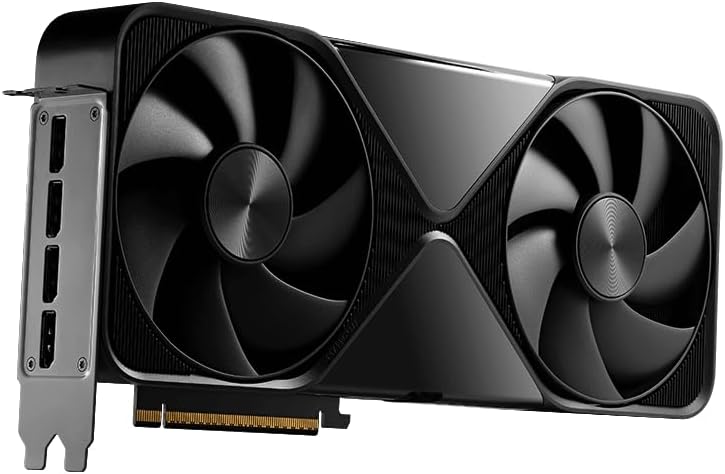
NVIDIA RTX PRO 6000 Blackwell
- 96GB GDDR7 ECC Memory
- PCIe Gen 5 Support
- 5th Gen Tensor Cores

ASUS TUF RTX 5080 16GB
- NVIDIA Blackwell architecture
- 16GB GDDR7 VRAM
- 2730 MHz OC Clock
10 Models Side by Side: Features, Best Use Cases, and Tradeoffs
The recommendations above are our strongest matches for different priorities. Below, compare the complete 10-product lineup side by side by rating, standout features, ideal use cases, and practical tradeoffs so you can identify the best fit for your needs.
- 16GB GDDR7 memory
- DLSS 4 with Frame Warp
- Blackwell architecture
- 96GB GDDR7 ECC Memory
- PCIe Gen 5 Support
- 5th Gen Tensor Cores
- NVIDIA Blackwell architecture
- 16GB GDDR7 VRAM
- 2730 MHz OC Clock

- 16GB GDDR7 Memory
- 767 AI TOPS
- Blackwell Architecture

- 24GB GDDR7 ECC Memory
- PCIe 5.0 x16 Interface
- 4X DisplayPort 2.1b

- 8GB GDDR7 Memory
- 0dB Technology
- DLSS 4 Support

- 2070 TFLOPS AI performance
- 2560-core Blackwell GPU
- 128GB GDDR6X memory

- 24GB GDDR7 ECC memory
- Blackwell architecture
- Low-profile dual-slot design

- 12GB GDDR7 memory
- DLSS 4 support
- NVIDIA Studio drivers

- 32GB HBM2 ECC memory
- 4608 CUDA cores
- NVLink 96GB scaling
10 Models Reviewed in Depth
#1. NVIDIA RTX 5080
GDDR7 Memory
Frame Warp
Tensor Cores
If you want the fastest consumer GPU NVIDIA sells right now, the RTX 5080 Founders Edition is the card to beat. Its Blackwell architecture with Tensor Cores and DLSS 4 pushes high frame rates at 4K, and full ray tracing with neural rendering looks stunning in supported titles. The 16GB of GDDR7 keeps memory bandwidth comfortably ahead of last-gen cards.
The honest caveat is that this is a flagship card, so you’ll want a strong CPU and a quality PSU to feed it, and stock can be hard to find. It’s ideal if you’re a 4K or high-refresh 1440p gamer who wants headroom for years. Skip it if you mostly play esports titles at 1080p — a cheaper card will serve you fine.
Pros
- Top-tier 4K performance
- DLSS 4 Frame Warp
- Efficient Blackwell design
Cons
- Premium flagship pricing
- High power demands
- Often hard to find
Specifications
#2. NVIDIA RTX PRO 6000 Blackwell
GDDR7 Memory
New Architecture
Professional Edition
If you are tackling massive AI models or complex 3D simulations, this card is designed for you. The RTX PRO 6000 Blackwell delivers an incredible 96GB of GDDR7 ECC memory, which is essential for fine-tuning large language models locally. You will benefit from the 5th Gen Tensor Cores and 4th Gen Ray Tracing, ensuring photorealistic results in demanding engineering projects. This professional workstation edition is built to handle the most intensive data science and design workflows.
While its power draw is substantial, the double-flow-through cooling design helps maintain peak performance under heavy loads. You should expect seamless integration into high-end desktop systems, though you must be aware of the strict export compliance requirements. This GPU is ideal for the professional buyer who needs uncompromising memory and processing power for enterprise-level tasks.
Pros
- Massive 96GB GDDR7 memory capacity
- Next-gen Blackwell architecture
- Robust professional features
Cons
- High power consumption (600W)
- Requires strict export compliance
- OEM packaging only
Specifications
#3. ASUS TUF RTX 5080 16GB
Next-Gen Power
Optimized Airflow
Ultra-Fast Bandwidth
If you are looking for the absolute pinnacle of current GPU technology, this ASUS TUF Gaming RTX 5080 delivers. You will immediately notice the difference in performance thanks to the NVIDIA Blackwell architecture and the massive 16GB of GDDR7 memory. The cooling system is exceptional, utilizing three Axial-tech fans and military-grade components to keep temperatures under control even during intense gaming sessions.
While the performance is unmatched, you must ensure your system can handle the demands. You’ll need a minimum 850W PSU to run this card at its full potential. This GPU is ideal for the enthusiast who wants the best, but you should skip it if your current power supply is older or undersized.
Pros
- Exceptional Blackwell performance
- Robust military-grade cooling
- High-speed GDDR7 memory
Cons
- Requires high wattage PSU
- Large physical footprint
- Premium price point
Specifications
#4. ASUS Dual GeForce RTX 5060 Ti
16 GB GDDR7
767 TOPS
Axial-tech Fans
If you are looking for the absolute best performance in a compact chassis, this ASUS Dual RTX 5060 Ti is an exceptional choice. You will immediately notice the power of the 16GB GDDR7 VRAM, which handles demanding textures and high-resolution assets with ease. The Blackwell architecture combined with 767 AI TOPS ensures that your gaming experience is not only visually stunning but also incredibly responsive.
This card features a robust cooling system with Dual Axial-tech fans, allowing you to enjoy high performance while maintaining relative silence. While the card is powerful, be mindful of the required power supply to fully utilize its potential. It is perfectly suited for the enthusiast who demands top-tier graphics without sacrificing build aesthetics.
Pros
- Massive 16GB GDDR7 VRAM capacity
- Exceptional AI processing power
- Compact 2.5-slot design
Cons
- High power consumption
- Premium pricing
- Dual fan noise potential
Specifications
#5. NVIDIA RTX PRO 4000 Blackwell
GDDR7 Memory
High Bandwidth
Compact Design
If your focus is on high-fidelity AI workloads or professional visualization in a compact form, this card is a strong contender. It features 24GB of ultra-fast GDDR7 memory coupled with the powerful Blackwell architecture, making it perfect for complex simulations. You will appreciate the PCIe 5.0 x16 interface and the multiple DisplayPort 2.1b outputs for professional multi-monitor setups. This professional GPU is designed to accelerate massive AI datasets efficiently.
Expect excellent performance from this single-slot design, which prioritizes efficiency and professional connectivity. While it is a powerful tool, you should note that its lower memory capacity compared to higher-end models might limit extremely large-scale training. This card is ideal for the professional buyer who needs a powerful, compact, and reliable AI workstation GPU.
Pros
- High-speed GDDR7 memory
- Compact single-slot design
- Excellent professional connectivity
Cons
- Lower memory than 6000 series
- Single slot design limits cooling
- Not suitable for heavy rendering
Specifications
#6. ASUS Dual NVIDIA GeForce RTX 5060
0dB Technology
2.5-Slot Build
Next Gen GPU
If you prioritize efficiency and a clean build, this ASUS Dual RTX 5060 is an outstanding mid-range contender. You will appreciate the 0dB Technology, which ensures that light gaming remains completely silent while delivering solid performance. The compact 2.5-slot design makes it an ideal fit for smaller PC cases without compromising on modern features like DLSS 4.
This card offers a fantastic balance of power and thermal management, making it a reliable choice for most users. While the 8GB VRAM is standard for this tier, the Axial-tech fan design provides excellent airflow even under heavy load. Skip this if you need maximum VRAM for extreme 4K rendering, but it excels for the average gamer seeking a quiet, powerful upgrade.
Pros
- Excellent 0dB cooling technology
- Compact 2.5-slot form factor
- Modern GDDR7 memory standard
Cons
- Limited VRAM capacity
- Standard 5060 performance
- Relatively high price
Specifications
#7. NVIDIA Jetson Thor Kit
AI Performance
GPU Architecture
GDDR6X Memory
If you’re building robotics or edge AI systems, the Jetson Thor Developer Kit delivers serious compute in a compact package. Its 2560-core Blackwell GPU with 96 fifth-gen Tensor Cores pushes 2070 TFLOPS of AI performance, and the massive 128GB GDDR6X memory pool lets you run large models locally without constant host round-trips. DisplayPort and HDMI outputs round out a capable dev platform.
Be aware this is a developer kit, not a gaming GPU — the warranty covers development use only, and it’s priced and specced for labs, not living rooms. If you’re prototyping humanoid robots, autonomous machines, or generative AI at the edge, it’s arguably the best platform available right now. Skip it if you just want a desktop graphics card.
Pros
- Massive 2070 TFLOPS AI throughput
- 128GB GDDR6X memory
- Latest Blackwell architecture
Cons
- Developer kit, not consumer GPU
- Dev-only warranty
- Heavy at 6.5 pounds
Specifications
#8. NVIDIA RTX PRO 4000 SFF
ECC GDDR7
AI Architecture
Dual-Slot Fit
If you’re building a compact AI or rendering workstation, the RTX PRO 4000 SFF Blackwell delivers serious capability in a low-profile dual-slot card. You get 24GB of GDDR7 with ECC, which matters when you’re pushing large model training or simulation datasets where memory errors aren’t acceptable. The PCIe 5.0 x8 interface and four Mini DisplayPort 2.1b outputs make it flexible for both compute and multi-display professional setups.
The honest caveat is that this is a workstation card, not a gaming GPU — you’ll pay a premium for the ECC memory, certified drivers, and SFF design, and raw gaming frame rates per dollar lag consumer cards. It’s a great fit for AI developers, CAD users, and small-form-factor builders who need reliability and 24GB capacity. Skip it if you’re purely gaming on a budget.
Pros
- 24GB ECC GDDR7 memory
- Fits small form factor builds
- Blackwell ray tracing support
Cons
- Not ideal for gaming
- Premium workstation pricing
- Limited availability
Specifications
#9. NVIDIA RTX 5070
GDDR7 VRAM
AI Upscaling
High Refresh
The RTX 5070 hits the sweet spot for mainstream gamers, bringing Blackwell architecture and DLSS 4 to a midrange price tier. You’ll get smooth high-refresh 1440p gaming, and the 12GB of GDDR7 handles modern titles well at that resolution. NVIDIA Studio and Broadcast support also make it a capable card for creators.
The main caveat is that 12GB of VRAM can feel tight in a few demanding games at 4K, and the single listed HDMI output means you may want to check your monitor setup. It’s a great fit if you’re upgrading from an RTX 3060 or 2070-class card. Skip it if you’re chasing maxed-out 4K ray tracing — step up a tier instead.
Pros
- Strong 1440p performance
- DLSS 4 support
- Efficient and compact
Cons
- 12GB VRAM limit
- Single HDMI output
- Not ideal for 4K
Specifications
#10. NVIDIA Tesla V100 32GB
Tensor Core Power
ECC Memory
96GB Scaling
If you’re building out an AI or HPC server, this Tesla V100 32GB still punches hard. You get 4,608 CUDA cores and 640 Tensor Cores delivering 112 TFLOPS of deep learning throughput, plus 900 GB/s of HBM2 bandwidth for large model training. NVLink lets you pair two cards for 96GB of unified memory, and HPE validation means it drops cleanly into ProLiant and PowerEdge racks.
The honest caveat: this is a passive-cooled data center card, so it won’t work in a typical desktop without server airflow, and Volta is now two generations old. You’ll also want to confirm your chassis supports the 250W TDP. It’s a solid pick for budget AI inference and research clusters, but skip it if you need consumer display outputs or the latest architecture features.
Pros
- Massive 112 TFLOPS AI throughput
- 900 GB/s HBM2 bandwidth
- NVLink dual-GPU scaling
Cons
- Passive cooling needs server chassis
- Older Volta architecture
- No video display outputs
Specifications
Finding the Green Team GPU That Fits Your Rig
An Nvidia graphics card is one of the biggest line items in most PC builds, and the “best” choice depends heavily on what you play, what resolution you run, and how long you want the card to last. Buying smart here means matching the card to your actual needs instead of chasing the biggest number on the box. Our buyer’s guide on how to choose a GPU for gaming walks through matching a card to your resolution and budget.
The Specs That Make or Break a Graphics Card Purchase
- Resolution and refresh rate first. The card that crushes 1440p gaming may be overkill for 1080p and underpowered for 4K. Decide your target resolution before you compare anything else.
- VRAM capacity matters more than you’d think. Modern games and creative apps keep demanding more video memory, so err on the generous side if you want the card to stay relevant for several years.
- Ray tracing and DLSS support. Nvidia’s strength here is real, but the benefit varies by game. Check whether the titles you actually play support these features before paying a premium.
- Power supply and case clearance. High-end cards are long, thick, and hungry for wattage. Measure your case and verify your PSU has the right connectors before checkout.
- Cooling and noise. Two- versus three-fan designs, and different partner brands of the same chip, can vary noticeably in temperature and acoustics. Reviews of specific models matter.
- Sticking to your budget. Set a ceiling before browsing, because it’s easy to talk yourself into the next tier up. A slightly older generation card often delivers most of the performance for meaningfully less money.
Pitfalls That Burn First-Time Buyers
- Buying for a monitor you don’t own. Paying for 4K-class performance while gaming on a 1080p display wastes money you could put toward a better screen or CPU.
- Ignoring the rest of the system. An aging or budget CPU can bottleneck a powerful GPU, so a balanced build often feels faster than a lopsided one.
- Chasing hype at launch. New releases often sell out instantly and command inflated prices from resellers. Waiting a few weeks or considering the previous generation frequently gets you better value with little real-world difference.
Our Verdict: The Best NVIDIA GPU for Your Setup
The RTX 5080 Founders Edition is the best overall pick for gamers who want flagship 4K performance, while the ASUS TUF RTX 5080 OC adds beefier cooling for overclockers. Creators and AI pros should eye the RTX PRO 6000 Blackwell for its massive 96GB of memory, or the single-slot RTX PRO 4000 for tighter workstation builds. Budget gamers are well served by the RTX 5060 Ti 16GB and RTX 5070, the Jetson Thor Developer Kit targets edge-AI tinkerers, and the renewed Tesla V100 remains a smart HPC accelerator. Whatever your needs or budget, there’s a card here that fits. Check the buttons above for current availability and pricing before you buy.
Final 3 Picks: 4K Gaming, Workstation GPU, and High-End 4K Gaming
Ready to decide? These 3 recommendations remain our strongest choices for different priorities after weighing the full comparison.
NVIDIA RTX PRO 6000 Blackwell
- 96GB GDDR7 ECC Memory
- PCIe Gen 5 Support
- 5th Gen Tensor Cores
ASUS TUF RTX 5080 16GB
- NVIDIA Blackwell architecture
- 16GB GDDR7 VRAM
- 2730 MHz OC Clock