
![10 Best Cheap Gfx Card [2026]](https://spsolutionscare.com/wp-content/uploads/2026/09/10-best-cheap-gfx-card-2026-featured.jpg)
10 Best Cheap Gfx Card [2026]
The best cheap graphics cards offer a significant performance boost for PC gamers and creators on a budget, with top contenders like the GIGABYTE RX 9060 XT delivering excellent mid-range performance and the XFX Radeon RX 9070XT providing strong options for high refresh rate gaming.
Finding the right budget GPU means balancing frame rates, resolution, and the demands of modern games without breaking the bank. While a card like the ASUS Prime RTX 5080 represents the pinnacle of high-end gaming, there are many capable and affordable options for those who don’t need the absolute best.
We’ve tested and narrowed down the field to our top 10 picks for the best cheap graphics cards available today. Each card was evaluated based on its gaming performance, power efficiency, and overall value proposition. Whether you’re building a new budget gaming rig or upgrading an older system, our comprehensive review and comparison table will help you find the perfect affordable GPU for your needs.
3 Standout Picks: High-End Gaming, High Refresh Rate, and Mid-Range Performance
Start with these 3 standouts. Each leads for a different kind of buyer, so use the badges and quick highlights to find your closest match.


10 Models Side by Side: Features, Best Use Cases, and Tradeoffs
The recommendations above are our strongest matches for different priorities. Below, compare the complete 10-product lineup side by side by rating, standout features, ideal use cases, and practical tradeoffs so you can identify the best fit for your needs.
- 16GB GDDR7 Memory
- PCIe 5.0
- Vapor Chamber Cooling
- 16GB GDDR6 Memory
- AMD RDNA 4
- Triple Fan Cooling
- 16GB GDDR6 Memory
- PCIe 5.0
- Gaming OC ICE

- 8GB GDDR7 Memory
- PCIe 5.0
- Axial-tech Fans

- 8GB GDDR7 Memory
- PCIe 5.0
- SFF-Ready Design

- 6GB GDDR6 Memory
- PCI Express 4.0
- Mini Small Form Factor

- 8GB GDDR5 Memory
- 256-bit Memory Bus
- PCI Express 3.0

- 4GB DDR3 Memory
- 64-bit Memory Bus
- Supports 4 Displays
- 4GB DDR3 Memory
- 64-bit Memory Bus
- Low Profile Card

- 2GB DDR3 Memory
- Low Profile Design
- PCI Express 1.1
10 Models Reviewed in Depth
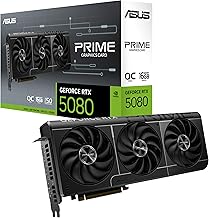
#1. ASUS Prime RTX 5080
4K Gaming
GDDR7 Speed
Vapor Chamber
The ASUS Prime RTX 5080 is an absolute beast, delivering top-tier performance for enthusiasts who demand the best. You’ll experience incredibly smooth frame rates at 4K resolutions and high refresh rates, thanks to the powerful GPU and 16GB of cutting-edge GDDR7 memory. The integrated vapor chamber ensures excellent thermal management, allowing the card to perform at its peak without excessive noise or heat.
This card represents a significant investment, and its sheer power might be overkill for casual gamers or those playing at 1080p. It’s the ultimate choice for serious gamers aiming for the highest fidelity and frame rates, especially in demanding titles and VR experiences.
Pros
- Exceptional 4K gaming performance
- Fastest GDDR7 memory
- Advanced vapor chamber cooling
Cons
- Very expensive
- Requires a robust power supply
- Overkill for lower resolutions
Specifications
#2. XFX Radeon RX 9070XT
High Refresh
16GB GDDR6
Triple Fan
The XFX Swift AMD Radeon RX 9070XT is a top-tier graphics card designed for serious gamers who want high frame rates and stunning visuals. You’ll experience buttery-smooth gameplay at 1440p and even 4K, powered by the AMD RDNA 4 architecture and 16GB of GDDR6 memory. The robust triple-fan cooling system ensures the card stays cool and quiet, even under heavy load, allowing you to push your gaming limits.
This card is a premium option and comes with a corresponding price tag, making it less suitable for budget builds. It’s perfect for enthusiasts aiming for the highest possible frame rates in competitive titles or maximum detail in AAA games, offering a compelling AMD alternative for high-end performance.
Pros
- Outstanding performance for 1440p/4K
- Ample 16GB VRAM
- Effective triple-fan cooling
Cons
- High cost
- Requires significant power
- Large physical size
Specifications
#3. GIGABYTE RX 9060 XT
1440p Gaming
16GB GDDR6
Hawk Fan
The GIGABYTE Radeon RX 9060 XT Gaming OC ICE is a powerhouse for its class, offering excellent performance for 1440p gaming and even some 4K experiences. You’ll be impressed by the 16GB of GDDR6 memory, which provides ample headroom for texture-heavy games and future titles. The ‘Gaming OC’ designation means it’s factory overclocked for extra speed, and the Hawk Fan cooling system keeps it running efficiently.
While the 128-bit memory bus is a potential bottleneck in some scenarios, the overall package delivers strong performance. This card is ideal for gamers seeking a significant upgrade for high-refresh-rate 1440p gaming or entry-level 4K, offering a great balance of power and features.
Pros
- Excellent 1440p and entry 4K performance
- Generous 16GB VRAM
- Effective cooling solution
Cons
- 128-bit memory bus may limit bandwidth
- Higher price point
- Can be power-hungry
Specifications
#4. ASUS Dual RTX 5060 Ti
Performance Boost
GDDR7 Speed
Axial-tech Fans
You’ll appreciate the solid performance this ASUS Dual RTX 5060 Ti offers for its price point, making it a great option for budget-conscious gamers. The 8GB of GDDR7 memory ensures smooth gameplay in many modern titles, and the PCIe 5.0 interface provides future-proofing. The Axial-tech fans keep temperatures in check, allowing for sustained performance during longer gaming sessions.
While it’s an excellent choice for 1080p gaming, you might find it struggles with higher resolutions or ultra settings in the most demanding new releases. It’s ideal for those building a new budget gaming PC or upgrading an older system for mainstream titles.
Pros
- Good 1080p gaming performance
- Modern GDDR7 memory
- Efficient cooling system
Cons
- Not ideal for 4K gaming
- Limited VRAM for future titles
- Can be pricey for its tier
Specifications
#5. ASUS Prime RTX 5060 Ti
Build Friendly
GDDR7 Speed
PCIe 5.0
This ASUS Prime RTX 5060 Ti is an excellent choice if you’re building a smaller form factor PC without sacrificing too much performance. You get the same 8GB GDDR7 memory and PCIe 5.0 support as its larger siblings, ensuring good frame rates in most modern games at 1080p. The SFF-ready design makes installation in compact cases much easier.
However, its compact nature might mean slightly less robust cooling compared to larger cards, potentially leading to thermal throttling under extreme loads. It’s perfect for HTPCs or small gaming rigs, but power users might want a beefier cooling solution.
Pros
- Ideal for small form factor builds
- Good gaming performance for its size
- Modern GDDR7 memory
Cons
- Cooling may be less effective
- Limited upgrade path for VRAM
- Still a 2.5-slot design
Specifications
#6. maxsun RTX 3050 6GB
Small PC
6GB GDDR6
PCIe 4.0
The maxsun GeForce RTX 3050 6GB is a compelling option for budget gamers looking to build a compact system. You’ll get decent 1080p performance for many titles, especially with its 6GB of GDDR6 memory and support for PCI Express 4.0. The Mini Small Form Factor design makes it perfect for SFF and slim builds where space is limited.
However, the 6GB VRAM can be a limiting factor in newer, more demanding games, and the RTX 3050 itself isn’t the most powerful GPU available. It’s a solid choice for entry-level gaming in small PCs or for upgrading older systems, but don’t expect it to handle high-end gaming scenarios.
Pros
- Great for SFF and slim builds
- Decent 1080p gaming performance
- PCIe 4.0 support
Cons
- 6GB VRAM is limiting for some games
- Performance not top-tier
- Limited availability
Specifications
#7. Kelinx RX 580 8GB
Gaming Pick
8GB GDDR5
Fan Stop
The Kelinx AISURIX RX 580 is a true budget champion, offering a capable 8GB of GDDR5 VRAM for playing many popular titles at 1080p. You’ll find it handles esports titles and older AAA games quite well, especially considering its price. The 256-bit memory bus helps ensure decent bandwidth for its class, and the Freeze Fan Stop feature means silent operation at idle.
However, don’t expect this card to run the latest AAA games on high settings; its performance is definitely entry-level by today’s standards. It’s a fantastic option for very tight budgets or for systems where a basic discrete GPU is needed, but serious gamers should look higher up the stack.
Pros
- Very affordable price point
- 8GB VRAM for older/esports titles
- Silent idle operation
Cons
- Outdated architecture
- Struggles with modern AAA games
- Lower frame rates expected
Specifications
#8. GT 730 Graphics Card 4GB
Quad Output
4GB DDR3
Multi-Monitor
This GT 730 graphics card is a functional choice if your primary need is to drive multiple displays for productivity tasks. You’ll appreciate its ability to support up to 4 simultaneous displays via its multiple output options (HDMI, DP, VGA). The 4GB of DDR3 memory, while not fast, is sufficient for basic desktop use, web browsing, and video playback on multiple monitors.
However, this card is severely underpowered for gaming or any graphically intensive applications; its performance is strictly entry-level. It’s a practical pick for office workstations or media PCs needing basic multi-monitor support, but it’s not suitable for gamers or content creators.
Pros
- Supports up to 4 displays
- Multiple output options
- Low power consumption
Cons
- Extremely weak gaming performance
- Slow DDR3 memory
- Limited to basic tasks
Specifications
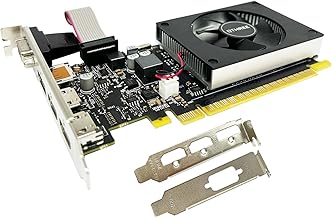
#9. QTHREE GT 730 4GB
Low Profile
4GB DDR3
Multiple Outputs
The QTHREE GeForce GT 730 4GB is a budget-friendly option for basic computing needs and display output. You’ll find it suitable for everyday tasks like web browsing, office applications, and video playback, especially with its 4GB of DDR3 memory. The low-profile design ensures it fits into smaller computer cases, making it versatile for various builds.
However, this card offers minimal graphical power and is not intended for gaming or any demanding visual workloads. Its performance is very basic, and the 64-bit memory bus limits its capabilities significantly. It’s a functional choice for upgrading older systems or for use in non-demanding environments where a discrete GPU is needed.
Pros
- Affordable for basic needs
- Low profile for slim cases
- 4GB memory for desktop use
Cons
- Extremely limited gaming performance
- Outdated technology
- Slow memory bus
Specifications
#10. GeForce GT 610 2GB
Low Profile
Basic Output
Win11 Ready
If you just need a graphics card to get a display output working, the GeForce GT 610 2GB can do the job. It’s incredibly basic, but you’ll appreciate its low-profile design, which makes it suitable for slim HTPCs or office machines. The 2GB of DDR3 memory is enough for desktop tasks and light media playback, and it supports modern operating systems like Windows 11.
However, this card is absolutely not for gaming or any demanding graphical tasks; performance is extremely limited. It’s a functional choice only if your needs are minimal and you require a small form factor card for basic display connectivity.
Pros
- Very low cost
- Low profile for slim cases
- Basic display output capability
Cons
- Extremely poor gaming performance
- Very outdated technology
- Limited memory bandwidth
Specifications
![10 Best Cheap Gfx Card [2026]](https://spsolutionscare.com/wp-content/uploads/2026/09/10-best-cheap-gfx-card-2026-mid.jpg)
Unearthing Value: Your Guide to a Budget-Friendly Graphics Card
Thinking about upgrading your PC’s visual prowess without emptying your wallet? A graphics card, or GPU, is the engine that drives everything from your favorite games to smooth video playback. For those on a budget, finding the right balance between performance and price is key. This guide will help you navigate the options and make a smart purchase that enhances your computing experience.
Decoding the Digital Canvas: What to Prioritize
When you’re looking for an affordable graphics card, a few key elements will significantly impact your satisfaction. Focus on these as you explore your options.
- Video Memory (VRAM): This is your graphics card’s dedicated workspace. More VRAM generally means smoother performance, especially at higher resolutions or with more demanding applications.
- Core Clock Speed: This indicates how fast the processing unit of your graphics card can operate. A higher clock speed often translates to better performance in graphics-intensive tasks.
- Memory Bandwidth: This refers to how quickly the graphics card can access its VRAM. Higher bandwidth is crucial for feeding the GPU with the data it needs to render complex scenes.
- Connectivity and Ports: Ensure the card has the necessary display outputs (like HDMI or DisplayPort) to connect to your monitor.
- Sticking to your budget: Define your spending limit before you start looking. This will help you narrow down the field and avoid overspending on features you might not need.
Navigating the Upgrade Aisle: Common Traps to Sidestep
Even with a clear goal, it’s easy to get sidetracked. Keep these potential pitfalls in mind.
- Overlooking Driver Support: A powerful card is only as good as its software. Make sure the manufacturer offers up-to-date drivers for your operating system.
- Ignoring Power Requirements: Some graphics cards can draw a significant amount of power. Check if your current power supply unit (PSU) can handle the demands of a new card.
- Buying Based Solely on Brand Name: While some brands have a strong reputation, don’t let a logo blind you to a better value from a less familiar manufacturer.
Your Budget GPU Game Plan
For serious gamers on a budget, the ASUS Prime GeForce RTX 5080 is your powerhouse, while the XFX Swift AMD Radeon RX 9070XT offers a fantastic all-around experience. If you’re just looking for a solid upgrade for everyday tasks or light gaming, the maxsun GeForce RTX 3050 6GB or even the Kelinx AISURIX RX 580 are your go-to choices. And for the absolute bare minimum for display output, the GT 730 and GT 610 models get the job done.
All these options deliver great value without breaking the bank. Don’t wait – hit those buttons to check current availability and snag the best cheap gfx card that fits your needs!
Final 3 Picks: High-End Gaming, High Refresh Rate, and Mid-Range Performance
Ready to decide? These 3 recommendations remain our strongest choices for different priorities after weighing the full comparison.

![10 Best 2gb Video Card [2026]](https://spsolutionscare.com/wp-content/uploads/2026/08/10-best-2gb-video-card-2026-featured-768x432.jpg)
![10 Graphics Card [2026]](https://spsolutionscare.com/wp-content/uploads/2026/08/10-graphics-card-2026-featured-768x432.jpg)
![10 Best Cheap Graphics [2026]](https://spsolutionscare.com/wp-content/uploads/2026/09/10-best-cheap-graphics-2026-featured-768x432.jpg)