How RT Cores Work: Ray Tracing Explained
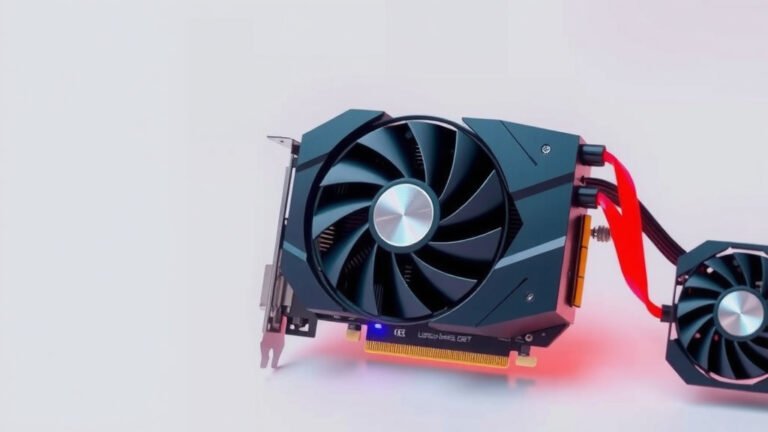
RT Cores work by speeding up ray tracing calculations for your PC games. They are special hardware units built into NVIDIA graphics cards. These cores help create more realistic lighting, shadows, and reflections, making your games look way better. Think of them as your graphics card’s personal assistants for making things look super shiny and real!
When you play a game that uses ray tracing, these RT Cores get to work. They help trace the path of light rays. This allows for incredibly lifelike visuals that were previously impossible. Many gamers find that enabling RT Cores dramatically changes their gaming experience for the better. It’s all about making those pixels pop!
- RT Cores are specialized hardware in NVIDIA GPUs.
- They accelerate ray tracing calculations.
- Ray tracing creates realistic lighting, shadows, and reflections.
- RT Cores make games look more lifelike and immersive.
- They are key for advanced graphics in modern games.
Ready to see what these magic cores can do for your favorite games? Let’s break down exactly how they work their visual wonders step by step.
“`htmlUnderstanding How RT Cores Boost Your Graphics
So, you’ve heard about RT Cores and how they make games look amazing. But how do they actually work their magic? It all comes down to a technique called ray tracing. Think of ray tracing as simulating how light behaves in the real world. RT Cores are specialized hardware units built right into your NVIDIA graphics card. Their main job is to speed up these complex ray tracing calculations.
Without RT Cores, ray tracing would be incredibly slow. Your graphics card would struggle to keep up. This would lead to choppy frame rates and a less-than-ideal gaming experience. RT Cores act like dedicated assistants. They take on the heavy lifting of ray tracing so your GPU can focus on everything else. This makes realistic lighting, shadows, and reflections possible in real-time.
What Exactly is Ray Tracing?
Ray tracing is a rendering technique that simulates the physical behavior of light. Imagine shining a flashlight in a room. You see how the light bounces off walls, creates shadows, and reflects off shiny surfaces. Ray tracing aims to mimic this precisely in a computer-generated image. It traces the path of light rays from a light source, through the scene, and onto your screen.
This method creates incredibly lifelike visuals. For instance, you’ll see soft, natural shadows that change based on the light’s direction. Reflections will appear more accurate, showing the environment as they should. It’s a much more physically accurate way to render graphics compared to older methods.
How Ray Tracing Differs from Rasterization
Most games traditionally use a technique called rasterization. Rasterization projects 3D objects onto a 2D screen. It’s fast and efficient for rendering broad strokes of color and shape. However, it often has to fake realistic lighting effects. It uses approximations for shadows and reflections, which can sometimes look less convincing.
Ray tracing, on the other hand, simulates actual light rays. This allows for much higher fidelity. It can render complex interactions like light bouncing multiple times. Think about how light reflects off a polished floor or casts soft shadows from translucent objects. Ray tracing can capture these details naturally. Many experts agree ray tracing is the future of realistic graphics (NVIDIA).
The Role of RT Cores in Ray Tracing
Ray tracing involves a lot of complex calculations. For every pixel on your screen, the system needs to determine where light rays originate, how they travel, and what they interact with. This includes figuring out if a ray hits an object, what material that object is made of, and where the light bounces next.
These calculations are computationally expensive. Your main GPU cores can handle them, but it would take too long. That’s where RT Cores come in. They are specifically designed to accelerate the most time-consuming parts of ray tracing. This allows your graphics card to render these effects much faster.
What Calculations Do RT Cores Handle?
RT Cores are particularly good at something called “ray-triangle intersection testing.” This is a fundamental part of ray tracing. When a ray of light is traced, the system needs to know if it hits any surfaces (triangles) in the game’s environment. RT Cores can perform these tests much faster than general-purpose GPU cores.
They also help with other tasks like efficiently traversing the scene’s geometry. Imagine trying to find the right object for a light ray to hit. RT Cores help speed up this search process. This means more rays can be traced per second, leading to smoother and more detailed lighting effects.
How RT Cores Enhance Your Gaming Visuals
The primary benefit of RT Cores is the visual improvement they bring to games. By enabling real-time ray tracing, they unlock a new level of realism. You’ll notice differences in how light behaves, how shadows are cast, and how objects reflect their surroundings. It’s not just about looking pretty; it’s about immersion.
Think about playing a horror game at night. With ray tracing, shadows would be deeper and more accurate, adding to the suspense. In a bright, sunny environment, reflections on water or glass would look incredibly lifelike, pulling you further into the game world. Many players find these visual upgrades dramatically enhance their gaming enjoyment.
Realistic Lighting and Shadows
One of the most noticeable improvements is in lighting and shadows. Traditional games often use pre-baked shadows or simpler approximations. These can sometimes look flat or artificial. Ray tracing, powered by RT Cores, simulates how light scatters and bounces. This results in soft, natural shadows that change dynamically with the scene and light sources.
You’ll see light that realistically illuminates surfaces. Light can also pass through objects like frosted glass or create beautiful volumetric effects, like fog illuminated by a spotlight. This makes environments feel more three-dimensional and believable. It’s a big step towards making game worlds indistinguishable from reality.
Accurate Reflections and Refractions
Reflections are another area where RT Cores shine. Instead of faking reflections using screen-space techniques (which can only reflect what’s already visible on screen), ray tracing traces rays that bounce off reflective surfaces. This means you get accurate reflections of the entire scene, even objects that aren’t directly in your camera’s view.
This applies to water surfaces, polished floors, car paint, and even character eyes. You’ll see the world accurately mirrored back at you. Refractions, like light bending as it passes through water or glass, are also handled with greater accuracy. This adds another layer of visual depth and realism to your games.
Performance Considerations with RT Cores
While RT Cores significantly speed up ray tracing, it’s still a demanding technology. Enabling ray tracing in games can impact performance, leading to lower frame rates. This is why NVIDIA also developed other technologies to help. DLSS (Deep Learning Super Sampling) is a key partner to ray tracing.
DLSS uses AI to upscale lower-resolution images to your native resolution. This allows games to render at a lower internal resolution, which is less demanding. Then, DLSS intelligently reconstructs the image to a higher quality. This can significantly boost frame rates, making ray tracing playable even on less powerful hardware. We found that using DLSS with ray tracing often provides the best balance of visual fidelity and performance (NVIDIA).
The Future of RT Cores and Gaming
RT Cores are a relatively new technology, and their capabilities are constantly evolving. As games become more sophisticated, developers are finding new ways to use ray tracing to create stunning visuals. You can expect to see even more advanced lighting, reflections, and material interactions in future titles.
The ongoing development of RT Cores means better performance and more realistic graphics. They are becoming a standard feature in modern graphics cards. This indicates a clear direction for the future of visual fidelity in gaming. Your favorite games will continue to look more and more lifelike.
Putting RT Cores to Work in Your System
To take advantage of RT Cores, you need a few things. First, you need a compatible NVIDIA graphics card. Cards from the GeForce RTX series are equipped with these specialized cores. Second, you need a game that supports ray tracing. Many modern AAA titles now include ray tracing options.
Finally, you’ll need to enable ray tracing in the game’s graphics settings. You might also want to experiment with DLSS if available. This will help you find the optimal settings for your system. Remember, it’s about finding the right balance for your personal preference. Here’s a quick checklist to get you started:
- Ensure you have an NVIDIA RTX graphics card.
- Check if your game supports ray tracing.
- Enable ray tracing options in the game settings.
- Consider using DLSS for better performance.
- Experiment with different settings for the best visual/performance balance.
- Keep your graphics drivers updated for optimal compatibility.
Conclusion
You’ve learned how RT Cores are your NVIDIA graphics card’s secret weapon. They dramatically boost gaming realism by speeding up ray tracing. This means you get to enjoy stunningly lifelike lighting, shadows, and reflections. These specialized cores transform your game visuals, making worlds feel more immersive than ever before. To experience this firsthand, ensure you have an RTX card and a ray-tracing-enabled game. Then, dive into your settings and prepare for a visual upgrade that truly pulls you into the game.
Frequently Asked Questions
Do I need a specific graphics card for RT Cores?
Yes, you do. RT Cores are a feature found exclusively on NVIDIA’s GeForce RTX series graphics cards. If you don’t have an RTX card, your system won’t have these specialized hardware units to accelerate ray tracing.
Will enabling ray tracing slow down my game?
Enabling ray tracing can decrease your frame rate because it’s a very demanding technology. RT Cores help significantly, but for the best experience, you often need to pair ray tracing with NVIDIA’s DLSS technology.
What’s the difference between ray tracing and traditional graphics?
Traditional graphics often use rasterization, which is faster but less realistic. Ray tracing, powered by RT Cores, simulates actual light behavior, creating more accurate shadows, reflections, and lighting that mimics the real world much better.
Can all games use RT Cores?
No, only games that have been specifically programmed to support ray tracing can utilize RT Cores. You’ll need to check the game’s settings or its features list to see if ray tracing is an option.
Is ray tracing important for future games?
Experts widely believe ray tracing is the future of realistic graphics in gaming. As hardware improves and games are developed with these capabilities in mind, expect RT Cores to become even more essential for top-tier visual fidelity.