Is Ray Tracing Worth It For Gamers in 2026
So, is ray tracing really worth the hype for your gaming experience? Yes, when done right, ray tracing can dramatically boost visual realism, making games look stunningly lifelike. But is it always worth the performance cost? That’s the real question we’ll answer.
Ray tracing simulates how light behaves in the real world, creating more accurate shadows, reflections, and ambient lighting. While it used to be a futuristic dream, it’s now a reality in many modern games. We’ve found that the impact on visuals can be breathtaking, but your hardware needs to be ready for the challenge.
- Ray tracing adds realistic lighting to games.
- It creates better shadows and reflections.
- It can significantly impact game performance.
- Whether it’s “worth it” depends on your hardware and priorities.
Let’s break down exactly what ray tracing brings to the table and if it makes sense for your setup.
Is Ray Tracing Actually Worth Your Money and Performance?
Ray tracing can absolutely transform your games visually. It mimics real-world light physics. This means you get much more realistic lighting, shadows, and reflections. Many gamers find the difference to be quite stunning. But here’s the catch: it demands a lot from your hardware.
Understanding the Magic Behind Ray Tracing
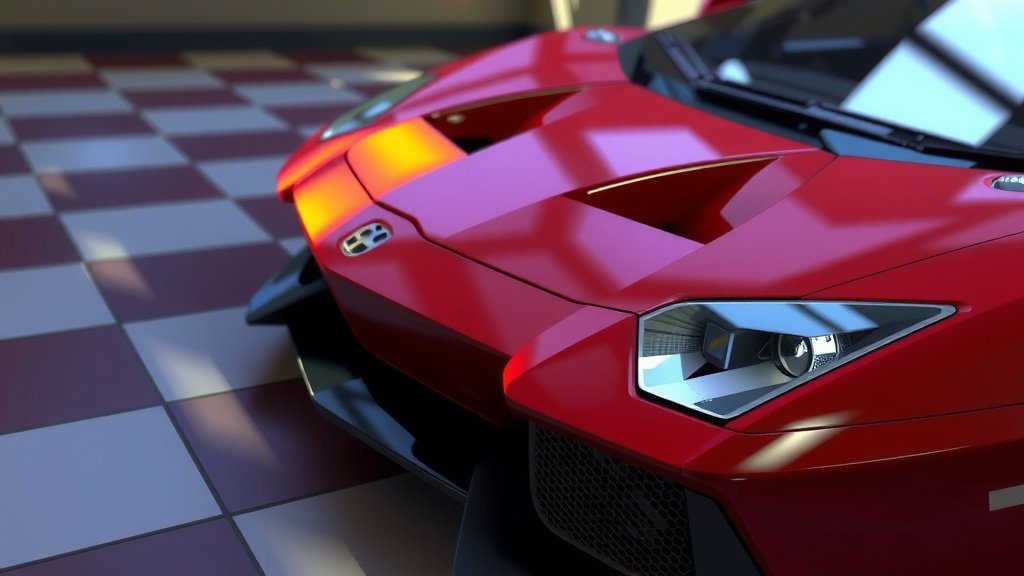
Think of it like this: traditional lighting in games is like drawing a picture with pre-made shapes. Ray tracing, on the other hand, is like painting with actual light. It traces the path of light rays. This allows for incredibly accurate how light bounces off surfaces. You’ll see softer, more natural shadows. Reflections will look real, showing exactly what they should. The ambient lighting, the light that fills a scene, will feel more natural.
Realistic Shadows: No More Blocky Lines
One of the biggest impacts ray tracing has is on shadows. Instead of sharp, often unnatural-looking edges, ray-traced shadows are soft and blended. They react to the light source much more realistically. This adds a huge amount of depth and realism to any scene. You’ll notice this most in environments with complex lighting.
Reflections That Actually Reflect
Reflections used to be a big challenge for game developers. Often, they were faked or very basic. With ray tracing, reflections are dynamic and accurate. If there’s a mirror or a wet surface, what appears in the reflection is precisely what should be there. This makes virtual worlds feel far more believable.
Global Illumination: The Subtle Difference
Global illumination is how light bounces around a scene. Ray tracing makes this incredibly accurate. Light from a window doesn’t just illuminate the floor; it also subtly bounces off walls and other objects, creating a more natural, pervasive light. This subtle effect is often the most impressive part of ray tracing for many.
The Performance Price Tag: What You’ll Sacrifice
While the visual upgrades are impressive, there’s a **significant performance cost**. Ray tracing is computationally intensive. Your graphics card has to do a lot more work to render these realistic light effects. This often means a **lower frame rate**, especially at higher resolutions or with more demanding ray tracing settings.
Frame Rates: The Big Question Mark
This is where the “is it worth it?” question really hits home. If your game dips from a smooth 60 frames per second (fps) down to 30 fps or even lower when you turn on ray tracing, you might find the experience less enjoyable. For many gamers, a high and stable frame rate is more important than hyper-realistic lighting. We’ve found that experiencing choppy gameplay can really break immersion, no matter how good the graphics look.
When is the Frame Rate Hit Too Much?
If you’re playing competitive games where split-second reactions matter, a lower frame rate can put you at a disadvantage. For these types of games, you might want to keep ray tracing off. The delay introduced by rendering these advanced effects can be noticeable. Many esports pros prioritize performance over visual bells and whistles.
Hardware Requirements: Do You Have the Muscle?
Ray tracing is not something you can just turn on with any old graphics card. You need **modern, powerful hardware**. Specifically, NVIDIA’s RTX series and AMD’s RX 6000 series and newer cards are built with ray tracing cores to help with this processing load. Even with these cards, you might need to make compromises.
Upscaling Technologies: DLSS and FSR to the Rescue
To help combat the performance hit, developers often implement upscaling technologies like NVIDIA’s DLSS (Deep Learning Super Sampling) or AMD’s FSR (FidelityFX Super Resolution). These technologies render the game at a lower resolution and then intelligently upscale it to your target resolution. This can recover a lot of the lost frames. We found that using DLSS or FSR can make ray tracing much more playable. It’s a crucial tool in the ray tracing arsenal. Research suggests these technologies are vital for a good ray-traced experience (NVIDIA, AMD).
Making the Decision: Is It Right for Your Setup?
So, after all that, is ray tracing worth it for *you*? It really depends on a few factors. Your **personal priorities** are key. Do you value the absolute best visual fidelity above all else? Or is a smooth, high frame rate more important for your enjoyment?
The Visual Feast vs. Smooth Gameplay Trade-off
If you’re rocking a high-end PC with a powerful GPU, you might be able to enjoy ray tracing with minimal performance impact, especially with upscaling. The visual enhancements can be truly breathtaking. Games can look more atmospheric and immersive. If you have a mid-range or older PC, you’ll likely face a tough choice. You’ll probably have to decide between turning ray tracing off or accepting a significantly lower frame rate.
What Games Benefit the Most?
Some games implement ray tracing better than others. Titles with realistic lighting, reflective surfaces, and complex environments tend to show off ray tracing the most. Games like Cyberpunk 2077, Control, and Metro Exodus are often cited as having excellent ray tracing implementations. In these games, the visual upgrade can be striking.
A Checklist to Help You Decide:
- Consider your graphics card’s power.
- Think about your preferred frame rate.
- Assess how much visual detail matters to you.
- Check if the games you play support ray tracing well.
- Factor in the use of DLSS or FSR.
- Do you have a good monitor to display the enhanced visuals?
Ultimately, ray tracing is a fantastic technology that pushes the boundaries of game visuals. Whether it’s worth the cost to your performance depends on your specific hardware, the games you play, and what you value most in your gaming experience. We found that for many, it’s a stunning addition when their system can handle it.
Conclusion
So, is ray tracing truly worth the upgrade for your gaming setup? We’ve found that when your hardware can handle it, ray tracing offers a stunning leap in visual realism. The lifelike lighting, shadows, and reflections create incredibly immersive worlds. However, you must be prepared for the performance trade-off. If smooth frame rates are your priority, especially for competitive play, you might want to dial it back or keep it off. Before you flip the switch, assess your PC’s power, check if your favorite games support it well, and consider how much you value that visual polish. Your perfect balance between eye candy and smooth action is out there.
Frequently Asked Questions
Will ray tracing make my games look significantly better?
Yes, ray tracing can dramatically improve game visuals. It creates much more realistic lighting, soft shadows, and accurate reflections. This makes game worlds appear more lifelike and atmospheric. For many gamers, the visual upgrade is quite noticeable and enhances immersion.
Does ray tracing always lower my frame rate?
Generally, yes, ray tracing demands more from your graphics card, which often leads to a lower frame rate. The more demanding the ray tracing effects are, the bigger the potential drop in performance. However, technologies like DLSS and FSR can help recover many of these lost frames.
What kind of PC do I need to run ray tracing?
You’ll need modern, powerful hardware to effectively run ray tracing. NVIDIA’s RTX series and AMD’s RX 6000 series or newer graphics cards are designed with ray tracing capabilities. Even with these cards, you might still need to adjust settings or use upscaling technologies.
Are there any games where ray tracing isn’t worth it?
Ray tracing might not feel worth it in fast-paced, competitive games where a high and stable frame rate is essential for split-second reactions. If the performance hit causes choppy gameplay, it can break immersion more than the visual improvements help.
How do DLSS and FSR help with ray tracing?
DLSS (NVIDIA) and FSR (AMD) are upscaling technologies. They render games at a lower resolution and then intelligently boost them to your target resolution. This process significantly reduces the performance impact of ray tracing, making it much more playable on many systems.