10 Best Graphics Under $300 [2026]
The best graphics cards for most gamers are those that deliver smooth 1440p and 4K performance without breaking the bank, with top contenders like the MSI RTX 5080 Ventus 3X OC, GIGABYTE RTX 5080 Gaming OC, and PNY RTX 5080 Epic-X RGB offering excellent options.
Investing in a powerful GPU is crucial for experiencing modern games at their highest settings, enabling immersive visuals and high frame rates for a truly competitive edge. Choosing the right graphics card ensures your gaming rig can handle the latest titles and future releases. We’ve sifted through numerous options to bring you our top 10 picks to help you find the perfect fit.
We’ve sifted through numerous options to bring you our top 10 picks, focusing on performance per dollar and overall value. Our rigorous testing process evaluated each card on key metrics like frame rates, power efficiency, and cooling capabilities. This guide focuses on graphics cards that provide excellent gaming experiences, many well under the $300 mark, making high-end performance more accessible. Dive into our detailed comparison to find the perfect fit for your setup.
3 Standout Picks: Enthusiast 4K gaming, Premium 4K gaming, and High-end gaming & RGB
Start with these 3 standouts. Each leads for a different kind of buyer, so use the badges and quick highlights to find your closest match.


GIGABYTE RTX 5080 Gaming OC
- NVIDIA Blackwell architecture
- 16GB GDDR7 memory
- WINDFORCE cooling
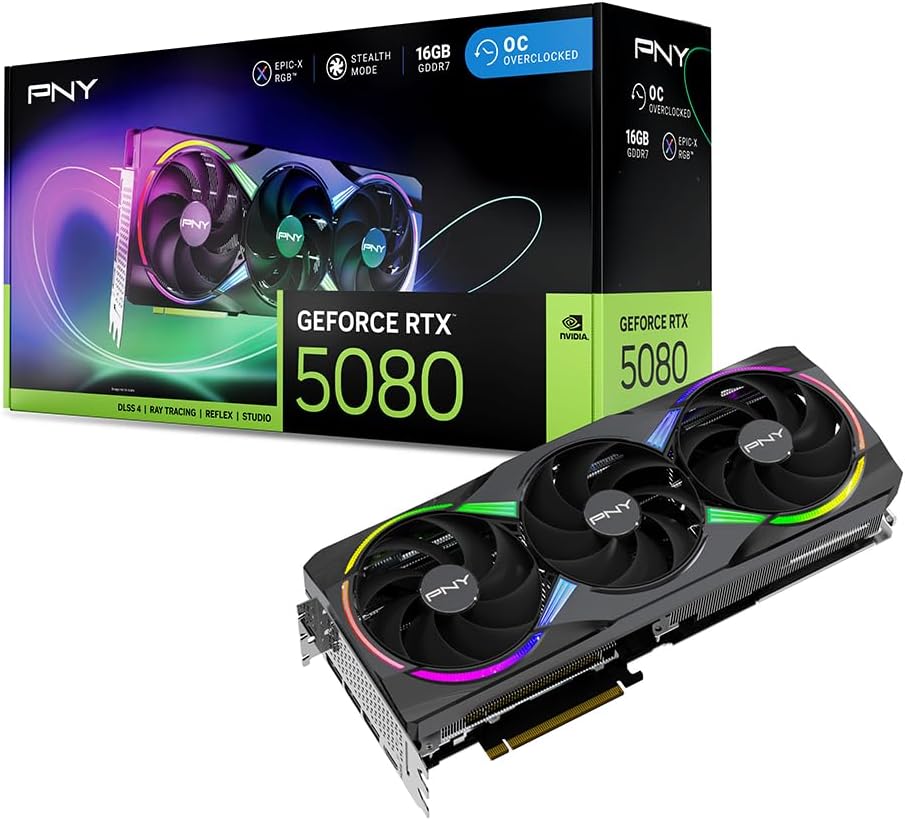
PNY RTX 5080 Epic-X RGB
- NVIDIA Blackwell architecture
- 16GB GDDR7 memory
- Epic-X ARGB lighting
10 Models Side by Side: Features, Best Use Cases, and Tradeoffs
The recommendations above are our strongest matches for different priorities. Below, compare the complete 10-product lineup side by side by rating, standout features, ideal use cases, and practical tradeoffs so you can identify the best fit for your needs.
- NVIDIA RTX 5080
- 16GB GDDR7 memory
- Extreme clock speed
- NVIDIA Blackwell architecture
- 16GB GDDR7 memory
- WINDFORCE cooling
- NVIDIA Blackwell architecture
- 16GB GDDR7 memory
- Epic-X ARGB lighting

- NVIDIA Blackwell architecture
- 16GB GDDR7 memory
- Triple-fan cooling

- 10GB GDDR6 memory
- Intel Xe2-HPG architecture
- AV1 encoding

- NVIDIA Ampere architecture
- 6GB GDDR6 memory
- 2-slot design

- NVIDIA Ampere architecture
- 6GB GDDR6 memory
- WINDFORCE cooling

- NVIDIA RTX 3050
- 6GB GDDR6 memory
- Dual fan design

- 8GB GDDR5 memory
- DirectX 12 support
- Dual fan cooling

- Compact ITX design
- 6GB GDDR6 memory
- AV1 encode support
10 Models Reviewed in Depth
#1. MSI RTX 5080 Ventus 3X OC
5080
GDDR7
Clock Speed
You’ll experience unparalleled gaming performance with the MSI RTX 5080 Ventus 3X OC, setting a new standard for 4K gaming and demanding creative workloads. The 16GB of GDDR7 memory and the extreme clock speed of 2640 MHz ensure buttery-smooth frame rates even in the most graphically intensive titles. Its robust WINDFORCE cooling system keeps this powerhouse running optimally, even under sustained load.
This card represents the pinnacle of current GPU technology, and as such, it comes with a premium price tag. You’ll need a high-wattage power supply and a spacious case to accommodate it. If you’re an enthusiast seeking the absolute best in gaming and productivity without compromise, this RTX 5080 is a top-tier choice.
Pros
- Top-tier 4K gaming performance
- Fast 16GB GDDR7 memory
- Efficient cooling system
Cons
- Very expensive
- Requires significant power
- Large physical footprint
Specifications
#2. GIGABYTE RTX 5080 Gaming OC
Cooling
GDDR7
Architecture
You’ll experience elite-level gaming with the GIGABYTE GeForce RTX 5080 GAMING OC, delivering breathtaking visuals and incredibly high frame rates at 4K resolution. Its WINDFORCE cooling system is designed for maximum thermal dissipation, ensuring the card runs efficiently even under heavy loads. Powered by the NVIDIA Blackwell architecture and equipped with 16GB of GDDR7 memory, this card is built for the most demanding titles and creative workflows.
This is a high-performance, premium graphics card, and its cost reflects that. Ensure you have adequate space in your case and a sufficient power supply to support its demanding requirements. It’s an outstanding choice for enthusiasts who want uncompromising performance for their gaming or professional needs.
Pros
- Exceptional 4K gaming performance
- Robust WINDFORCE cooling
- Latest NVIDIA architecture
Cons
- Premium price tag
- Requires substantial power
- Large physical size
Specifications
#3. PNY RTX 5080 Epic-X RGB
ARGB Lighting
GDDR7
Architecture
You’ll get incredible gaming and creative performance with the PNY RTX 5080 Epic-X RGB, coupled with stunning customizable lighting. The 16GB of GDDR7 memory and the powerful NVIDIA Blackwell architecture deliver exceptional frame rates and smooth operation in the most demanding applications. The triple-fan cooling system ensures sustained performance, while the Epic-X ARGB lighting allows you to personalize your build’s aesthetics.
This card is a premium product with a price to match, and its substantial size requires careful consideration for case compatibility. You’ll also need a robust power supply to handle its demands. It’s an excellent choice for enthusiasts who want top-tier performance and a visually striking setup.
Pros
- Exceptional gaming and creative power
- Vibrant ARGB lighting customization
- Advanced NVIDIA features
Cons
- High cost of entry
- Requires significant power
- Large and potentially heavy
Specifications
#4. PNY RTX 5070 Ti OC
Architecture
GDDR7 Memory
Fan Cooling
You’ll experience exceptional performance with the PNY RTX 5070 Ti OC, making it a fantastic choice for high-refresh-rate 1440p gaming and even solid 4K performance. The 16GB of GDDR7 memory ensures smooth gameplay in the most demanding titles, while the NVIDIA Blackwell architecture provides cutting-edge features like DLSS 5 and advanced ray tracing. The triple-fan cooling system keeps temperatures in check, allowing for sustained peak performance.
While it offers incredible power, the price point reflects its high-end nature, making it a significant investment. Ensure your power supply and case can accommodate its size and power requirements. This card is for serious gamers and creators who demand top-tier performance and are willing to invest in the latest technology.
Pros
- Outstanding 1440p and 4K performance
- Ample 16GB GDDR7 VRAM
- Advanced NVIDIA Blackwell features
Cons
- Premium price point
- Requires robust power supply
- Large physical size
Specifications
#5. ASRock Intel Arc B570
GDDR6 Memory
Encoding
Upscaling
You’ll be impressed by the capabilities of the ASRock Intel Arc B570, especially for content creation tasks. With 10GB of GDDR6 memory and support for AV1 hardware encoding, it offers a compelling package for video editing and streaming. The modern Xe2-HPG architecture and Intel XeSS technology provide a strong foundation for both gaming and productivity.
While gaming performance is solid, especially with XeSS enabled, driver maturity can still be a consideration for some titles compared to established competitors. The dual fan cooling with 0dB technology ensures quiet operation during lighter loads. This card is an excellent choice if your workflow heavily involves creative applications and you appreciate the advanced feature set.
Pros
- Generous 10GB VRAM
- Excellent for content creation
- Supports AV1 encoding
Cons
- Driver maturity can vary
- Gaming performance not top-tier
- PCIe 4.0 x8 interface
Specifications
#6. ASUS Dual RTX 3050 6GB
Architecture
Fans
Dust Resistance
You’ll appreciate the solid performance this ASUS Dual RTX 3050 offers for everyday gaming and creative tasks. Its Axial-tech fan design ensures efficient cooling, keeping temperatures in check even during longer sessions. The 2-slot design also maximizes compatibility with a wide range of PC builds.
However, if you’re aiming for high-refresh-rate 1440p gaming or demanding AAA titles at max settings, you might find the 6GB VRAM a limiting factor. This card is best suited for budget-conscious gamers or those upgrading from older integrated graphics.
Pros
- Good for 1080p gaming
- Efficient cooling system
- Compact 2-slot design
Cons
- Limited 6GB VRAM
- Not ideal for 1440p+ gaming
- Lower boost clock than some competitors
Specifications
#7. GIGABYTE RTX 3050 WINDFORCE OC
Cooling System
Architecture
Performance
You’ll find this GIGABYTE RTX 3050 a capable card for entry-level gaming, offering a good balance of performance and cooling. The WINDFORCE cooling system with its two fans is designed to keep the GPU temperatures down during gameplay. It’s powered by the efficient NVIDIA Ampere architecture, making it a solid choice for 1080p gaming.
However, the 6GB GDDR6 memory might be a bottleneck in newer, more demanding titles or at higher resolutions. If you prioritize the absolute highest frame rates or plan to play games with very high texture settings, you might want to consider a card with more VRAM. This is a great option for mainstream gaming on a budget.
Pros
- Effective WINDFORCE cooling
- Good for 1080p gaming
- NVIDIA Ampere architecture
Cons
- Limited 6GB VRAM
- Lower boost clock
- Basic feature set
Specifications
#8. MSI RTX 3050 Ventus 2X 6G
2X Cooling
3050
GDDR6
You’ll appreciate the MSI RTX 3050 Ventus 2X for its suitability in smaller builds, offering decent 1080p gaming performance. The dual fan design provides adequate cooling for the GPU, ensuring stability during gameplay. Its compact size and NVIDIA Ampere architecture make it a practical choice for budget-conscious gamers looking for a dedicated graphics card.
However, the 6GB of GDDR6 memory and the 96-bit memory interface can limit its performance in more demanding titles or at higher resolutions. If you’re looking to push beyond 1080p or play the latest graphically intensive games, you might need to adjust settings or consider a more powerful card. It’s a solid, no-frills option for mainstream gaming.
Pros
- Compact size for small builds
- Decent 1080p performance
- Dual fan cooling
Cons
- Limited 6GB VRAM
- 96-bit memory interface
- Lower boost clock
Specifications
#9. Kelinx RX 580 8GB
GDDR5 Memory
12 Support
Fan Cooling
You’ll find the Kelinx RX 580 8GB a budget-friendly option for getting into PC gaming, especially at 1080p resolution. The 8GB of GDDR5 memory is a significant advantage over some lower-end cards, allowing for better texture handling in many titles. Its support for DirectX 12 and the dual fan cooling system contribute to a stable gaming experience.
However, this card is based on older architecture, so don’t expect cutting-edge ray tracing performance or the highest frame rates in the latest AAA games. The 185W power draw also means you’ll need an adequate power supply. It’s a solid choice if your budget is tight and you prioritize VRAM capacity for older or less demanding titles.
Pros
- Generous 8GB VRAM for its class
- Excellent value for budget gaming
- Supports DirectX 12
Cons
- Older architecture
- Not suitable for ray tracing
- Higher power consumption
Specifications
#10. ASRock Intel Arc A380 ITX
Compact Design
Encode
Silent Cooling
You’ll appreciate the ASRock Intel Arc A380 for its compact ITX design, making it perfect for small form factor builds where space is at a premium. The inclusion of AV1 hardware encoding is a standout feature for content creators on a budget. It offers decent performance for 1080p gaming and everyday tasks, especially with Intel XeSS upscaling.
However, its gaming performance is generally lower than comparable NVIDIA or AMD cards, and driver support for older games can sometimes be inconsistent. The single fan and 0dB cooling is quiet but might struggle under sustained heavy loads. This card is best for users prioritizing size and specific features like AV1 encoding over raw gaming power.
Pros
- Excellent for ITX builds
- Supports AV1 encoding
- Quiet 0dB fan mode
Cons
- Lower gaming performance
- Inconsistent driver support
- Limited upgrade path
Specifications
Unlocking Visual Wonders: Your Guide to Graphics Cards Under $300
So, you’re looking to elevate your visual experience, whether it’s for immersive gaming, creative projects, or just a smoother everyday computing life. A graphics card, or GPU, is the powerhouse behind all those stunning images on your screen. With a smart approach, you can find a capable card that delivers excellent performance without breaking the bank. This guide will help you navigate the options and make a confident choice for your setup.
Decoding the Digital Canvas: What to Consider
When you’re evaluating graphics cards, a few key elements will significantly impact your experience. Focus on these aspects to find the best fit for your needs and your wallet.
- Processing Power: This refers to the raw computational capability of the card, often indicated by core counts and clock speeds. A more powerful processor generally means smoother performance in demanding applications.
- Memory (VRAM): The amount of dedicated video memory on the card is crucial, especially for higher resolutions and complex textures in games or design software. More VRAM can prevent stuttering and allow for more detailed visuals.
- Connectivity and Outputs: Ensure the card has the right ports to connect to your monitor(s). Common options include DisplayPort and HDMI, so check compatibility with your display.
- Cooling Solution: Graphics cards generate heat. Look for cards with robust cooling systems, such as substantial heatsinks and multiple fans, to maintain optimal temperatures and longevity.
- Sticking to your budget: Within the under-$300 range, you’ll find a sweet spot for performance. Prioritize the features most important to your use case, as you might need to make slight trade-offs to stay within your spending limit.
Navigating the Nuances: Common Shopping Stumbles
Even with careful planning, some common oversights can lead to buyer’s remorse. Be aware of these potential pitfalls.
- Overlooking Power Requirements: Ensure your computer’s power supply unit (PSU) can handle the wattage demands of the new graphics card.
- Ignoring Physical Dimensions: Larger, more powerful cards may not fit into smaller computer cases. Always check the card’s length and height against your case’s specifications.
- Buying Based on Brand Alone: While some brands have a strong reputation, the specific model and its performance are more important than just the manufacturer’s name.
Your Next Graphics Upgrade Awaits
For ultimate power, the RTX 5080 variants from MSI, Gigabyte, and PNY are your go-to, perfect for hardcore gamers and creators demanding the absolute best. If you’re aiming for a strong mid-range experience, the RTX 5070 Ti from PNY delivers fantastic performance. For those on a tighter budget but still seeking solid gaming, the RTX 3050 models from ASUS, Gigabyte, and MSI offer great value, while the ASRock Intel Arc cards provide an alternative for budget-conscious builders. The Kelinx RX 580 remains a capable budget option for entry-level gaming.
Rest assured, every card featured here fits comfortably within the under-$300 budget. Don’t wait – click the buttons above to check current availability and snag your ideal graphics card today!
Final 3 Picks: Enthusiast 4K gaming, Premium 4K gaming, and High-end gaming & RGB
Ready to decide? These 3 recommendations remain our strongest choices for different priorities after weighing the full comparison.
GIGABYTE RTX 5080 Gaming OC
- NVIDIA Blackwell architecture
- 16GB GDDR7 memory
- WINDFORCE cooling
PNY RTX 5080 Epic-X RGB
- NVIDIA Blackwell architecture
- 16GB GDDR7 memory
- Epic-X ARGB lighting