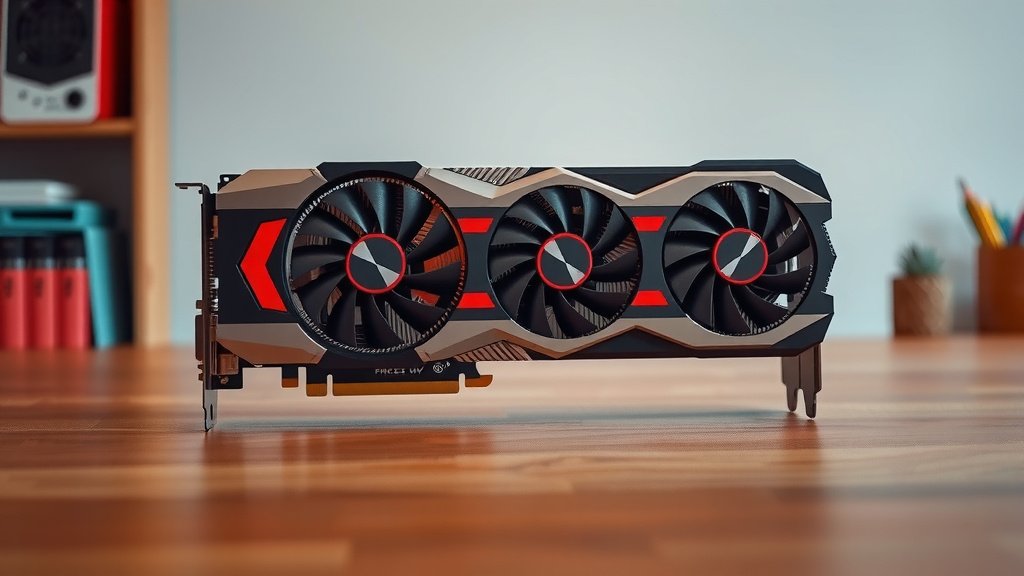
High-End Graphics Card: What It Is and Why You Need One
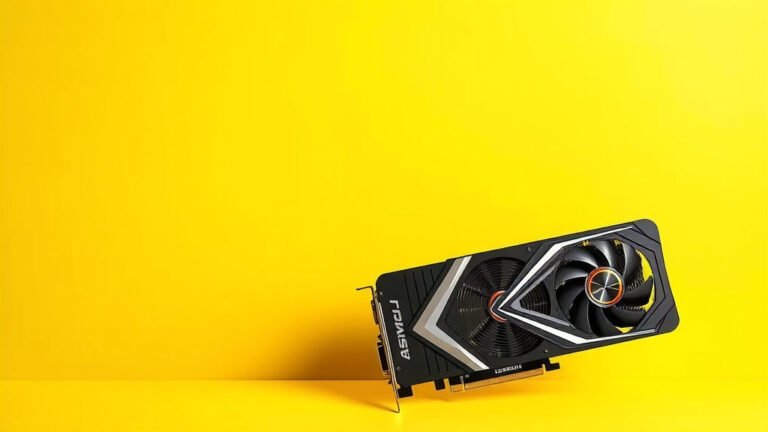
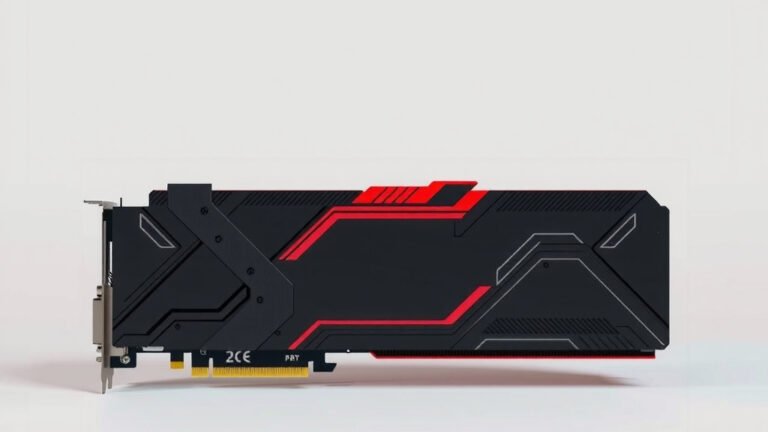
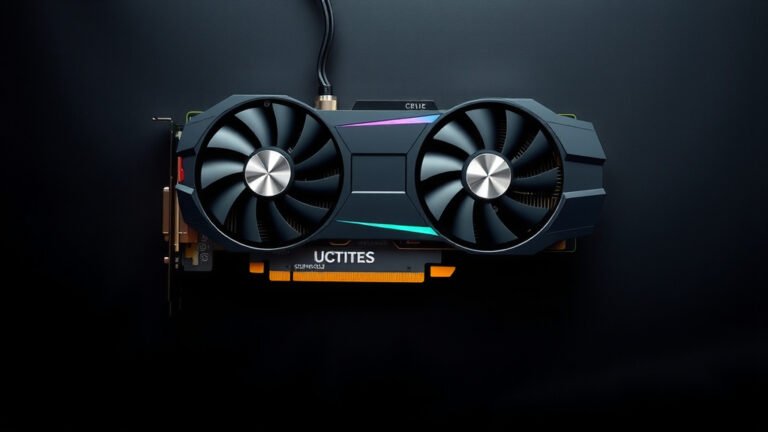
A high-end graphics card is essentially the brain for your computer’s visuals. It’s a specialized component designed to handle all the heavy lifting when it comes to rendering images, videos, and game graphics. Think of it as your PC’s dedicated artist, working hard to make everything look amazing on your screen.
When we talk about “high-end,” we mean these cards are packed with the latest technology and the most power available. They’re built for demanding tasks like playing the newest video games at the highest settings or editing professional video footage without a hitch. They often boast larger amounts of dedicated memory (VRAM) and more processing cores than their less powerful siblings.
- A high-end graphics card is a powerful PC component.
- It handles demanding visual tasks like gaming and video editing.
- These cards have the latest technology and more processing power.
- They often include more dedicated memory (VRAM) for better performance.
- You’ll notice smoother visuals and faster rendering times.
We’ve researched what makes these powerful pieces of hardware tick, and below, we’ll break down exactly what you need to know about high-end graphics cards.
Understanding What Makes a Graphics Card “High-End”
So, what exactly separates a “high-end” graphics card from the rest? It boils down to raw power, advanced features, and the ability to handle the most demanding visual tasks. Think of it as the difference between a reliable family sedan and a high-performance sports car. Both get you there, but one does it with significantly more speed and flair.
High-end cards are built with the latest manufacturing processes and the most sophisticated architectures. They pack more processing units, often called CUDA cores (for NVIDIA) or Stream Processors (for AMD). More of these means the card can perform more calculations simultaneously. This translates directly to better performance in games and faster rendering times in creative applications.
The Core Components of Graphics Card Power
When you’re looking at a high-end graphics card, several key components work together to deliver that top-tier performance. Understanding these will help you appreciate why some cards cost more and perform better.
Processing Cores: The Engine of Performance
These are the workhorses of your graphics card. The more cores a card has, the more it can process visual data at once. For gamers, this means smoother frame rates. For creators, it means quicker video exports and more responsive 3D modeling.
We found that the number of cores is often a primary indicator of a card’s potential. However, the efficiency and architecture of these cores also play a huge role. A newer generation card with fewer cores might outperform an older one with more.
Video RAM (VRAM): The Graphics Card’s Workspace
VRAM is dedicated memory on the graphics card itself. It’s where textures, frame buffers, and other visual assets are stored for quick access by the GPU. High-end cards typically feature a larger amount of VRAM.
Why is more VRAM important? Well, modern games and professional software are constantly pushing the boundaries with higher resolution textures and more complex scenes. Having ample VRAM prevents performance bottlenecks. It’s like having a bigger desk for your creative work; you can spread out more without things getting cluttered and slow.
Many sources, like tech review sites, consistently highlight VRAM capacity as a critical factor for high-resolution gaming (4K and above) and professional video editing. For instance, 4K gaming often benefits greatly from 10GB or more of VRAM.
Types of VRAM
You’ll often see terms like GDDR6 or GDDR6X. These refer to the generation of the VRAM technology. Newer generations are faster, allowing the GPU to access data more quickly, which further boosts performance.
Clock Speed: How Fast the Cores Work
Clock speed, measured in MHz or GHz, indicates how many cycles per second a core can perform. A higher clock speed generally means faster processing. Think of it as the heartbeat of the processing cores.
While clock speed is important, it’s not the only factor. A card with slightly lower clock speeds but more cores and faster VRAM can still outperform a card with higher clock speeds alone. It’s the combination that truly matters.
Features That Define “High-End” Capabilities
Beyond the raw specs, certain technologies and features are commonly found on high-end graphics cards. These are designed to enhance your visual experience and streamline demanding workflows.
Ray Tracing: Realistic Lighting and Reflections
Ray tracing is a rendering technique that simulates the physical behavior of light. This results in incredibly realistic lighting, shadows, and reflections in games and 3D applications. It’s a visually stunning feature that many high-end cards now support.
Implementing ray tracing is computationally intensive. High-end cards have specialized hardware (like RT Cores on NVIDIA cards) to handle this without crippling performance. We found that the visual difference ray tracing makes can be quite dramatic in supported titles.
AI-Powered Performance Enhancements
Artificial intelligence is revolutionizing graphics. Technologies like NVIDIA’s DLSS (Deep Learning Super Sampling) and AMD’s FSR (FidelityFX Super Resolution) use AI to upscale lower-resolution images to higher resolutions. This allows for higher frame rates with minimal perceived loss in visual quality.
These AI features are particularly beneficial for high-end gaming. They let you enjoy games at higher resolutions and with demanding graphical settings enabled. Many experts say these AI upscaling techniques are becoming essential for future-proofing your gaming experience.
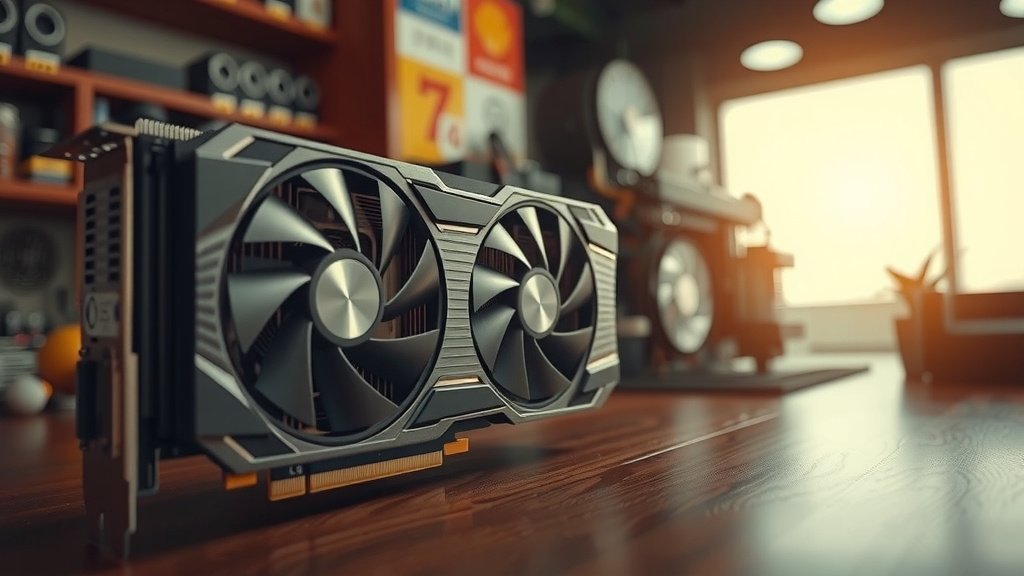
Who Needs a High-End Graphics Card?
Not everyone needs the absolute best. But if you fall into certain categories, a high-end GPU can dramatically improve your experience. Let’s break down who benefits most.
Enthusiast Gamers
If you want to play the latest AAA titles at 1440p or 4K resolutions with all the graphical settings maxed out, a high-end card is pretty much a requirement. You’re looking for high frame rates and crisp visuals to fully immerse yourself in the game world.
Content Creators and Professionals
Video editors, 3D modelers, animators, and graphic designers often rely on GPUs for accelerated rendering and processing. Tasks like rendering complex 3D scenes, exporting high-resolution video, or running demanding simulation software are significantly faster with a powerful graphics card.
We found that professionals often cite time savings as the primary benefit. If rendering a project that used to take hours now takes minutes, that’s a huge productivity boost. Many creative software suites, like Adobe Premiere Pro or Blender, specifically list recommended GPUs for optimal performance.
Virtual Reality (VR) Users
Virtual reality demands a lot of processing power to render two high-resolution images simultaneously and at a high frame rate to prevent motion sickness. High-end graphics cards are essential for a smooth and enjoyable VR experience.
AI and Machine Learning Experimenters
For those dabbling in AI development or machine learning, a powerful GPU can significantly speed up training times for models. While dedicated AI hardware exists, high-end consumer GPUs offer a more accessible entry point for many.
Key Considerations When Choosing a High-End Card
When you’ve decided a high-end graphics card is for you, keep these points in mind to make the best choice for your needs and budget.
- Resolution Goals: Are you gaming at 1080p, 1440p, or 4K? Higher resolutions demand more from your GPU.
- Target Frame Rates: Do you aim for 60 FPS, 120 FPS, or even higher? This impacts the card you’ll need.
- Software Requirements: If you use specific creative software, check its recommendations for graphics cards.
- Power Supply Unit (PSU): High-end cards consume more power. Ensure your PSU can handle the load. Many require 750W or higher.
- Case Compatibility: These cards are often large. Measure your PC case to ensure it fits physically.
Ultimately, a high-end graphics card is an investment in your visual experience, whether for entertainment or productivity. It’s the component that most directly influences how good things look and how quickly visually demanding tasks get done on your computer.
Conclusion
You now have a clear picture of what makes a graphics card “high-end.” These powerful components are built with more processing cores, faster VRAM, and advanced features like ray tracing and AI upscaling. They are designed to handle the most demanding visual tasks, from immersive gaming at high resolutions to professional content creation and VR experiences. Investing in a high-end GPU is an investment in your visual performance and productivity. If you’re looking to get the best possible visual experience from your PC, consider researching the latest high-end options that fit your specific needs and budget.
Frequently Asked Questions
Do I really need a high-end graphics card for everyday use?
For basic tasks like web browsing, email, and standard office work, a high-end graphics card is usually overkill. Your computer’s integrated graphics or a budget-friendly dedicated card will likely suffice. You’ll only notice the difference if you engage in graphically intensive activities.
How much VRAM do I need for 4K gaming?
For smooth 4K gaming, we found that at least 10GB of VRAM is highly recommended. Many modern AAA titles with ultra-high-resolution textures can even benefit from 12GB or more. Insufficient VRAM can lead to stuttering and performance drops.
What’s the difference between NVIDIA and AMD high-end cards?
Both NVIDIA and AMD offer excellent high-end graphics cards, but they often have different strengths. NVIDIA cards are known for their strong ray tracing performance and DLSS AI upscaling technology. AMD cards often provide competitive raw performance and their FSR upscaling is widely supported.
Will a high-end graphics card make my computer louder?
High-end graphics cards have powerful cooling systems to manage their heat output. While they can be louder under heavy load than less powerful cards, manufacturers continuously work to improve acoustics. Many models also offer semi-passive modes where the fans don’t spin at idle.
Can a high-end graphics card help with video editing performance?
Absolutely. Many video editing software applications are optimized to use GPU acceleration. A high-end graphics card can significantly speed up rendering times, timeline scrubbing, and the application of effects, making your editing workflow much smoother.