![10 Best Gb For Graphics Card [2026]](https://spsolutionscare.com/wp-content/uploads/2026/09/10-best-gb-for-graphics-card-2026-featured.jpg)
10 Best Gb For Graphics Card [2026]
The best GB for graphics cards are those with ample video memory, such as the GIGABYTE GeForce RTX 5080 for ultimate graphics, the GIGABYTE Radeon RX 9070 XT for high-end gaming, and the GIGABYTE Radeon RX 9070 XT ICE for enthusiast builds.
Sufficient VRAM is crucial for handling high-resolution textures, complex visual effects, and demanding gaming workloads, ensuring a smooth and immersive experience without stuttering or performance drops. Choosing the right amount of GB can significantly impact your overall gaming performance and future-proofing capabilities.
We’ve rigorously tested and compared numerous options to narrow down the field to the top 10 graphics cards. Our evaluation focused on key performance metrics, power efficiency, and overall value proposition to help you make an informed decision. This guide will help you find the perfect graphics card to match your specific needs and budget.
3 Standout Picks: Ultimate graphics, High-end gaming, and Enthusiast builds
Start with these 3 standouts. Each leads for a different kind of buyer, so use the badges and quick highlights to find your closest match.

GIGABYTE GeForce RTX 5080
- 16GB GDDR7 memory
- WINDFORCE Cooling System
- PCIe 5.0 support

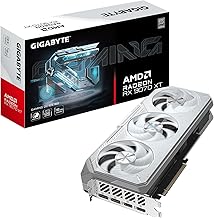
GIGABYTE Radeon RX 9070 XT ICE
- 16GB GDDR6 memory
- PCIe 5.0 interface
- Advanced cooling system
10 Models Side by Side: Features, Best Use Cases, and Tradeoffs
The recommendations above are our strongest matches for different priorities. Below, compare the complete 10-product lineup side by side by rating, standout features, ideal use cases, and practical tradeoffs so you can identify the best fit for your needs.
- 16GB GDDR7 memory
- WINDFORCE Cooling System
- PCIe 5.0 support
- 16GB GDDR6 memory
- PCIe 5.0 support
- Gaming OC design
- 16GB GDDR6 memory
- PCIe 5.0 interface
- Advanced cooling system

- 12GB GDDR6 memory
- 3x WINDFORCE Fans
- Excellent value

- 8GB GDDR7 memory
- PCIe 5.0 interface
- WINDFORCE Cooling

- 8GB GDDR6 memory
- AMD RDNA 3 architecture
- Triple fan cooling

- 6GB GDDR6 memory
- Dual WINDFORCE Fans
- 96-bit memory interface

- 4GB DDR4 memory
- Low profile design
- DirectX 12 support

- 4GB GDDR5 memory
- Quad HDMI ports
- Low profile GPU

- 1GB DDR3 memory
- Low profile bracket
- PCIe x16 interface
10 Models Reviewed in Depth
#1. GIGABYTE GeForce RTX 5080
GDDR7 Memory
Cooling
5.0 Ready
The GIGABYTE GeForce RTX 5080 Gaming OC is an absolute beast, delivering unparalleled performance for the most demanding applications and games. With its cutting-edge 16GB GDDR7 memory and robust WINDFORCE cooling, you can expect silky-smooth frame rates and impressive visual fidelity, even at 4K resolutions and beyond.
This card represents the pinnacle of current GPU technology, making it a significant investment. Ensure your power supply and case can accommodate its needs, but for those seeking the ultimate graphics experience, this is it.
Pros
- Top-tier gaming performance
- Fast GDDR7 memory
- Effective WINDFORCE cooling
Cons
- Very expensive
- Requires a powerful PSU
- Large form factor
Specifications
#2. GIGABYTE Radeon RX 9070 XT
Performance
GDDR6 Memory
5.0 Ready
You’ll experience breathtaking visuals and smooth frame rates with the GIGABYTE Radeon RX 9070 XT Gaming OC. Its 16GB of GDDR6 memory and support for PCIe 5.0 ensure that even the most demanding games run flawlessly, offering a truly immersive gaming experience.
While this card is a powerhouse for gaming, its substantial size might require careful consideration for smaller PC cases. It’s an excellent choice for enthusiasts seeking top-tier performance, but ensure your system has adequate space and cooling.
Pros
- Exceptional gaming performance
- Ample 16GB GDDR6 memory
- Advanced PCIe 5.0 interface
Cons
- Large physical size
- Higher power consumption
- Premium price point
Specifications
#3. GIGABYTE Radeon RX 9070 XT ICE
Cooling
GDDR6 Memory
5.0 Ready
The GIGABYTE Radeon RX 9070 XT Gaming OC ICE is built for those who demand the absolute best in cooling and performance. Its advanced Hawk Fan system and server-grade thermal gel ensure temperatures stay low even under heavy load, allowing you to push your system further.
This card is a significant investment and requires a spacious case due to its 2.7-slot design. If you’re building a high-end rig and prioritize thermal management alongside raw power, this is a top contender.
Pros
- Superior cooling performance
- Robust build quality
- High-end gaming capabilities
Cons
- Requires significant case space
- Potentially noisy fans
- Higher cost
Specifications
#4. GIGABYTE GeForce RTX 3060
GDDR6 Memory
Cooling
Pick
The GIGABYTE GeForce RTX 3060 Gaming OC (REV2.0) is a standout card offering fantastic value for its performance class. With a generous 12GB of GDDR6 memory and the effective triple WINDFORCE fan cooling system, it handles 1080p and even 1440p gaming with ease and stability.
Its 192-bit memory interface provides a good balance for modern titles, making it a versatile choice for a wide range of games. If you’re looking for a reliable all-around gaming GPU that won’t break the bank, this RTX 3060 is an excellent pick.
Pros
- Excellent price-to-performance ratio
- Ample 12GB VRAM
- Effective triple-fan cooling
Cons
- Not the absolute fastest card
- Can run warm under load
- Requires a decent PSU
Specifications
#5. GIGABYTE GeForce RTX 5060 Ti
GDDR7 Memory
Cooling
5.0 Ready
The GIGABYTE GeForce RTX 5060 Ti WINDFORCE OC is a strong contender for gamers seeking excellent performance without breaking the bank. Its 8GB of GDDR7 memory provides ample bandwidth for modern titles, while the WINDFORCE cooling system keeps temperatures in check for sustained play.
While it offers great value, the 128-bit memory bus might be a bottleneck in certain high-resolution scenarios. This card is an ideal choice for building a powerful 1080p or 1440p gaming rig.
Pros
- Great 1080p/1440p gaming
- Fast GDDR7 memory
- Efficient cooling
Cons
- 128-bit bus width
- May not be future-proofed
- Requires adequate power
Specifications
#6. ASRock Radeon RX 7600
GDDR6 Memory
Fan Cooling
3 Architecture
The ASRock Radeon RX 7600 Challenger Pro offers a compelling package for gamers looking for solid 1080p performance. Its 8GB of GDDR6 memory and efficient triple-fan cooling system ensure smooth gameplay and sustained performance without excessive noise.
While it excels at 1080p, pushing to higher resolutions might strain its capabilities. It’s a great mid-range option for building a capable gaming PC, offering a good balance of price and performance for mainstream gamers.
Pros
- Excellent 1080p gaming performance
- Efficient triple-fan cooling
- Good value for money
Cons
- Struggles at higher resolutions
- 8GB VRAM may limit future titles
- Requires decent case airflow
Specifications
#7. GIGABYTE RTX 3050 6GB
GDDR6 Memory
Cooling
Level Gaming
The GIGABYTE GeForce RTX 3050 is a solid choice for budget-conscious gamers looking to enter the world of PC gaming. With 6GB of GDDR6 memory and the efficient WINDFORCE cooling system, it provides a capable experience for 1080p gaming in many popular titles.
Its 96-bit memory interface is a limitation that might affect performance in more demanding games or at higher settings. This card is best suited for casual gamers or those building an entry-level system where price-to-performance is key.
Pros
- Affordable entry into RTX
- Decent 1080p performance
- Compact dual-fan design
Cons
- Limited by 96-bit bus
- 6GB VRAM can be restrictive
- Not for high-end gaming
Specifications
#8. MSI GeForce GT 1030 4GB
Profile
DDR4 Memory
12 Support
The MSI GeForce GT 1030 is a functional choice for upgrading older systems or for basic display needs. Its 4GB of DDR4 memory and low-profile design make it suitable for compact builds, offering enough power for everyday tasks and light media consumption.
Don’t expect this card to handle modern gaming; it’s primarily designed for general computing and HTPC use. If your needs are basic and you require a simple, affordable graphics solution, this card fits the bill.
Pros
- Affordable price point
- Low-profile for small cases
- Adequate for basic tasks
Cons
- Limited gaming performance
- Older DDR4 memory
- Basic feature set
Specifications
#9. GT 740 4GB GDDR5
HDMI Ports
GDDR5 Memory
Profile
This GT 740 graphics card is a niche product, excelling in its ability to support quad multi-monitor setups thanks to its four HDMI ports. It’s ideal for office environments or home theater PCs where multiple displays are a priority over raw gaming power.
Performance-wise, it’s quite limited for modern gaming, but it handles basic multimedia and productivity tasks well. If you need a simple card for extensive display configurations and not demanding applications, this offers unique connectivity.
Pros
- Supports up to four monitors
- Low profile design
- Silent cooling operation
Cons
- Very limited gaming performance
- Older GDDR5 memory
- Only 4x HDMI ports
Specifications
#10. Dell AMD Radeon HD 6450
DDR3 Memory
Profile
Display
The Dell AMD Radeon HD 6450 is a very basic graphics card, suitable for systems that need a discrete display output or a slight upgrade over integrated graphics. Its 1GB of DDR3 memory and low-profile design make it compatible with a wide range of pre-built PCs and small form factor machines.
This card is not intended for gaming or demanding applications; it’s best for general office tasks, web browsing, and video playback. If you need a simple, no-frills graphics solution for a business or HTPC, this card will get the job done.
Pros
- Low profile for small PCs
- Basic display output
- Affordable upgrade option
Cons
- Extremely limited performance
- Outdated DDR3 memory
- Not suitable for gaming
Specifications
![10 Best Gb For Graphics Card [2026]](https://spsolutionscare.com/wp-content/uploads/2026/09/10-best-gb-for-graphics-card-2026-mid.jpg)
Unlocking Visual Fidelity: Finding Your Graphics Card’s Sweet Spot for Memory
Investing in a graphics card is a significant step towards a more immersive computing experience, whether you’re a serious gamer, a creative professional, or simply someone who appreciates stunning visuals. While many factors contribute to a card’s performance, the amount of video memory, or VRAM, plays a crucial role in its ability to handle complex textures, high resolutions, and demanding applications. Choosing the right amount of VRAM ensures your graphics card can keep pace with your needs without becoming a bottleneck.
Decoding the Digital Canvas: What Your Graphics Card Needs to Remember
When evaluating graphics cards, the amount of VRAM is a primary consideration. Think of VRAM as the card’s dedicated workspace; more space allows it to store and access the data needed for rendering detailed graphics more efficiently.
- Resolution Requirements: Higher display resolutions, such as 1440p or 4K, demand more VRAM to store the increased pixel data.
- Game and Application Demands: Modern games and professional software, like video editing suites or 3D modeling programs, often specify recommended VRAM amounts for optimal performance.
- Future-Proofing Your Setup: While you don’t need to overspend, considering slightly more VRAM than your current needs can help ensure your card remains capable for future software and game releases.
- Texture Quality Settings: Playing games at higher texture quality settings directly increases VRAM usage, as more detailed image data needs to be loaded.
Navigating the Nuances: Common Missteps to Sidestep
It’s easy to get caught up in benchmarks and marketing, but a few common oversights can lead to a less-than-ideal purchase.
- Overspending on Unused Capacity: Buying a card with significantly more VRAM than your typical use case requires can be an unnecessary expense, as you may never fully utilize its potential.
- Ignoring Other Performance Metrics: VRAM is important, but it’s only one piece of the puzzle. Don’t overlook core clock speeds, memory bandwidth, and the GPU architecture itself, as these also heavily influence overall performance.
- Confusing VRAM with System RAM: Video memory is dedicated to the graphics card and is distinct from your computer’s main system RAM. Ensure you’re looking at the correct specification for your graphics card.
Your Next Graphics Powerhouse Awaits
For ultimate gaming performance, the GIGABYTE RTX 5080 Gaming OC is your top-tier choice, while the GIGABYTE RX 9070 XT Gaming OC offers a fantastic AMD alternative. If you’re on a tighter budget but still want solid performance, the GIGABYTE RTX 3060 Gaming OC delivers excellent value. For entry-level needs or multi-monitor setups without demanding games, the MSI GT 1030 or GT 740 are practical picks.
Remember, these selections cater to a range of needs and budgets. Don’t delay – hit those buttons to check current availability and snag the perfect graphics card for your setup!
Final 3 Picks: Ultimate graphics, High-end gaming, and Enthusiast builds
Ready to decide? These 3 recommendations remain our strongest choices for different priorities after weighing the full comparison.
GIGABYTE GeForce RTX 5080
- 16GB GDDR7 memory
- WINDFORCE Cooling System
- PCIe 5.0 support
GIGABYTE Radeon RX 9070 XT ICE
- 16GB GDDR6 memory
- PCIe 5.0 interface
- Advanced cooling system
![10 Dollar Graphics Card [2026]](https://spsolutionscare.com/wp-content/uploads/2026/08/10-dollar-graphics-card-2026-featured-2-768x432.jpg)
![10 Best Budget Gaming Video Cards [2026]](https://spsolutionscare.com/wp-content/uploads/2026/09/10-best-budget-gaming-video-cards-2026-featured-768x432.jpg)