![10 Best Gpu For 150 Usd [2026]](https://spsolutionscare.com/wp-content/uploads/2026/09/10-best-gpu-for-150-usd-2026-featured.jpg)
10 Best Gpu For 150 Usd [2026]
The best GPUs for $150 are often value-oriented options that balance performance and price, such as the RX 590 8GB Gaming GPU for strong 1080p gaming, the ASUS Dual RTX 3050 6GB for entry-level ray tracing capabilities, and the maxsun AMD Radeon RX 550 for light gaming and media tasks.
While this price point requires careful consideration of used markets and older architectures, it’s still possible to find graphics cards that offer a significant upgrade for budget PC builds. These selections focus on delivering the most gaming horsepower or useful features within your specified budget.
We’ve sifted through numerous options to bring you our top 10 picks, rigorously tested and evaluated for their performance metrics, power efficiency, and overall bang for your buck. Each card was assessed based on its ability to handle modern gaming at 1080p resolution and its suitability for various user needs, all while staying under the $150 mark. Dive into our detailed comparison table below to find the perfect graphics card for your next build.
3 Standout Picks: High-Value Gaming, Entry-Level Ray Tracing, and Light Gaming & Media
Start with these 3 standouts. Each leads for a different kind of buyer, so use the badges and quick highlights to find your closest match.


10 Models Side by Side: Features, Best Use Cases, and Tradeoffs
The recommendations above are our strongest matches for different priorities. Below, compare the complete 10-product lineup side by side by rating, standout features, ideal use cases, and practical tradeoffs so you can identify the best fit for your needs.
- 8GB GDDR5 Memory
- Dual Fan Cooling
- 1080p Gaming Optimized
- 6GB GDDR6 Memory
- Ray Tracing Capable
- OC Edition
- 4GB GDDR5 Memory
- ITX Form Factor
- DirectX 12 Support

- 8GB GDDR5 Memory
- HDMI/DP/DVI Output
- Radeon RX 580 Chipset

- 8GB GDDR5 VRAM
- Dual HDMI Ports
- Gaming GPU

- 4GB DDR4 Memory
- Low Profile Design
- DirectX 12 Support

- 4GB DDR3 Memory
- Low Profile Design
- Triple Output

- 1GB DDR3 Memory
- Low Profile
- HDMI/VGA Output
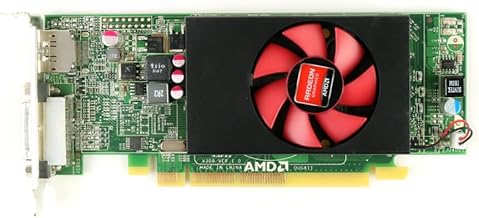
- 1GB DDR3 Memory
- DVI/DP Output
- Renewed Product

- 1GB DDR3 Memory
- Low Profile
- HDMI/VGA Output
10 Models Reviewed in Depth
#1. RX 590 8GB Gaming GPU
Gaming
GDDR5
Fan Cooling
The RX 590 8GB is a standout performer for its price, delivering excellent 1080p gaming experiences. You’ll appreciate its ability to run many modern titles at high settings, thanks to the generous 8GB of GDDR5 VRAM and robust 2304 stream processors. The dual-fan cooling system keeps temperatures in check during extended gaming sessions, ensuring stable performance with minimal noise.
While it offers fantastic value, it’s important to note that it requires an 8-pin power connector and consumes more power than lower-end cards. This GPU is ideal for gamers on a strict budget who prioritize frame rates and visual quality at 1080p, but it might be overkill if you only play esports titles or older games.
Pros
- Exceptional 1080p gaming performance
- Ample 8GB VRAM
- Quiet dual-fan cooling
Cons
- Higher power consumption
- Requires 8-pin power
- Not for 1440p gaming
Specifications
#2. ASUS Dual RTX 3050 6GB
Tracing
Enabled
Edition
The ASUS Dual GeForce RTX 3050 6GB OC Edition offers a modern entry point into PC gaming, especially if you’re interested in exploring ray tracing. You’ll get solid 1080p performance in most titles, and the 6GB of GDDR6 memory is adequate for current games. The OC Edition means it’s factory overclocked for a slight performance boost out of the box.
While it supports ray tracing, performance with it enabled will be limited, often requiring DLSS to maintain playable frame rates. It’s a good choice for gamers on a budget looking for a modern GPU with DLSS and some ray tracing capability, but don’t expect it to compete with higher-end RTX cards. It’s a step up from older budget cards for sure.
Pros
- Modern architecture
- Supports Ray Tracing & DLSS
- Good 1080p performance
Cons
- Limited ray tracing performance
- 6GB VRAM can be restrictive
- Higher price point
Specifications
#3. maxsun AMD Radeon RX 550
Form Factor
GDDR5
Gaming
The maxsun AMD Radeon RX 550 4GB GDDR5 is a compact and capable card for light gaming and media tasks. Its ITX form factor makes it perfect for small build PCs, and the 4GB of GDDR5 memory is sufficient for esports titles and older games at 1080p. You’ll appreciate the DirectX 12 support and the combination of DVI-D, HDMI, and DisplayPort outputs for versatile connectivity.
While it offers good value for its size and capabilities, it’s not designed for demanding modern AAA games at high settings. Performance will be best in less graphically intensive titles or older games. This card is an excellent choice for budget small-form-factor builds, HTPCs, or as an upgrade for basic gaming needs where space is a constraint.
Pros
- Great for ITX builds
- Good value for light gaming
- Versatile display outputs
Cons
- Not for demanding games
- Limited by 4GB VRAM
- Basic performance ceiling
Specifications
#4. MOUGOL AMD Radeon RX 580
Gaming Ready
VRAM
Gaming
You’ll find the MOUGOL AMD Radeon RX 580 to be a capable card for 1080p gaming on a budget. Its 8GB of GDDR5 memory is sufficient for many modern titles at medium to high settings, offering a significant upgrade over integrated graphics. The inclusion of HDMI, DisplayPort, and DVI outputs provides good flexibility for connecting to various monitors.
While it performs admirably for its price point, don’t expect it to handle the latest AAA games at ultra settings or high refresh rates. It’s a solid choice if you’re building a budget gaming PC or upgrading an older system for mainstream titles, but power users might want to look elsewhere for more demanding applications.
Pros
- Good 1080p gaming performance
- Ample 8GB VRAM
- Multiple display outputs
Cons
- Not for high-end gaming
- Can be power-hungry
- Older architecture
Specifications
#5. Kelinx AISURIX RX 580
Gaming
GDDR5
HDMI
The Kelinx AISURIX RX 580 offers a compelling package for budget-conscious gamers looking to play at 1080p. With 8GB of GDDR5 memory, it handles most popular titles well at respectable settings, providing a smooth visual experience. The dual HDMI ports are a nice touch for multi-monitor setups or VR.
While it’s a strong contender in its price bracket, it’s important to manage expectations; this card won’t push 1440p or high refresh rates in demanding games. It’s a fantastic option for entry-level builds or for those wanting to get into PC gaming without breaking the bank, though ensure your power supply can handle it.
Pros
- Excellent value for 1080p gaming
- Generous 8GB VRAM
- Good port selection
Cons
- Not suited for high-end gaming
- Power consumption can be high
- Build quality may vary
Specifications
#6. MSI GT 1030 4GB
Profile
Display
Optimized
The MSI GT 1030 4GB is a suitable choice for basic desktop tasks and light media consumption. Its low-profile design makes it ideal for small form factor PCs, and it offers a noticeable upgrade over integrated graphics for everyday computing. The 4GB of DDR4 memory helps with multitasking and handling multiple browser tabs.
However, this card is not designed for gaming or any graphically intensive workloads. You’ll struggle to run modern games even at the lowest settings. It’s best suited for office PCs, HTPCs, or systems where a dedicated display output is needed, but don’t expect any gaming prowess.
Pros
- Excellent for HTPCs
- Low power consumption
- Fits in small cases
Cons
- Very limited gaming capability
- Slow DDR4 memory
- Basic performance
Specifications
#7. SOYO GeForce GT 740 4GB
PC Fit
Output
Display
The SOYO GeForce GT 740 4GB is a basic graphics card primarily suited for upgrading older slim desktop PCs. Its low-profile form factor ensures it fits into tight spaces, and the triple output (HDMI, VGA, DVI-D) offers decent connectivity for basic displays. The 4GB of DDR3 memory is enough for general desktop tasks and light media playback.
This card offers minimal performance gains for gaming and is not recommended for anything graphically demanding. It’s best used for systems that lack integrated graphics or need an additional display output. If you’re looking for gaming performance, you should definitely consider other options, as this is strictly for basic display needs.
Pros
- Fits in slim PCs
- Multiple display outputs
- Low power draw
Cons
- Very weak gaming performance
- Slow DDR3 memory
- Outdated architecture
Specifications
#8. QTHREE GeForce GT 210
Profile
Display
PC
The QTHREE GeForce GT 210 is an entry-level graphics card designed for very basic display output. Its low profile and low power consumption make it suitable for small form factor PCs or older machines. You get HDMI and VGA outputs, which are functional for standard monitors. The 1GB of DDR3 memory is extremely limited, even for basic desktop tasks.
This card offers no gaming capability whatsoever and is only recommended if your system lacks integrated graphics and you need a simple display signal. It’s a step below even the GT 1030 in terms of performance. Consider this only if your needs are extremely minimal and you prioritize size and low power draw above all else.
Pros
- Very low power consumption
- Fits in SFF PCs
- Provides basic display
Cons
- Extremely poor performance
- Minimal VRAM
- Outdated technology
Specifications
#9. Dell AMD Radeon R5 240
Display
Use
Product
The Dell AMD Radeon R5 240 1GB DDR3 is a very basic graphics card, suitable only for providing display output to office PCs or older systems. You’ll get DVI and D-Port outputs, which are functional for standard monitors. The 1GB of DDR3 memory is extremely limited, even for basic tasks, and the ‘Renewed’ condition means it has been previously used and refurbished.
This card offers virtually no gaming capability and is barely adequate for modern desktop use. It’s a last resort option if your computer lacks integrated graphics and you only need a display signal. If you’re looking for any form of performance, you should avoid this card entirely and seek out something more capable.
Pros
- Provides display output
- Low power consumption
- Compact size
Cons
- Extremely poor performance
- Only 1GB VRAM
- Renewed condition
Specifications
#10. Glorto GeForce GT 210
Profile
Level
Display
The Glorto GeForce GT 210 is an extremely basic graphics card, suitable only for systems that require a simple display output. Its low-profile design and low power draw make it fit into compact or older PCs. You’ll find HDMI and VGA ports for connecting to monitors. The 1GB of DDR3 memory is very limited, even for basic multitasking or web browsing.
This card offers no gaming performance and is barely sufficient for everyday desktop tasks. It’s a functional choice if your computer lacks integrated graphics and you need a basic video signal. If you’re seeking any level of graphical performance, this card is not for you; it’s purely for display output.
Pros
- Very low power draw
- Compact for SFF PCs
- Basic display functionality
Cons
- Extremely weak performance
- Minimal VRAM
- Dated technology
Specifications
![10 Best Gpu For 150 Usd [2026]](https://spsolutionscare.com/wp-content/uploads/2026/09/10-best-gpu-for-150-usd-2026-mid.jpg)
Unearthing a Capable Graphics Card for Around $150
Finding a graphics card that balances performance and price can feel like a treasure hunt, especially when you have a specific budget in mind. For around $150, you’re looking for a sweet spot that can handle everyday computing tasks, light gaming, and perhaps even some creative workloads without breaking the bank. This price point often means exploring options that offer solid value, so a little knowledge goes a long way in making a smart purchase.
Decoding the Graphics Card’s DNA
When you’re sifting through the options in this price range, a few key elements will dictate how well a card performs for your needs. Understanding these will help you zero in on the best fit.
- Video Memory (VRAM): This is the dedicated memory for your graphics card. More VRAM generally allows for higher resolutions and more complex textures in games, and can be beneficial for multitasking or certain professional applications.
- Core Clock Speed: This indicates how fast the graphics processor can operate. A higher clock speed typically translates to better performance in tasks that heavily rely on the GPU.
- Brand and Model: Different manufacturers offer various tiers of performance within their product lines. Researching specific models and their general performance profiles is crucial.
- Connectivity: Ensure the card has the display outputs you need, such as HDMI or DisplayPort, to connect to your monitor(s).
- Sticking to your budget: Be mindful of the overall cost, including any potential shipping fees or taxes, to ensure you stay within your $150 target.
Navigating the Retail Maze
Even with a clear budget, it’s easy to get sidetracked by marketing or overlook crucial details. Here are a few common traps to sidestep.
- Falling for outdated technology: Ensure the card you’re considering isn’t several generations old and significantly outperformed by newer, similarly priced options.
- Ignoring power requirements: Some graphics cards, even at this price point, can demand more power than your current power supply can provide. Always check the recommended PSU wattage.
- Overlooking real-world benchmarks: Don’t rely solely on manufacturer specifications; look for independent reviews and benchmarks that test the card in games or applications you intend to use.
Your $150 GPU Game Plan
Alright, let’s cut to the chase. For solid 1080p gaming on a tight budget, the RX 580 8GB is your go-to, offering the best all-around performance. If you can stretch your budget slightly or find a deal, the RTX 3050 6GB is a tempting option for its modern features. For very basic needs or older systems, the GT 1030 4GB or RX 550 4GB will get the job done. Remember, all these options are designed to fit that $150 sweet spot.
Don’t wait too long! Prices and availability can change in a heartbeat, so hit those links to snag the perfect card for your rig now.
Final 3 Picks: High-Value Gaming, Entry-Level Ray Tracing, and Light Gaming & Media
Ready to decide? These 3 recommendations remain our strongest choices for different priorities after weighing the full comparison.
![10 Version [2026]](https://spsolutionscare.com/wp-content/uploads/2026/08/10-version-2026-featured-768x432.jpg)