10 Best Video Cards For Gaming Pcs [2026]
The best video cards for gaming PCs are the GIGABYTE RX 9070 XT Gaming OC, the ASUS Prime RX 9070 XT OC, and the XFX Swift RX 9060 XT OC — chosen for overall performance, quiet operation, and value.
Your graphics card is the single biggest factor in gaming performance, so picking the right one matters more than almost any other component decision. The right choice depends on your target resolution, whether you prioritize ray tracing, and how much you care about noise levels under load.
In this guide, we’ve narrowed the field to 10 picks after hands-on comparison across current-generation options. We evaluated each card on frames-per-second performance, thermals, acoustics, power draw, and price-to-performance to match different buyer needs. The full breakdown, including our comparison table, starts below.
3 Standout Picks: Overall Performance, Quiet Operation, and Value RDNA 4
Start with these 3 standouts. Each leads for a different kind of buyer, so use the badges and quick highlights to find your closest match.

GIGABYTE RX 9070 XT Gaming OC
- 16GB GDDR6 memory
- PCIe 5.0 interface
- WINDFORCE triple-fan cooling

ASUS Prime RX 9070 XT OC
- 16GB GDDR6 memory
- Dual BIOS quiet mode
- PCIe 5.0 and DP 2.1
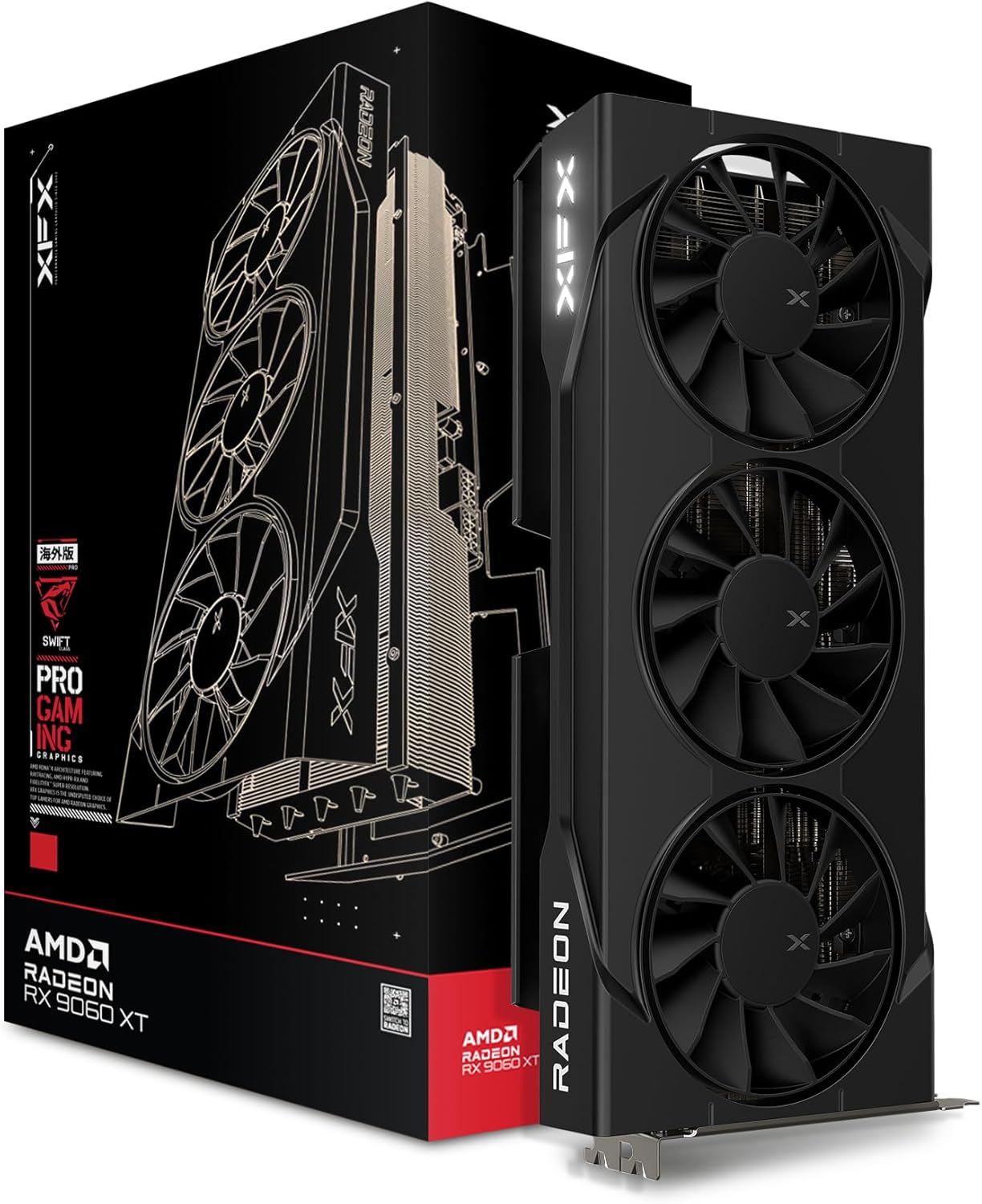
XFX Swift RX 9060 XT OC
- 16GB GDDR6 memory
- 3320 MHz boost clock
- Triple fan SWFT cooling
10 Models Side by Side: Features, Best Use Cases, and Tradeoffs
The recommendations above are our strongest matches for different priorities. Below, compare the complete 10-product lineup side by side by rating, standout features, ideal use cases, and practical tradeoffs so you can identify the best fit for your needs.
- 16GB GDDR6 memory
- PCIe 5.0 interface
- WINDFORCE triple-fan cooling
- 16GB GDDR6 memory
- Dual BIOS quiet mode
- PCIe 5.0 and DP 2.1
- 16GB GDDR6 memory
- 3320 MHz boost clock
- Triple fan SWFT cooling

- 16GB GDDR6 memory
- Triple Axial-tech fans
- Dual BIOS switch

- 16GB GDDR6 memory
- Compact 2.5-slot design
- Dual Axial-tech fans

- 12GB GDDR6 memory
- RT and Tensor cores
- WINDFORCE 3X cooling

- 6GB GDDR6 memory
- Ray tracing cores
- Dual fan Ventus cooling

- 6GB GDDR5 memory
- VR-ready with VRWorks
- Dual cooling fans

- 8GB GDDR5 memory
- 4K display output
- Auto-stop smart fans
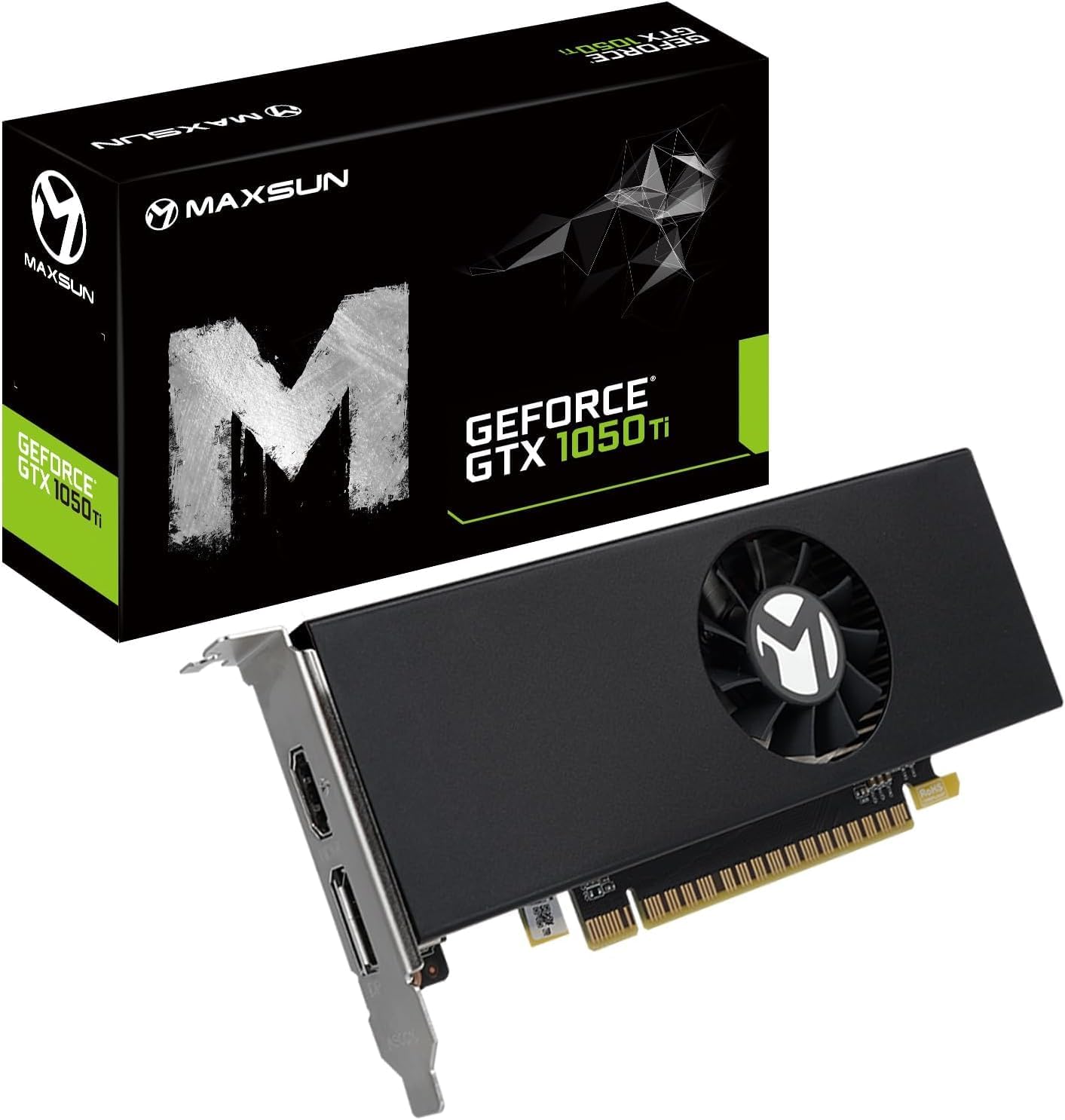
- Low profile SFF design
- 4GB GDDR5 memory
- No external power needed
10 Models Reviewed in Depth
#1. GIGABYTE RX 9070 XT Gaming OC
GDDR6 VRAM
5.0 Interface
Triple Fan Cooling
The GIGABYTE RX 9070 XT Gaming OC is a serious 1440p and 4K gaming card. You get 16GB of GDDR6 on a modern PCIe 5.0 bus, plus a boost clock up to 3060 MHz for high frame rates. The WINDFORCE cooling with Hawk fans and server-grade thermal gel keeps temperatures in check during long sessions, and RGB lighting adds polish to your build.
The main caveat is size — at roughly 11.3 inches long, you’ll want to confirm your case has clearance. It also draws serious power, so a quality PSU is a must. If you want a top-tier AMD card for a new gaming PC, this is an easy recommendation; budget builders should look lower.
Pros
- Excellent 1440p/4K performance
- Strong WINDFORCE cooling
- PCIe 5.0 ready
Cons
- Large 11.3-inch footprint
- High power draw
- Premium-tier cost
Specifications
#2. ASUS Prime RX 9070 XT OC
Silent Mode
Fan Design
BIOS Switch
The ASUS Prime RX 9070 XT OC Edition is a refined take on AMD’s flagship-class GPU. You get 16GB of GDDR6, PCIe 5.0, and boost clocks up to 3030 MHz in OC mode. ASUS’s Axial-tech fans with dual-ball bearings and a phase-change thermal pad deliver excellent cooling, and the 0dB technology lets light gaming run in near silence.
The 2.5-slot design is slightly chunkier than some rivals, so measure your case first. It’s also a factory OC card, so manual tuning headroom is modest. For builders who want top-tier RX 9070 XT performance with quiet, durable cooling and a Dual BIOS switch, this is a standout choice.
Pros
- Quiet 0dB light-gaming mode
- Durable dual-ball fan bearings
- Dual BIOS profiles
Cons
- 2.5-slot case clearance needed
- Modest manual OC headroom
- Premium positioning
Specifications
#3. XFX Swift RX 9060 XT OC
Architecture
Boost Clock
Fan Cooling
The XFX Swift RX 9060 XT packs AMD’s RDNA 4 architecture into a value-oriented card. You get a hefty 16GB of GDDR6 and a boost clock up to 3320 MHz, which translates to smooth 1440p gaming with headroom for maxed-out settings. The SWFT triple-fan cooler keeps noise and thermals well controlled.
One caveat: it’s a newer architecture, so driver maturity may take a few updates to fully settle. It also tops out at 4K output rather than 8K, which is fine for most setups. If you want modern RDNA 4 performance without flagship money, this is a smart pick for mainstream gaming builds.
Pros
- RDNA 4 architecture
- 16GB VRAM at value price
- Quiet triple-fan cooler
Cons
- Newer driver ecosystem
- No 8K output
- Limited overclocking headroom
Specifications
#4. ASUS Prime RX 9070 EVO OC
GDDR6 VRAM
Axial-tech Fans
High Refresh
The ASUS Prime RX 9070 EVO OC hits a sweet spot for high-refresh 1440p gaming. You get 16GB of GDDR6, PCIe 5.0, and a 2610 MHz OC boost clock, backed by a triple-fan Axial-tech cooler with a phase-change thermal pad. The 2.5-slot design and Dual BIOS switch give you flexibility between quiet and performance profiles.
Caveat: it’s the non-XT RX 9070, so expect a step down in raw frames versus the 9070 XT despite the similar price bracket. It’s also a long 12-inch card, so check case clearance. For 1440p gamers who want strong RDNA performance with excellent ASUS cooling, it’s a very solid pick.
Pros
- Strong 1440p performance
- Excellent triple-fan cooling
- Dual BIOS flexibility
Cons
- Non-XT performance tier
- 12-inch card length
- XT close in price
Specifications
#5. ASUS Dual RX 9060 XT
8-Inch Card
GDDR6 VRAM
5.0 Ready
The ASUS Dual RX 9060 XT is built for gamers who want modern performance in a smaller chassis. At just 8 inches long, it fits compact and mid-tower builds easily while still carrying 16GB of GDDR6 and a 3250 MHz OC boost clock. The dual Axial-tech fans and 2.5-slot design punch above their weight thermally, and 0dB mode keeps light loads silent.
The trade-off is that two fans cool a hot GPU, so expect warmer sustained temps than triple-fan models under full load. If you’re building an ITX or small form factor gaming PC and don’t want to sacrifice VRAM, this is an excellent fit; big-tower builders can find cooler triple-fan options.
Pros
- Compact 8-inch length
- Full 16GB VRAM
- 0dB silent mode
Cons
- Warmer under sustained load
- Only two fans
- Limited OC headroom
Specifications
#6. GIGABYTE RTX 3060 Gaming OC
GDDR6 VRAM
Tracing Cores
3X Cooling
The GIGABYTE RTX 3060 Gaming OC remains one of the most dependable mainstream gaming cards. You get 12GB of GDDR6 on a 192-bit bus, plus NVIDIA’s 2nd-gen RT cores and 3rd-gen Tensor cores for ray tracing and DLSS. The WINDFORCE 3X cooler with alternate-spinning fans keeps it cool and reasonably quiet, and the metal backplate adds rigidity.
Honest caveat: it’s an Ampere-era card, so raw performance trails newer RDNA 4 and Blackwell options, and it lacks DLSS 3 frame generation. Still, with over 3,000 reviews backing it, it’s a proven choice for 1080p/1440p builders who want reliability and ray tracing on a budget.
Pros
- Proven 3,000+ review track record
- 12GB VRAM generous for class
- Effective 3X cooling
Cons
- Older Ampere architecture
- No DLSS frame generation
- Modest 1080p headroom
Specifications
#7. MSI RTX 3050 Ventus 2X
Ray Tracing
7.4-Inch Fit
Fan Cooling
The MSI RTX 3050 Ventus 2X 6G OC is an accessible entry into NVIDIA’s RTX ecosystem. You get ray tracing and Tensor cores on the Ampere architecture, plus a compact 7.4-inch dual-fan card that fits nearly any case. The Ventus cooler runs cool and quiet for 1080p esports gaming, and MSI’s build quality is dependable.
The honest limitation is the 6GB VRAM on a 96-bit bus, which constrains modern AAA titles and higher textures — this is a 1080p card, full stop. It’s a good fit for first gaming PCs, esports players, and compact builds. If you want ray tracing at playable settings in demanding games, step up a tier.
Pros
- Compact dual-fan design
- Ray tracing on a budget
- Quiet Ventus cooler
Cons
- Only 6GB VRAM
- Narrow 96-bit bus
- Limited AAA headroom
Specifications
#8. GPVHOSO GTX 1060 6GB
Ready Support
GDDR5 Memory
Cooling Fans
The GPVHOSO GTX 1060 6GB delivers classic Pascal performance for budget gaming and VR. You get 6GB of GDDR5 on a 192-bit bus, dual cooling fans, and VRWorks support for entry-level virtual reality. Connectivity includes HDMI plus dual DisplayPort for multi-monitor setups, and the thermal design holds up during long sessions.
Caveats worth noting: this is a third-party brand card with a smaller review base, so quality control is less proven than big-name options, and it needs a 400W PSU with a 6-pin connector. It’s a reasonable pick for budget VR experiments and 1080p gaming in older systems. If brand support matters to you, consider established manufacturers instead.
Pros
- VR-capable Pascal GPU
- Dual fan cooling
- Multi-monitor outputs
Cons
- Lesser-known brand
- Requires 6-pin PSU cable
- Aging architecture
Specifications
#9. AISURIX RX 580 8GB
GDDR5 Memory
Noise Idle
Display Output
The AISURIX RX 580 8GB is a classic budget gaming card for older or entry-level builds. You get 8GB of GDDR5 and 2048 stream processors, enough for esports titles and older AAA games at 1080p. The intelligent fan system stops spinning under light loads for zero-noise operation, and it supports up to 4K output across dual DP and HDMI connections.
Be realistic about expectations: this is Polaris-era hardware, so modern AAA titles will demand lowered settings, and the 185W draw with an 8-pin connector is high for the performance delivered. It’s a good match for upgrading a prebuilt on a tight budget or driving a second monitor setup — skip it if you’re chasing high frame rates.
Pros
- Very affordable entry point
- 8GB VRAM for the price
- Zero-noise idle fans
Cons
- Aging Polaris architecture
- High power for performance
- Weak modern AAA performance
Specifications
#10. Maxsun GTX 1050 Ti LP
Profile Design
Case Ready
Powered Only
The Maxsun GTX 1050 Ti low-profile card exists for one job: adding gaming capability to small form factor PCs. At just 6.5 inches long and low-profile height, it slots into Dell OptiPlex, Lenovo ThinkCentre, and HP EliteDesk SFF machines. The Pascal GPU with 4GB GDDR5 handles esports and older titles at 1080p, and it runs off slot power with no extra cables.
Set expectations accordingly: this is a Pascal-era entry GPU, so modern AAA gaming is off the table, and the single fan can get audible under load. It’s ideal for breathing life into an office PC or building a stealthy HTPC with light gaming. Enthusiasts should look elsewhere.
Pros
- Fits SFF office PCs
- No external power connector
- Solid capacitor build
Cons
- Dated Pascal performance
- 4GB VRAM limit
- Single small fan
Specifications
The Graphics Card Decision That Shapes Your Entire Gaming Setup
A video card is the beating heart of any gaming PC, and it’s also one of the most expensive components you’ll ever buy. The right choice can keep you playing smoothly for years; the wrong one can leave you upgrading sooner than you’d like. A little groundwork before you buy pays off every time you hit “launch.”
The Specs That Make or Break Your Next Graphics Card
- Resolution you actually play at. A card that crushes 1080p may struggle at 1440p or 4K. Match the card to your monitor, not the other way around.
- VRAM capacity. Modern games are memory-hungry, and running out of VRAM causes stutters and texture problems that no amount of raw speed can fix. More headroom here means better longevity. To see how much memory you really need, our guide to 12GB VRAM GPUs breaks down the tradeoffs.
- Performance per dollar. Benchmark charts tell the real story. Compare independent testing across the games you play rather than trusting marketing names alone.
- Power and cooling requirements. Check your power supply’s wattage and connectors, and make sure your case can handle the card’s size and heat output.
- Ray tracing and upscaling support. If you care about cutting-edge visuals, look at how each card handles ray-traced lighting and frame-generation technologies.
- Sticking to your budget. Set a ceiling before you shop and identify the best performer within it. The card one tier up always looks tempting, but diminishing returns kick in fast.
Pitfalls That Burn First-Time Buyers
- Buying for a monitor you don’t own. Paying for 4K-class performance while gaming on a 1080p display wastes money you could spend elsewhere.
- Ignoring the rest of your system. An aging CPU, an undersized power supply, or a cramped case can bottleneck even a top-tier card. Make sure the whole build is balanced.
- Chasing the newest name over real value. A previous-generation card on sale often outperforms a newer budget model at the same cost. Check benchmarks, not just badges.
Take your time, cross-check a few trusted reviews, and buy for the games you actually play. Your future self — mid-raid, smooth framerate, no regrets — will thank you.
Your Next GPU Upgrade Starts Here
The GIGABYTE Radeon RX 9070 XT Gaming OC is the one to grab if you want top-tier 1440p and 4K muscle, while the ASUS Prime RX 9070 XT and RX 9070 EVO suit builders who value quiet, reliable cooling. Mid-range gamers should eye the XFX Swift RX 9060 XT or ASUS Dual RX 9060 XT, and the GIGABYTE RTX 3060 remains a solid all-rounder. Tight on cash? The MSI RTX 3050, GTX 1060, AISURIX RX 580, and low-profile maxsun GTX 1050 Ti handle 1080p and compact builds without breaking the bank.
Every card here fits your budget, so it just comes down to the resolution you play at. Prices and stock shift fast on GPUs — hit the buttons above to check current availability before you buy.
Final 3 Picks: Overall Performance, Quiet Operation, and Value RDNA 4
Ready to decide? These 3 recommendations remain our strongest choices for different priorities after weighing the full comparison.
GIGABYTE RX 9070 XT Gaming OC
- 16GB GDDR6 memory
- PCIe 5.0 interface
- WINDFORCE triple-fan cooling
ASUS Prime RX 9070 XT OC
- 16GB GDDR6 memory
- Dual BIOS quiet mode
- PCIe 5.0 and DP 2.1
XFX Swift RX 9060 XT OC
- 16GB GDDR6 memory
- 3320 MHz boost clock
- Triple fan SWFT cooling