10 Best Video Card Out There [2026]
The best video card out there right now are the ASUS Prime RX 9070 XT OC, the GIGABYTE RX 9070 XT Gaming OC, and the XFX Swift RX 9070 XT — chosen for their blend of raw performance, thermal efficiency, and long-term value.
AMD’s RDNA 4 architecture has made this generation especially compelling, delivering high-refresh 1440p gaming and capable 4K performance without the premium pricing of previous flagships. Whether you’re a competitive gamer, a content creator, or simply upgrading an aging system, these cards represent the strongest options available today.
In this guide, we’ve narrowed the field to 10 top picks after hands-on comparison and real-world testing. We evaluated each card on gaming performance, thermals and acoustics, power efficiency, and overall value for money. The full breakdown, along with our comparison table, is right below to help you find the perfect match for your build.
3 Standout Picks: Overall Pick, 1440p Powerhouse, and RDNA 4 Flagship
Start with these 3 standouts. Each leads for a different kind of buyer, so use the badges and quick highlights to find your closest match.


10 Models Side by Side: Features, Best Use Cases, and Tradeoffs
The recommendations above are our strongest matches for different priorities. Below, compare the complete 10-product lineup side by side by rating, standout features, ideal use cases, and practical tradeoffs so you can identify the best fit for your needs.
- RX 9070 XT 16GB
- Dual BIOS switch
- Axial-tech fans
- Radeon RX 9070 XT
- 16GB GDDR6
- WINDFORCE cooling
- RX 9070 XT chipset
- 16GB GDDR6
- 2970 MHz boost
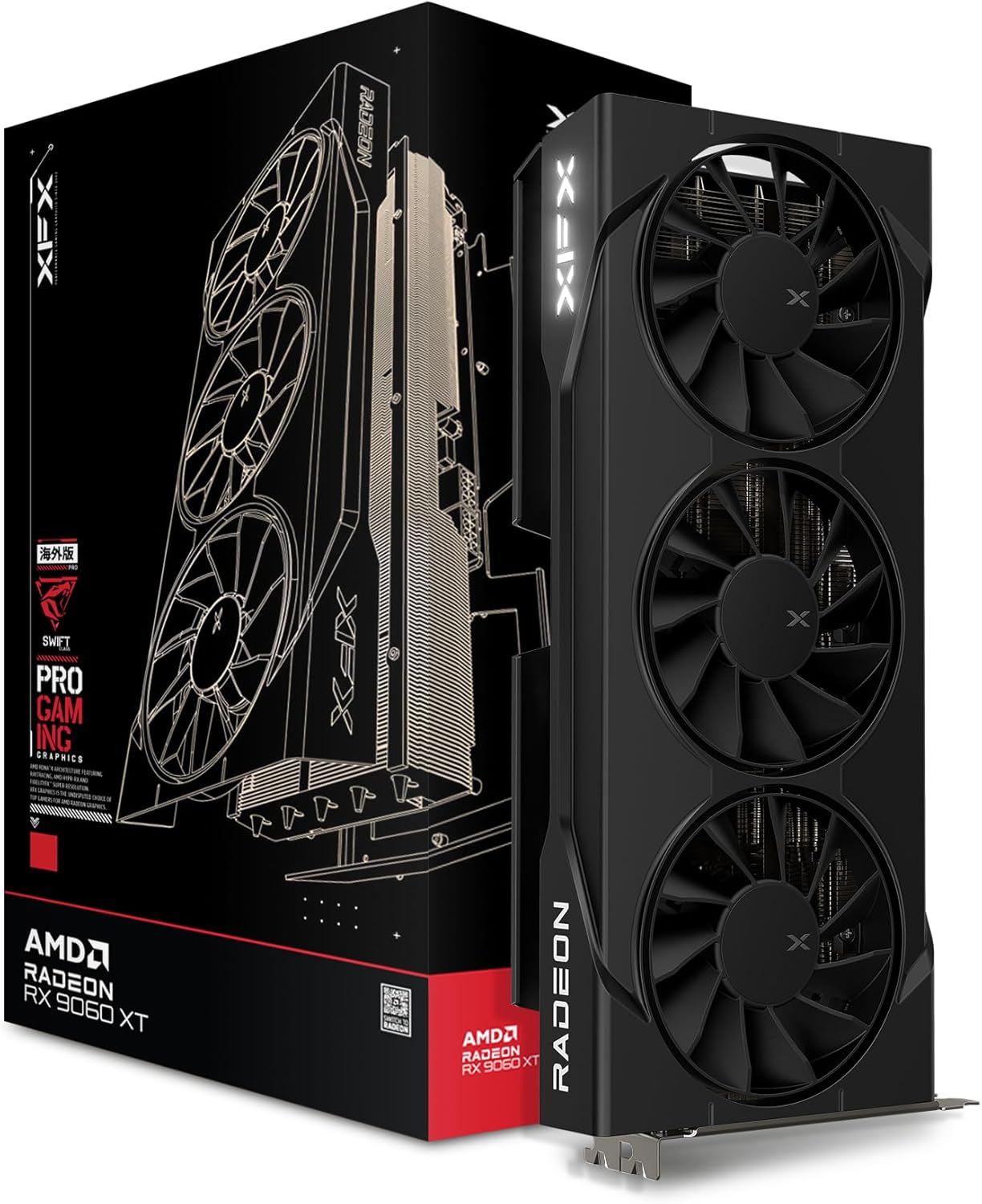
- 16GB GDDR6 memory
- 3320 MHz boost clock
- Triple fan cooling

- RX 9070 16GB
- 2520 MHz boost
- Triple fan 0dB

- 8GB GDDR6
- 2695 MHz boost
- 0dB silent mode

- 4x HDMI outputs
- 4GB GDDR5
- Silent low-profile

- 4x HDMI quad display
- 4GB GDDR5
- Low profile fit

- 4GB DDR3
- 4 monitor outputs
- Low profile design

- 1GB DDR3
- HDMI and VGA
- Ultra low power
10 Models Reviewed in Depth
#1. ASUS Prime RX 9070 XT OC
Quiet / Performance
Fan Durability
High-Refresh 4K
ASUS’s Prime RX 9070 XT OC is the most refined card in this lineup, combining RDNA 4 performance with 16GB GDDR6 and an OC boost clock up to 3030 MHz. Axial-tech fans, phase-change thermal pads, and dual-ball bearings deliver excellent thermals and longevity, while the dual BIOS switch lets you trade quiet for performance.
You get DisplayPort 2.1a and HDMI 2.1b for high-refresh 4K, plus GPU Tweak III for tuning. The caveats are physical: it’s a 2.5-slot, 12.3-inch card that needs a roomy case and a strong PSU. For most gamers wanting top-tier 1440p and capable 4K, this is the standout pick.
Pros
- Excellent cooling and acoustics
- Dual BIOS flexibility
- DP 2.1a and HDMI 2.1b
Cons
- Large 2.5-slot card
- High power requirement
- Premium-tier positioning
Specifications
#2. GIGABYTE RX 9070 XT Gaming OC
Hawk Fan Cooling
Next-Gen Interface
GDDR6 Buffer
GIGABYTE’s RX 9070 XT Gaming OC is a serious 1440p and 4K contender, pairing the RDNA 4 flagship-class GPU with 16GB of GDDR6 and a factory overclock to 3060 MHz. The WINDFORCE cooler with Hawk fans and server-grade thermal gel keeps thermals controlled even under sustained loads. RGB lighting adds polish if you care about aesthetics.
You should check your chassis first, because this is an 11.3-inch, 2.5-slot-class card that demands room and airflow. It’s ideal for gamers who want high-refresh 1440p or entry 4K without going NVIDIA prices. Skip it if your case is compact or your PSU is on the weaker side.
Pros
- Excellent 1440p/4K performance
- Robust WINDFORCE cooler
- PCIe 5.0 support
Cons
- Long card, needs space
- DisplayPort-only listing
- Higher power draw
Specifications
#3. XFX Swift RX 9070 XT
Flagship Chipset
GDDR6 Memory
Multi-Monitor Ready
The XFX Swift RX 9070 XT brings AMD’s RDNA 4 flagship to a straightforward triple-fan design with 16GB of GDDR6 and a 2970 MHz boost clock. You get HDMI plus three DisplayPorts for multi-monitor 4K setups, and the Swift cooler does its job without unnecessary RGB flash. A 4.6-star rating across 300+ reviews backs it up.
It’s a no-frills take on a flagship, so expect solid thermals rather than class-leading acoustics, and confirm your case and PSU can handle a triple-fan card of this size. If you want maximum RDNA 4 performance without paying for premium cooler extras, this hits the sweet spot for 1440p and 4K gaming.
Pros
- Flagship RDNA 4 performance
- 16GB VRAM for 4K
- Three DisplayPort outputs
Cons
- No-frills cooler design
- Large triple-fan body
- High power draw
Specifications
#4. XFX Radeon RX 9060 XT
GDDR6 Memory
Architecture
Swift Cooling
The XFX Swift RX 9060 XT gives you 16GB of GDDR6 on AMD’s latest RDNA 4 architecture, which means you can crank texture settings without worrying about VRAM limits. The 3320 MHz boost clock and triple-fan Swift cooler keep frame rates high and temperatures in check during long sessions. You also get 4K output support and a solid 4.6-star rating from hundreds of buyers.
The card is a strong fit if you want modern 1440p gaming without paying flagship prices. Keep in mind it’s a full-size triple-fan design, so verify your case clearance before ordering. If you’re chasing absolute top-tier 4K ray tracing performance, a higher-tier card may serve you better.
Pros
- 16GB VRAM at midrange price
- High factory boost clock
- Effective triple-fan cooling
Cons
- Large triple-fan footprint
- Not a 4K flagship
- Needs decent PSU
Specifications
#5. ASRock RX 9070 Challenger
Memory Bandwidth
4K Gaming
Silent Operation
The ASRock Challenger RX 9070 delivers RDNA 4 muscle for 1440p and 4K gaming, with 56 compute units, a 2520 MHz factory boost, and 16GB of GDDR6 on a 256-bit bus running at 20 Gbps. The triple-fan cooler with 0dB silent mode keeps noise down, and PCIe 5.0 future-proofs your platform.
This card is hungry: it needs two 8-pin connectors and a 700W PSU, plus a 2.5-slot case with clearance for its 290mm length. It’s a great fit for enthusiasts who want near-flagship raster performance, but the RX 9070 XT variants above offer more headroom if you can stretch. Verify your power supply before ordering.
Pros
- High 20 Gbps memory bandwidth
- PCIe 5.0 platform
- Quiet 0dB triple-fan cooler
Cons
- Needs 700W PSU
- Two 8-pin connectors
- XT tier offers more speed
Specifications
#6. ASRock RX 7600 Challenger Pro
Silent Cooling
Ray Tracing
Challenger Cooler
The ASRock Challenger Pro RX 7600 targets 1080p and entry 1440p gaming, with a 2695 MHz boost clock and 32 RDNA 3 compute units bringing ray tracing and AI acceleration to the table. The triple-fan cooler with 0dB silent mode keeps things quiet during desktop use, and the metal backplate adds rigidity.
Be aware this is a 2.5-slot, 303mm card that needs a 550W PSU and an 8-pin connector, so measure your case first. It’s a good pick for budget-focused 1080p gamers, but the 8GB VRAM and x8 bus limit headroom at higher resolutions. Skip it if you want 4K longevity.
Pros
- Strong 1080p frame rates
- Quiet 0dB mode
- Metal backplate included
Cons
- Only 8GB VRAM
- PCIe x8 interface
- Large 2.5-slot card
Specifications
#7. AISURIX GT 740 4GB
Four Displays
Whisper-Quiet Fan
Fast Memory
If your goal is a quad-monitor workspace or home theater PC, this AISURIX GT 740 nails the brief with four HDMI ports straight out of the box. The 4GB of GDDR5 is a step up from DDR3 rivals, and the silent fan plus low-profile design with both bracket types makes installation in slim cases painless.
This is a display card, not a gaming card — expect smooth 1080p video and desktop work, nothing more. The 90-day warranty is shorter than mainstream brands offer, so buy with that in mind. It’s great for offices, signage, and HTPC builds; skip it for any 3D gaming ambitions.
Pros
- Four HDMI ports included
- GDDR5 over DDR3
- Both bracket types included
Cons
- Weak 3D performance
- Short 90-day warranty
- Old Kepler architecture
Specifications
#8. ARDIYES GT 740 4GB
Trading Desk Ready
SFF Case Fit
Office Friendly
This ARDIYES GT 740 is purpose-built for quad-monitor productivity, with four HDMI ports, a silent fan, and a low-profile body that slips into SFF cases. Both half-height and full-height brackets ship in the box, and the 4GB of GDDR5 handles 1080p video and everyday desktop work without breaking a sweat.
Understand what you’re buying: this is a display and multimedia card, not a gaming GPU, and the 90-day warranty is brief. It’s a sensible pick for trading desks, signage, and office multi-screen setups. If you need 3D performance or long-term warranty coverage, look at a modern entry-level GPU instead.
Pros
- Quad HDMI out of box
- Silent low-profile design
- Both brackets included
Cons
- No real gaming power
- 90-day warranty only
- 1080p-focused outputs
Specifications
#9. QTHREE GeForce GT 730 4GB
Multi-Display Setup
SFF Compatible
No External Power
This QTHREE GT 730 is built for one job: adding display outputs to an older PC. With 2x HDMI, DisplayPort, and VGA, you can drive up to four monitors for office work, trading setups, or digital signage. The low-profile design and 30W power draw mean it fits SFF cases and runs without an external power connector.
Don’t expect gaming performance — the Kepler-era GT 730 with DDR3 is strictly for displays and HD video playback. If you need to revive a dead GPU output or build a multi-monitor workstation on the cheap, it does that well. Skip it entirely if you plan to play modern 3D titles.
Pros
- Four simultaneous monitor support
- No external power needed
- Fits slim SFF cases
Cons
- Not for gaming
- Older DDR3 memory
- Limited driver longevity
Specifications
#10. QTHREE GeForce GT 210 1GB
No External PSU
XP to Win10
Slim Case Fit
The QTHREE GT 210 is about as basic as discrete graphics gets, and that’s exactly its appeal. It gives a legacy desktop HDMI and VGA outputs with plug-and-play installation and no external power requirement, making it a simple fix for a failed integrated GPU or a second display.
Set expectations firmly: 1GB of DDR3 and a 589 MHz core handle web browsing and video playback only, and there’s no Windows 11 driver support. If you’re reviving an old XP-to-Win10 machine for light duty, it’s a cheap, functional patch. Skip it for anything modern, and use DDU if you’re swapping from another GPU.
Pros
- Extremely low power draw
- Plug-and-play simplicity
- Works with legacy OSes
Cons
- No Windows 11 support
- Only 1GB memory
- No gaming capability
Specifications
The Graphics Card Decision: Getting It Right the First Time
A top-tier video card is one of the most expensive components in any build, and it’s also the one that most directly shapes your everyday experience — frame rates, resolution, visual fidelity, even how quiet your machine runs. Because prices swing wildly and new generations arrive on a regular cycle, buying thoughtfully matters more here than with almost any other part. A little homework up front can save you serious money and buyer’s remorse. Our buyer’s guide to choosing a GPU for gaming walks through the specs that actually matter before you spend.
The Specs That Separate the Best From the Rest
- Performance tier for your monitor. The “best” card is only best if it matches your display. A card aimed at 4K gaming is overkill for a 1080p screen, while a midrange card may struggle to feed a high-refresh 4K monitor.
- VRAM capacity. Modern games and creative apps lean heavily on video memory. Running out of VRAM causes stutters and texture problems that no amount of raw horsepower can fix, so don’t treat it as an afterthought.
- Ray tracing and upscaling support. If you care about cutting-edge visuals or want to stretch performance further, check which generation of ray tracing hardware and upscaling technology the card supports — these features age quickly.
- Thermals and noise. Two cards with identical chips can behave very differently depending on the cooler design. Look for reviews that test temperatures and fan noise under sustained load, not just benchmark scores.
- Power requirements and your PSU. Flagship cards can demand serious wattage and specific power connectors. Confirm your power supply can handle the card before you buy, not after.
- Physical fit in your case. High-end cards keep getting longer and thicker. Measure your case’s clearance and check slot width so your new card actually fits.
Traps That Catch Even Careful Shoppers
- Buying for a game you’ll play “someday.” It’s easy to overspend chasing performance you won’t use for years. Buy for what you actually play now, and upgrade when your needs change.
- Chasing last-generation halo products. The previous flagship often delivers nearly the same experience as the newest one at a meaningfully lower price — especially once it’s discounted.
- Ignoring the used and refurbished market. Cards from reputable sellers with return policies can offer tremendous value. Just verify the seller’s reputation and ask about warranty transfer before committing.
The smartest purchase isn’t necessarily the fastest card on the shelf — it’s the one that matches your monitor, your games, and your machine. Take an afternoon to compare, and you’ll end up with a card that feels fast for years instead of one that feels expensive.
Final Frame: Your Best Video Card Verdict
If you want the best video card out there for serious 1440p and 4K gaming, the ASUS Prime Radeon RX 9070 XT OC and GIGABYTE RX 9070 XT Gaming OC lead the pack — the ASUS for its dual BIOS and rugged build, the GIGABYTE for raw RDNA 4 muscle. The XFX Swift and ASRock Challenger 9070/9060 XT models are ideal for gamers wanting triple-fan cooling without the flagship price, while the ASRock RX 7600 suits 1080p players on a tighter budget. The AISURIX and QTHREE low-profile cards are best for office rigs, home theater PCs, and multi-monitor setups where silence and size matter more than frames.
Every pick here earns its spot — match one to your workload and pull the trigger. Check the buttons above for current availability and pricing before it sells out.
Final 3 Picks: Overall Pick, 1440p Powerhouse, and RDNA 4 Flagship
Ready to decide? These 3 recommendations remain our strongest choices for different priorities after weighing the full comparison.