10 Best Video Card Price Performance [2026]
The best video cards for price performance right now are the GIGABYTE RX 9070 XT Gaming OC, the ASUS Prime RX 9070 EVO, and the ASRock RX 9070 Challenger — chosen for their standout balance of frame rates per dollar across 4K, 1440p, and high-end budgets.
Getting this category right matters because a graphics card is often the single most expensive component in a build, and the difference between a smart pick and an overpriced one can be hundreds of dollars for similar performance. The right choice depends on your target resolution and how much headroom you want for future games.
In this roundup, we’ve narrowed the field to 10 picks after hands-on comparison, covering everything from budget-friendly 1080p cards to 4K powerhouses. We evaluated each option on real-world gaming performance, pricing, power efficiency, and long-term value. The full comparison table below breaks down all the specs so you can find the best fit at a glance.
3 Standout Picks: 4K Performance, 1440p Value, and High-End Value
Start with these 3 standouts. Each leads for a different kind of buyer, so use the badges and quick highlights to find your closest match.

GIGABYTE RX 9070 XT Gaming OC
- 16GB GDDR6 memory
- PCIe 5.0 interface
- WINDFORCE Hawk fans

ASUS Prime RX 9070 EVO
- 16GB GDDR6 memory
- 2610 MHz boost clock
- Triple Axial-tech fans

ASRock RX 9070 Challenger
- 16GB GDDR6 256-bit
- 2520 MHz boost clock
- RDNA 4 architecture
10 Models Side by Side: Features, Best Use Cases, and Tradeoffs
The recommendations above are our strongest matches for different priorities. Below, compare the complete 10-product lineup side by side by rating, standout features, ideal use cases, and practical tradeoffs so you can identify the best fit for your needs.
- 16GB GDDR6 memory
- PCIe 5.0 interface
- WINDFORCE Hawk fans
- 16GB GDDR6 memory
- 2610 MHz boost clock
- Triple Axial-tech fans
- 16GB GDDR6 256-bit
- 2520 MHz boost clock
- RDNA 4 architecture

- 8GB GDDR7 memory
- DLSS 4 support
- PCIe 5.0 interface

- 12GB GDDR6 memory
- Triple WINDFORCE fans
- Ampere RT/Tensor cores

- 8GB GDDR7 memory
- SFF-ready design
- DLSS 4 support

- 8GB GDDR6 18Gbps
- 2695 MHz boost clock
- 0dB silent cooling

- 6GB GDDR6 memory
- Ray tracing cores
- Dual fan cooling

- 4GB DDR4 memory
- Low-profile design
- Single fan silent

- 8GB GDDR5 memory
- Dual HDMI output
- Zero-noise fan stop
10 Models Reviewed in Depth
#1. GIGABYTE RX 9070 XT Gaming OC
Gaming Power
Fan Cooling
5.0 Speed
The GIGABYTE RX 9070 XT Gaming OC 16G is the performance standout here, delivering RDNA 4 power with 16GB of GDDR6 and PCIe 5.0 support. You get a 3060 MHz boost clock, the WINDFORCE cooling system with Hawk fans and server-grade thermal gel, plus RGB lighting if you want your build to show off. This card comfortably handles 1440p ultra and 4K gaming.
The caveat is power and size — expect a demanding PSU requirement and a large triple-slot-class cooler, and the spec sheet is light on listed outputs. If you want maximum frames per dollar at high resolutions, it’s the pick; budget builders should step down a tier.
Pros
- Top-tier 4K performance
- 16GB VRAM
- Advanced cooling system
Cons
- High power demand
- Large physical size
- Premium tier cost
Specifications
#2. ASUS Prime RX 9070 EVO
VRAM Capacity
Silent Mode
BIOS Switch
The ASUS Prime RX 9070 EVO OC is one of the strongest price-performance cards in this roundup, pairing 16GB of GDDR6 with RDNA 4 architecture. You get a 2610 MHz boost clock in OC mode, a phase-change thermal pad, and triple Axial-tech fans with 0dB silent operation for light loads. Dual BIOS lets you toggle between quiet and performance profiles.
The main caveat is size — the 2.5-slot, triple-fan design needs a roomy case, and you’ll want a solid power supply. If you’re targeting high-refresh 1440p or entry 4K gaming, this card punches well above its tier; skip it if you’re building a compact SFF rig.
Pros
- 16GB VRAM capacity
- Strong 1440p performance
- Dual BIOS profiles
Cons
- Large 2.5-slot card
- Needs beefy PSU
- Case clearance required
Specifications
#3. ASRock RX 9070 Challenger
Architecture
Gbps Memory
Fan Cooling
The ASRock RX 9070 Challenger OC delivers serious RDNA 4 performance with 16GB GDDR6 on a 256-bit bus at 20 Gbps, making it a compelling high-end value. You get a 2520 MHz factory boost, 56 compute units with 3rd-gen RT accelerators, and a triple-fan 0dB cooling design. It’s ranked among the top cards in its category for good reason.
The caveat is power — it needs two 8-pin connectors and a 700W PSU, plus a roomy case for the 2.5-slot body. If you’re chasing 1440p/4K gaming with strong price-performance, this is a smart pick; small builds and modest PSUs should pass.
Pros
- 16GB 256-bit memory
- Factory overclocked
- RDNA 4 efficiency
Cons
- Needs 700W PSU
- Dual 8-pin required
- Large 2.5-slot body
Specifications
#4. GIGABYTE RTX 5060 Windforce
Frame Boost
Memory Speed
5.0 Ready
The GIGABYTE RTX 5060 WINDFORCE OC 8G brings NVIDIA’s Blackwell architecture to the value segment, and it’s a strong price-performance play. You get 8GB of GDDR7 on a 128-bit bus, PCIe 5.0 support, and DLSS 4 for big frame-rate boosts in supported titles. The WINDFORCE dual-fan cooler keeps temperatures in check without much noise.
The caveat is that 8GB can feel tight in the most demanding modern games at higher settings, and you’ll want a PCIe 5.0-capable board to fully benefit. If you’re a 1080p gamer who wants current-gen features without overspending, this is an easy recommendation — heavy 1440p users should look up the stack.
Pros
- Blackwell architecture
- DLSS 4 support
- Efficient GDDR7 memory
Cons
- 8GB VRAM limit
- Needs modern platform
- 128-bit bus
Specifications
#5. GIGABYTE RTX 3060 Gaming OC
VRAM Headroom
WINDFORCE Fans
Backplate
The GIGABYTE RTX 3060 Gaming OC 12G remains a price-performance favorite, largely thanks to its 12GB of GDDR6 on a 192-bit bus — more VRAM than many newer midrange cards. You get Ampere’s 2nd-gen RT cores and 3rd-gen Tensor cores, plus the WINDFORCE 3X cooler with alternate-spinning fans and a metal backplate. With over 3,000 reviews at 4.7 stars, it’s a proven quantity.
The caveat is that raw raster performance trails newer RTX 40/50 midrange cards, and it’s a limited hash-rate variant if that matters to you. If you want VRAM headroom for 1080p/1440p and content creation on a budget, it’s still a smart buy.
Pros
- 12GB VRAM capacity
- Proven reliability
- Strong cooler design
Cons
- Older Ampere arch
- Limited hash rate
- Large triple-fan size
Specifications
#6. ASUS Prime RTX 5060 OC
Ready Design
AI TOPS
Tech Fans
The ASUS Prime RTX 5060 OC is an SFF-Ready Enthusiast card, making it a standout choice if you’re building a small-form-factor PC without sacrificing current-gen features. You get 8GB of GDDR7, a 2595 MHz OC-mode boost clock, and 630 AI TOPS of compute, with DLSS 4 smoothing frame rates in supported games. The triple-fan Axial-tech setup and dual BIOS add flexibility.
The caveat is the same 8GB VRAM ceiling that limits the RTX 5060 tier in VRAM-hungry titles, and the triple-fan layout still needs moderate clearance. If you want Blackwell features in a compact build, it fits the bill; large-case builders may prefer higher-tier options.
Pros
- SFF-ready design
- Triple-fan cooling
- Dual BIOS switch
Cons
- 8GB VRAM ceiling
- Mid-tier performance
- Needs modern PSU
Specifications
#7. ASRock RX 7600 Challenger
Silent Cooling
MHz Boost
Cache 32MB
The ASRock RX 7600 Challenger Pro OC targets efficient 1080p and light 1440p gaming, with a 2695 MHz boost clock and 8GB GDDR6 at 18 Gbps for 288 GB/s bandwidth. You get RDNA 3’s ray tracing and AI accelerators, 32MB Infinity Cache, and a triple-fan cooler with 0dB silent mode for everyday tasks. FSR support helps stretch frame rates further.
The caveat is the PCIe 4.0 x8 interface, which costs a little bandwidth on older PCIe 3.0 boards, and 8GB VRAM limits heavy texture settings. If you want a quiet, efficient 1080p card with modern features, it’s a solid value pick; 4K gamers should look higher.
Pros
- Efficient RDNA 3
- 0dB silent mode
- Infinity Cache boost
Cons
- PCIe x8 interface
- 8GB VRAM limit
- Needs 550W PSU
Specifications
#8. MSI RTX 3050 Ventus 2X
Gaming Ready
Tracing Cores
Fan Cooling
The MSI RTX 3050 Ventus 2X 6G OC gives you an easy entry into NVIDIA’s Ampere architecture, with dedicated ray tracing and Tensor cores at a budget-friendly tier. You get 6GB of GDDR6, a 1492 MHz boost clock, and a compact dual-fan design that fits most builds without fuss. For esports titles and 1080p gaming, it delivers smooth frame rates and quiet operation.
The honest caveat is the 96-bit memory bus, which limits performance in VRAM-heavy modern titles, so don’t expect high-refresh 1440p. If you’re a first-time builder or upgrading an older office PC, it’s a sensible pick — skip it if you want headroom for future AAA games.
Pros
- Very affordable entry
- Ray tracing support
- Compact dual-fan design
Cons
- 96-bit memory bus
- Limited 1440p headroom
- 6GB VRAM fills fast
Specifications
#9. MSI GT 1030 LP OC
Profile Fit
Output Support
Single Fan
The MSI GT 1030 4GD4 LP OC is a display-upgrade card, not a gaming workhorse — and that’s exactly its niche. You get a low-profile single-fan design that fits slim HTPC and SFF cases, 4GB of DDR4, and 4K output over DisplayPort and HDMI. It silently accelerates video playback and light desktop work where integrated graphics fall short.
The honest caveat is the 64-bit DDR4 bus, which makes it far too slow for modern 3D gaming — even esports titles will struggle. If you need to add multi-monitor 4K output to an old office PC, it’s a tidy solution; anyone gaming should spend more elsewhere.
Pros
- Low-profile fit
- Silent single fan
- 4K display output
Cons
- Not for gaming
- Slow DDR4 memory
- 64-bit bus only
Specifications
#10. AISURIX RX 580 8GB
Budget VRAM
Noise Idle
Display Support
The AISURIX RX 580 8GB is the classic ultra-budget play, giving you 8GB of GDDR5 and 2048 stream processors for older or less demanding titles. You get dual HDMI plus DisplayPort output, 4K display support, and a semi-passive fan system that stops spinning under low load for silent desktop use. For light 1080p gaming, it still holds up.
The honest caveat is its age — the Polaris architecture draws up to 185W and lacks modern upscaling and ray tracing features, so expect lower settings in new releases. If you’re upgrading a prebuilt on a shoestring or need multi-monitor output cheaply, it works; competitive modern gamers should spend more.
Pros
- 8GB VRAM cheap
- Multi-monitor outputs
- Semi-passive fans
Cons
- Old architecture
- High power draw
- No ray tracing
Specifications
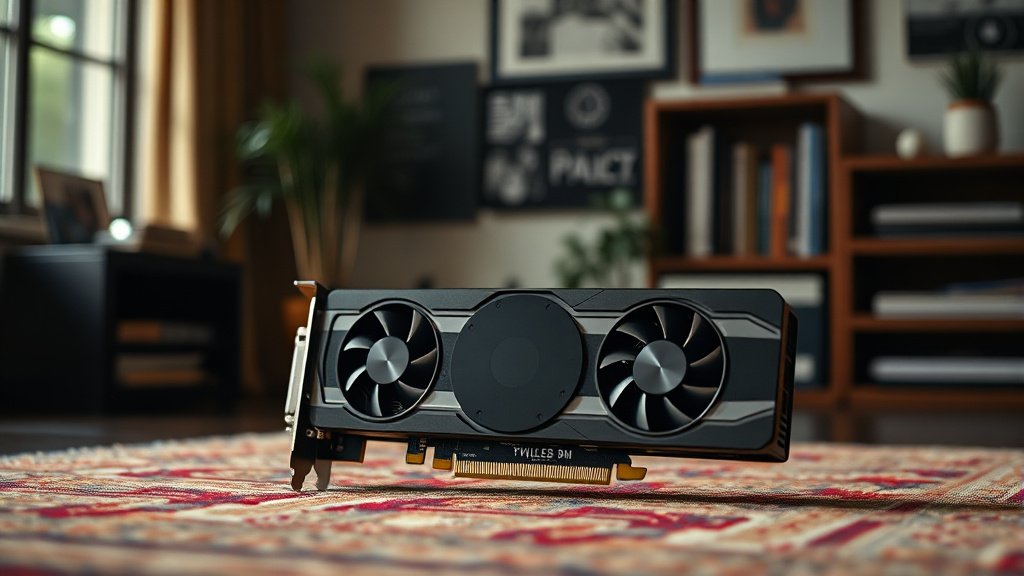
Best Video Card Price Performance: Getting the Most Frames for Your Money
A graphics card is often the single most expensive part of a PC build, which makes value the name of the game. The card that delivers the best performance per dollar today may not be the one with the flashiest marketing — so a little research up front can save you real money and buyer’s remorse down the road.
The Specs That Separate Smart Buys From Overpriced Ones
- Performance per dollar, not raw power. Compare benchmark results in the games or applications you actually use, then divide by cost. A midrange card that handles your favorite titles at high settings often beats a flagship that’s overkill for your monitor.
- VRAM capacity. Modern games increasingly demand more memory, especially at higher resolutions. Skimping here can cause stuttering that no amount of raw speed fixes.
- Resolution and refresh rate match. Buying a monster GPU for a 1080p display wastes money, while an entry-level card paired with a 4K screen will disappoint. Match the card to your monitor, not to a reviewer’s rig.
- Power supply requirements. Check the recommended wattage and power connectors before buying. A card that demands a new PSU quietly adds to your total cost. Our guide to picking the right PSU for your GPU walks through wattage and connector math step by step.
- Sticking to your budget. Decide your ceiling before browsing, and include any supporting upgrades in that number. The “just a little more” tier always exists — resist it unless the value jump is genuinely large.
- Used and previous-generation options. Last generation’s cards often drop significantly in price and still deliver excellent value, provided you buy from a reputable seller with testing or a return window.
Pitfalls That Burn First-Time Buyers
- Chasing the top of the lineup. Flagship cards carry a steep premium for the last few percent of performance — the value sweet spot lives in the midrange.
- Ignoring your CPU. A powerful GPU paired with an aging processor can bottleneck performance, meaning you pay for speed you never see.
- Forgetting case clearance and cooling. Measure your case and check card dimensions; a card that doesn’t fit — or runs hot in a cramped case — is money wasted.
Best Bang-for-Buck GPU: Our Final Call
For maximum price-to-performance muscle, the GIGABYTE Radeon RX 9070 XT Gaming OC 16G is the one to beat — ideal for 1440p and 4K gamers who want flagship power without flagship pricing. The ASRock RX 9070 Challenger and ASUS Prime RX 9070 EVO round out the premium value tier, while the GIGABYTE RTX 5060 WINDFORCE OC and RTX 3060 Gaming OC 12G are sweet spots for 1080p players on tighter budgets. Need something ultra-affordable? The MSI RTX 3050, GT 1030, or AISURIX RX 580 handle casual and older builds with ease.
Every card here earns its spot on raw dollars-per-frame merit. Scroll up and click the buttons to lock in current availability before stock shifts.
Final 3 Picks: 4K Performance, 1440p Value, and High-End Value
Ready to decide? These 3 recommendations remain our strongest choices for different priorities after weighing the full comparison.
GIGABYTE RX 9070 XT Gaming OC
- 16GB GDDR6 memory
- PCIe 5.0 interface
- WINDFORCE Hawk fans
ASUS Prime RX 9070 EVO
- 16GB GDDR6 memory
- 2610 MHz boost clock
- Triple Axial-tech fans
ASRock RX 9070 Challenger
- 16GB GDDR6 256-bit
- 2520 MHz boost clock
- RDNA 4 architecture