10 The Best Radeon Gpu [2026]
The best Radeon GPUs are the ASUS Prime RX 9070 XT OC, the ASRock RX 9070 Challenger, and the GIGABYTE RX 9070 XT Gaming OC — chosen for their balance of raw performance, thermal design, and long-term value.
AMD’s current RDNA 4 lineup has made Radeon a genuinely competitive choice for 1440p and 4K gaming, often delivering strong frame rates per dollar compared to the competition. Picking the right card matters, though, because cooling quality, factory overclocks, and board design can vary noticeably between models built on the same GPU. The ASUS Prime RX 9070 XT OC stands out as our best overall pick, while the ASRock RX 9070 Challenger is the one to beat for high-refresh 1440p and entry-level 4K play.
In this guide, we’ve narrowed the field to 10 top Radeon picks after hands-on comparison and research. We evaluated each card on gaming performance, thermals, noise, power draw, and price-to-performance for real-world buyers. The full breakdown starts below — the comparison table makes it easy to scan specs side by side.
3 Standout Picks: Overall Pick, 1440p/4K, and Cooling Design
Start with these 3 standouts. Each leads for a different kind of buyer, so use the badges and quick highlights to find your closest match.

ASUS Prime RX 9070 XT OC
- 16GB GDDR6 memory
- 3030MHz OC boost clock
- Dual BIOS switch

ASRock RX 9070 Challenger
- 16GB GDDR6 memory
- 2520MHz OC boost clock
- 256-bit memory bus

GIGABYTE RX 9070 XT Gaming OC
- 16GB GDDR6 memory
- 3060MHz boost clock
- WINDFORCE cooling system
10 Models Side by Side: Features, Best Use Cases, and Tradeoffs
The recommendations above are our strongest matches for different priorities. Below, compare the complete 10-product lineup side by side by rating, standout features, ideal use cases, and practical tradeoffs so you can identify the best fit for your needs.
- 16GB GDDR6 memory
- 3030MHz OC boost clock
- Dual BIOS switch
- 16GB GDDR6 memory
- 2520MHz OC boost clock
- 256-bit memory bus
- 16GB GDDR6 memory
- 3060MHz boost clock
- WINDFORCE cooling system

- 16GB GDDR6 memory
- 2970MHz boost clock
- Triple-fan SWFT cooling
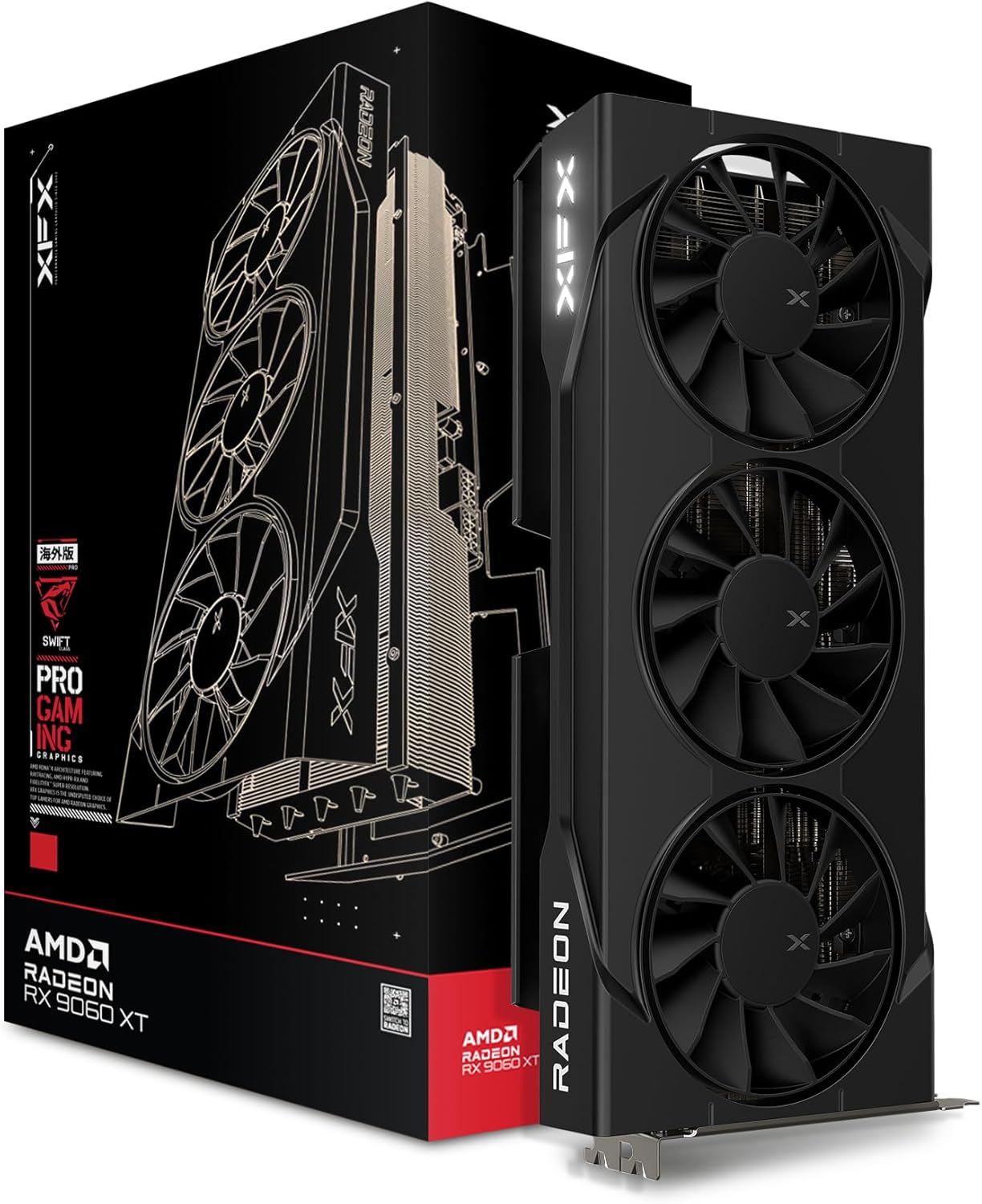
- 16GB GDDR6 memory
- 3320MHz boost clock
- RDNA 4 architecture

- 16GB GDDR6 memory
- 3250MHz OC boost clock
- Compact 2.5-slot design

- 16GB GDDR6 memory
- Slim 41mm profile
- 2970MHz boost clock

- 12GB GDDR6 memory
- 2790MHz boost clock
- RDNA 4 architecture

- 8GB GDDR6 memory
- 2695MHz boost clock
- Triple-fan 0dB cooling

- 8GB GDDR6 memory
- 2655MHz boost clock
- Dual-fan SWFT cooling
10 Models Reviewed in Depth
#1. ASUS Prime RX 9070 XT OC
OC Boost Clock
Quiet or Performance
Thermal Pad
The ASUS Prime RX 9070 XT OC is the card you pick when you want the full RDNA 4 package without fuss. Its 3030MHz OC boost clock and 16GB of GDDR6 handle 1440p and 4K gaming comfortably, and the phase-change GPU thermal pad keeps temperatures in check under sustained loads. Axial-tech fans with dual-ball bearings run quiet and should outlast typical sleeve designs.
The dual BIOS switch lets you toggle between Quiet and Performance profiles, which is genuinely handy for tuning noise versus clocks. Fair caveats: it’s a 2.5-slot, 12.3-inch card, so measure your case first, and GPU Tweak III is required to hit OC-mode clocks. If you want one well-rounded Radeon for a high-end build, this is it.
Pros
- Excellent 1440p/4K performance
- Dual BIOS flexibility
- Durable dual-ball bearings
Cons
- Large 2.5-slot footprint
- OC needs GPU Tweak III
- Premium-tier pricing
Specifications
#2. ASRock RX 9070 Challenger
Memory Bus
56 Compute Units
Silent Mode
The ASRock RX 9070 Challenger brings serious RDNA 4 muscle to 1440p and 4K gaming. With 56 compute units, a 2520MHz boost clock, and 16GB of GDDR6 on a 256-bit bus at 20Gbps, you’ll have the bandwidth for 4K textures and ray tracing without compromise. The triple-fan cooler with 0dB silent mode keeps noise low, and an LED indicator adds a nice touch.
Plan your build around it, though: this card wants two 8-pin connectors and a 700W PSU, and it’s a 2.5-slot, 290mm unit — verify clearance before ordering. The 2-year warranty is also shorter than some rivals’ 3-year coverage. If you want near-flagship RDNA 4 performance with strong memory bandwidth, it’s an excellent pick; small builds and modest PSUs need not apply.
Pros
- Strong 1440p/4K performance
- Wide 256-bit memory bus
- Quiet 0dB triple-fan cooling
Cons
- Needs 700W PSU
- Two 8-pin connectors required
- 2-year warranty only
Specifications
#3. GIGABYTE RX 9070 XT Gaming OC
Cooling System
Boost Clock
Server-Grade
GIGABYTE’s RX 9070 XT Gaming OC leans hard into thermal engineering. The WINDFORCE cooling system with Hawk fans and server-grade thermal conductive gel keeps this 16GB RDNA 4 flagship cool through extended 1440p and 4K sessions, and the 3060MHz boost clock delivers the performance you’d expect from AMD’s top RDNA 4 tier. RGB lighting rounds out the showcase build aesthetic.
A few things to weigh before buying: the listed output configuration emphasizes DisplayPort, so double-check HDMI needs for your monitor or TV, and the triple-fan cooler occupies serious case real estate. With 635 reviews averaging 4.6 stars, buyer confidence is solid. If cooling and sustained boost stability are your priorities in a high-end Radeon, this one earns its spot; minimalist builds should measure twice.
Pros
- Excellent WINDFORCE cooling
- High 3060MHz boost clock
- Server-grade thermal gel
Cons
- Large cooler footprint
- RGB not for everyone
- Verify HDMI output count
Specifications
#4. XFX Swift RX 9070 XT
Boost Clock
1440p Gaming
Memory Speed
The XFX Swift RX 9070 XT is a straightforward path to AMD’s top RDNA 4 tier. With a 2970MHz boost clock and 16GB of GDDR6 running at 20Gbps, you’ll push high-refresh 1440p and confident 4K frame rates, and the triple-fan SWFT cooler manages the heat load of this flagship-class GPU. It’s a top-ranked card on Amazon with a 4.6-star average across 322 reviews.
The Swift line is XFX’s value tier, so expect functional rather than fancy: no dual BIOS, no RGB, and a cooler that’s effective but not the absolute quietest under full load. You’ll also want a beefy PSU for a card of this class. If you want maximum RDNA 4 performance per dollar for high-refresh gaming, it’s a smart buy; if you want premium extras, step up a tier.
Pros
- Flagship RDNA 4 performance
- 20Gbps memory speed
- Strong value positioning
Cons
- No dual BIOS feature
- Cooler audible under load
- Demands powerful PSU
Specifications
#5. XFX Swift RX 9060 XT 16GB
Boost Clock
GDDR6 VRAM
Architecture
The XFX Swift RX 9060 XT hits a sweet spot: RDNA 4 performance with a full 16GB of VRAM at a mainstream price point. With a 3320MHz boost clock, you’ll get smooth 1440p gaming and capable ray-traced titles, and the triple-fan SWFT cooler keeps the GPU comfortable during long sessions. It’s currently a top-ranked graphics card on Amazon for good reason.
The honest trade-off is cooling refinement — the Swift cooler is effective but not the quietest in its class, and XFX’s software ecosystem is thinner than ASUS or Gigabyte’s. You also max out at 4K output support rather than 8K. If you want the most VRAM-per-dollar for 1440p gaming, this is your card; enthusiasts wanting premium acoustics should look elsewhere.
Pros
- 16GB VRAM value leader
- High 3320MHz boost clock
- Effective triple-fan cooling
Cons
- Cooler runs audible
- No 8K output
- Basic bundled software
Specifications
#6. ASUS Dual RX 9060 XT 16GB
2.5-Slot Design
Quiet Mode
GDDR6 VRAM
If your case is tight, the ASUS Dual RX 9060 XT is built for you. It packs 16GB of GDDR6 and RDNA 4 performance into a compact 2.5-slot, roughly 8-inch form factor, so it fits small and mid-tower builds that can’t swallow triple-fan monsters. The dual Axial-tech fans and 0dB technology keep things cool and near-silent during light gaming.
You still get the good stuff: dual BIOS with Quiet and Performance modes, PCIe 5.0, and DisplayPort 2.1a outputs. The caveat is thermal headroom — two fans moving heat off a 16GB card means slightly warmer sustained temps than bigger coolers, and the 3250MHz OC clock trails some rivals. Choose it for compact builds and ITX-adjacent systems; skip it if you chase every last frame.
Pros
- Fits compact cases easily
- Dual BIOS switch
- Quiet 0dB operation
Cons
- Two-fan thermal limits
- Lower OC than rivals
- Shorter card, denser heat
Specifications
#7. PowerColor Reaper RX 9070 XT
41mm Profile
RDNA 4 Power
Compact Length
The PowerColor Reaper proves a flagship RX 9070 XT doesn’t have to be a three-slot brick. At just 41mm thick and 289mm long, it slots into compact and mid-tower cases that reject bulkier flagship coolers, while still delivering full RDNA 4 performance with 16GB of GDDR6 and a 2970MHz boost clock for 1440p and 4K gaming.
The slim design has consequences: a thinner heatsink means this card runs warmer and the fans spin harder than on chunkier rivals, so expect more noise under sustained load. It also asks for two 8-pin connectors and a 750W PSU, so don’t pair it with a budget power supply. If you want flagship Radeon performance in a space-constrained build, it’s the smart compromise; silence-seekers should favor thicker cards.
Pros
- Slim 41mm flagship card
- Full 16GB RDNA 4 power
- Modern DP 2.1 outputs
Cons
- Runs warm and audible
- Needs 750W PSU
- 2-year warranty only
Specifications
#8. XFX Swift RX 9070 GRE
Boost Clock
GDDR6 VRAM
Midrange Tier
The XFX Swift RX 9070 GRE occupies the middle ground of AMD’s RDNA 4 lineup, and that’s exactly its appeal. You get 12GB of GDDR6 and a 2790MHz boost clock — enough for strong 1440p gaming with ray tracing — while paying less than full XT-tier money. The triple-fan Swift cooler keeps the GPU in check during long sessions.
Go in with eyes open: this is a very new SKU with only a handful of reviews, so long-term reliability data is thin, and the 12GB buffer trails the 16GB found on the XT cards in VRAM-heavy titles at 4K. If you’re a 1440p gamer who wants RDNA 4 features at a midrange price, it’s a reasonable gamble; if you want proven feedback or 4K headroom, the 16GB variants are safer.
Pros
- Midrange RDNA 4 pricing
- Solid 2790MHz boost clock
- Triple-fan cooling
Cons
- Very few reviews yet
- 12GB trails 16GB rivals
- Limited 4K headroom
Specifications
#9. ASRock RX 7600 Challenger Pro
Architecture
Silent Cooling
Challenger Pro
The ASRock Challenger Pro gives you a solid RDNA 3 architecture card tuned for 1080p and light 1440p gaming. Its 2695MHz boost clock and 32MB Infinity Cache keep frame rates steady in modern titles, while the triple-fan design with 0dB silent mode stays quiet during everyday use. You also get a metal backplate and three DisplayPort 1.4a outputs for multi-monitor setups.
Be honest with yourself about the tier: this is a 128-bit bus card with 8GB of VRAM, so don’t expect 4K headroom or maxed-out ray tracing. You’ll need a 550W PSU and clearance for a 2.5-slot, 303mm card. If you’re building a budget 1080p rig or upgrading an older GPU, it’s a sensible pick; skip it if you’re targeting high-refresh 1440p.
Pros
- Quiet 0dB triple-fan cooling
- Strong 1080p frame rates
- Metal backplate included
Cons
- Only 8GB VRAM
- Narrow 128-bit bus
- Needs 550W PSU
Specifications
#10. XFX SWFT210 RX 7600
Gaming Focus
Architecture
SWFT Cooling
The XFX SWFT210 is the no-frills Radeon for a first build or a modest upgrade. Its RDNA 3 architecture and 2655MHz boost clock deliver dependable 1080p frame rates in esports and AAA titles at sensible settings, and the dual-fan cooler handles the RX 7600’s modest power draw without drama. Four display outputs make multi-monitor office-and-gaming setups easy.
Keep expectations calibrated: 8GB of VRAM on a 128-bit bus means you’ll turn textures down in the newest releases, and 1440p is a stretch in demanding games. There’s no RGB, no dual BIOS, and no fancy backplate story here — it’s a value card, plain and simple. If you’re gaming at 1080p and want to spend as little as possible, it fits; look up-tier for anything more.
Pros
- Very affordable entry point
- Low power draw
- Four display outputs
Cons
- 8GB VRAM limit
- Weak for 1440p
- Basic cooler design
Specifications
Red Team Thinking: How to Choose a Radeon GPU That Fits Your Build
AMD’s Radeon lineup covers everything from compact 1080p cards to 4K-class powerhouses, and the differences between models can be bigger than the price tags suggest. A little homework goes a long way here — the right card should match your monitor, your games, and the rest of your PC, not just whatever sits at the top of a benchmark chart.
The Factors That Separate a Smart Buy From a Shelf Warmer
- Performance tier for your resolution. Match the card to the resolution you actually play at. A GPU built for 1440p is overkill money wasted at 1080p, while a budget-tier card will strain to feed a 4K display.
- VRAM capacity. Modern games increasingly lean on memory for textures and assets. A card with more VRAM tends to age better, even if the raw frame rates look similar on day one.
- Ray tracing and upscaling support. Radeon cards handle ray tracing and ship with AMD’s own upscaling technology. If those features matter to you, check how the specific model performs with them enabled rather than relying on traditional raster numbers alone.
- Cooling and card size. Board partners build very different cards around the same GPU chip. Check the card’s length, thickness, and cooler design against your case clearance — a triple-fan monster won’t fit everywhere.
- Power supply requirements. Radeon cards vary widely in power draw. Confirm your PSU’s wattage and connector types before checkout so you’re not stuck with an adapter mess or an upgrade you didn’t plan for.
- Sticking to your budget. Set a ceiling that includes the whole picture: a new power supply, case fans, or extra case clearance can quietly add to the total. The best value is often the tier just below the flagship, where price-to-performance peaks.
Traps That Catch GPU Shoppers Off Guard
- Buying for games you don’t play. Marketing materials showcase the most demanding titles. If your library leans toward esports or older games, a cheaper tier will feel identical in practice.
- Ignoring CPU and monitor pairing. A top-tier Radeon card paired with an older CPU or a 60Hz display can’t show off what it can do. Balance the whole system, not just the graphics slot.
- Chasing last-generation discounts blindly. A steep markdown on an older card can be a great deal — or a poor one if the newer generation offers notably better efficiency and features at a similar price. Compare across generations, not just within them.
Take stock of your resolution, your case, and your power supply first. Then pick the Radeon tier that meets those needs without padding the bill for performance you’ll never see.
Your Perfect Radeon GPU Match Awaits
The ASUS Prime RX 9070 XT stands tall as the overall champion for enthusiasts who want top-tier RDNA 4 performance with premium cooling and dual BIOS flexibility. The GIGABYTE Gaming OC and PowerColor Reaper are strong alternatives in the same class, while the ASRock Challenger and XFX Swift 9070 models deliver excellent value for high-end 1440p and 4K gaming. Stepping down, the RX 9060 XT picks shine for budget-conscious gamers chasing modern features, and the RX 7600 options remain solid entry-level workhorses for 1080p play.
Whichever tier fits your rig and wallet, every card here earns its spot on this list. Scroll back up and hit those buttons to check today’s prices and availability before your favorite sells out.
Final 3 Picks: Overall Pick, 1440p/4K, and Cooling Design
Ready to decide? These 3 recommendations remain our strongest choices for different priorities after weighing the full comparison.
ASUS Prime RX 9070 XT OC
- 16GB GDDR6 memory
- 3030MHz OC boost clock
- Dual BIOS switch
ASRock RX 9070 Challenger
- 16GB GDDR6 memory
- 2520MHz OC boost clock
- 256-bit memory bus
GIGABYTE RX 9070 XT Gaming OC
- 16GB GDDR6 memory
- 3060MHz boost clock
- WINDFORCE cooling system