Graphics Card Cost: What to Expect in 2026
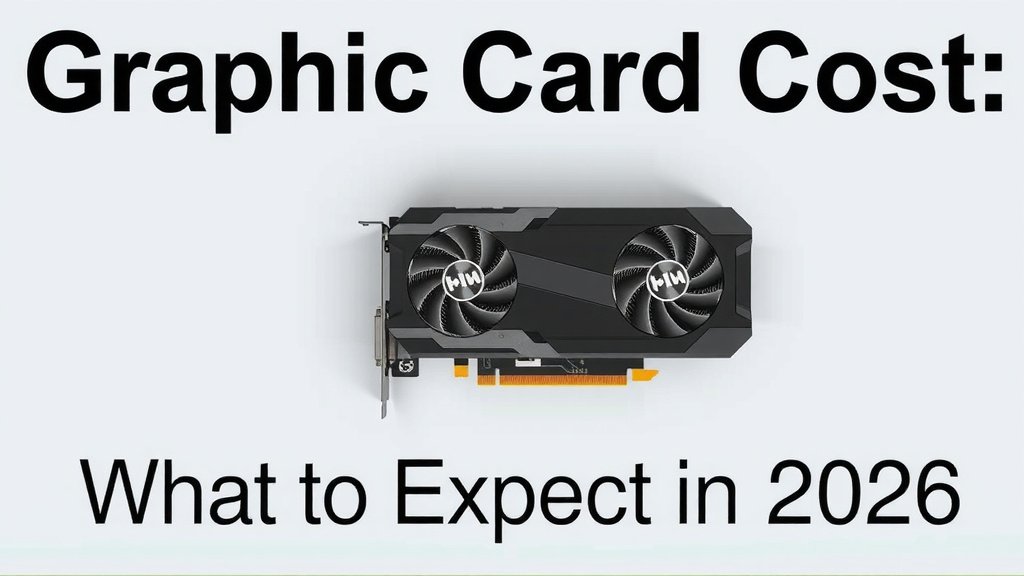
The cost of a graphics card can range dramatically, from around $100 for basic models to over $2,000 for high-end performance. You’ll typically see prices between $300 and $800 for most gamers looking for a good balance of performance and price.
Several factors influence graphics card prices. This includes the card’s raw processing power, the amount and speed of its video memory (VRAM), and the brand reputation. Newer technologies and demand also play a big role.
- Graphics cards cost anywhere from $100 to over $2,000.
- Most gamers find good value between $300 and $800.
- Price depends on power, VRAM, and new technology.
- Market demand and supply heavily influence costs.
Let’s dive into what really affects graphics card prices and how you can find the best one for your budget.
Understanding Graphics Card Pricing
So, you’re wondering about graphics card costs. It’s a big question because prices can really swing. Think of it like buying a car; a basic sedan is much cheaper than a sports car. You can find graphics cards for under $100, but those are for very light tasks. Most people looking for a solid experience, especially gamers, tend to spend between $300 and $800. High-end cards, the Ferraris of the GPU world, can easily top $1,000 or even $2,000. We’ll break down what makes these prices so different.
Key Factors Driving GPU Costs
Several elements come together to determine how much a graphics card will set you back. It’s not just one thing; it’s a mix of hardware, technology, and market forces. Understanding these will help you make a smarter choice for your budget.
Raw Performance: The Engine’s Power
The most obvious factor is the card’s processing power. This is measured by things like core count and clock speed. More cores and faster speeds mean the card can handle more calculations per second. This translates directly to smoother gameplay and faster rendering for creative work. A card with double the processing power might cost significantly more, but it delivers a much better experience.
Video Memory (VRAM): The Graphics Card’s Short-Term Memory
Think of VRAM as the card’s workspace. The amount and speed of VRAM are super important, especially for modern games and demanding applications. Higher resolutions and detailed textures require more VRAM. If a game needs 10GB of VRAM and your card only has 8GB, you’ll likely see performance drops. For gamers at 1440p or 4K, 12GB or even 16GB of VRAM is becoming the sweet spot. More VRAM generally means a higher price tag.
New Technology and Features
Manufacturers are always innovating. Features like real-time ray tracing, AI upscaling technologies (like DLSS or FSR), and improved power efficiency add to the cost. Ray tracing makes lighting and reflections look incredibly realistic. AI upscaling lets you play games at higher frame rates by intelligently boosting resolution. These advanced technologies require more sophisticated hardware, driving up the price of cards that support them.
Brand and Manufacturer Reputation
Just like with other electronics, brand name matters. Companies like NVIDIA and AMD are the main chip designers. Then, other companies like ASUS, MSI, Gigabyte, and EVGA build the actual cards. Some brands are known for better cooling, higher quality components, or superior customer service. You might pay a bit of a premium for a card from a brand you trust or one that’s known for overclocking potential.
Price Tiers Explained
Let’s look at how graphics card prices generally break down into different performance categories. This will give you a clearer picture of what to expect in each bracket.
Budget-Friendly Options (Under $200)
If your budget is really tight, you can find cards in this range. They’re suitable for basic computing, watching videos, and very light gaming. Think older titles at lower settings or indie games. Don’t expect to run the latest AAA games smoothly on these. They often have less VRAM and weaker processing power.
Mid-Range Sweet Spot ($300 – $600)
This is where most gamers find a fantastic balance. Cards in this range can handle most modern games at 1080p resolution with good settings. You might even be able to push into 1440p gaming with some adjustments. This tier often offers the best bang for your buck. You get solid performance without breaking the bank.
Performance Tier ($600 – $1,000)
Stepping into this price bracket gets you cards that excel at 1440p gaming and can even handle some 4K gaming. These cards often feature more VRAM, higher clock speeds, and advanced cooling solutions. If you want high refresh rates or plan to use demanding creative software, this is a great place to look.
Enthusiast/High-End ($1,000+)
These are the top-of-the-line GPUs. They are built for ultimate performance. You’ll get the best possible experience at 4K resolution with all the bells and whistles turned on. Ray tracing will shine, and you’ll achieve very high frame rates. These cards are for serious gamers, content creators, and professionals who need the absolute best and have the budget for it.
Market Dynamics: Supply and Demand’s Role
You’ve probably heard about graphics card shortages in recent years. This is a prime example of how supply and demand heavily influence prices. When demand is high (like during a gaming boom or crypto mining craze) and supply is limited, prices skyrocket. Conversely, when supply catches up or demand cools, prices tend to stabilize or even drop.
The Impact of Cryptocurrency Mining
For a while, cryptocurrency miners bought up huge numbers of graphics cards. They used them to “mine” digital currencies. This created artificial scarcity for gamers and other users. While this has lessened, it’s a good reminder of how external factors can mess with GPU availability and cost. Experts from various tech outlets have covered this phenomenon extensively over the past few years.
New Product Launches and Generational Shifts
When new generations of graphics cards are released, older models usually see price drops. This is a great time to snag a good deal on a slightly older but still capable card. However, the newest cards often launch at a premium price, especially if they offer a significant leap in performance.
Finding the Right Graphics Card for You
Considering all these factors, how do you make the right choice? It really comes down to your specific needs and budget. Don’t just buy the most expensive card you can find. That’s like buying a semi-truck to drive to the grocery store – overkill and impractical!
Here’s a quick checklist to guide your decision:
- Determine Your Primary Use: Are you gaming, video editing, or just browsing?
- Set a Realistic Budget: How much can you comfortably spend?
- Identify Your Target Resolution and Refresh Rate: 1080p, 1440p, or 4K? 60Hz, 144Hz, or higher?
- Check Game/Application Requirements: See what GPUs are recommended for the software you use.
- Read Reviews: Look for benchmarks and comparisons for cards in your price range.
- Consider Future Needs: Will your needs change in the next few years?
By carefully considering these points, you can navigate the graphics card market and find a GPU that offers the performance you need without straining your wallet. It’s all about making an informed decision that fits your personal computing journey.
Conclusion
As you’ve seen, graphics card costs vary wildly, from budget-friendly options under $200 to enthusiast cards over $1,000. Most gamers find their sweet spot between $300 and $800 for a solid gaming experience. Remember that raw power, VRAM, new tech, brand reputation, and market demand all play a role in the final price.
Your next step is to identify your primary use and set a realistic budget. Then, research cards that meet your needs for resolution and desired performance. Making an informed choice ensures you get the best GPU for your money and your personal computing journey.
Frequently Asked Questions
Is it worth buying a cheap graphics card?
Cheap graphics cards, typically under $200, are best for basic computing tasks and light gaming. If you plan to play modern, demanding games or do creative work, these cards will likely struggle. You might experience low frame rates and the need to lower graphical settings significantly.
How much VRAM do I really need for gaming?
For 1080p gaming, 8GB of VRAM is often sufficient, but 10GB or 12GB is becoming more future-proof. If you’re targeting 1440p or 4K resolutions, aiming for 12GB, 16GB, or even more will provide a smoother experience with higher texture settings.
Can I get a good gaming graphics card for under $500?
Yes, you absolutely can! The mid-range market, often between $300 and $600, offers excellent value for gamers. Cards in this price bracket can handle most games at 1080p with high settings and can often manage 1440p gaming with some adjustments.
Will the price of graphics cards go down soon?
Graphics card prices are influenced by supply, demand, and new product releases. While prices can fluctuate, they tend to stabilize after a new generation launches. Watching for sales and considering slightly older models can also lead to better deals.
What’s the biggest factor that makes graphics cards so expensive?
The biggest factors are typically the raw processing power and the amount of VRAM. Cards with more cores, faster clock speeds, and larger, faster memory offer significantly better performance, which manufacturers price accordingly. Additionally, the inclusion of advanced features like ray tracing also increases cost.


![10 Best Asus Graphics Card [2026]](https://spsolutionscare.com/wp-content/uploads/2026/08/10-best-asus-graphics-card-2026-featured-768x432.jpg)