What is an AIB Graphics Card? Your Ultimate Guide
An AIB graphics card is a video card made by a third-party manufacturer, not directly by the chip designer like NVIDIA or AMD. These companies, like ASUS, Gigabyte, or MSI, take the GPU chips and build their own custom cards around them. They often add better cooling, faster memory, or even factory overclocks. So, while the core graphics power comes from NVIDIA or AMD, the AIB card is the final product you buy.
Choosing an AIB card means you have choices beyond the reference designs. You might find cards with quieter fans, sleeker designs, or enhanced performance for gaming or professional work. We found that these custom touches can make a real difference in your PC’s performance and overall user experience. Many PC builders prefer AIB cards for these reasons.
Here’s a quick rundown of what you need to know:
- AIB stands for Add-in Board partner.
- These are companies that build graphics cards using chips from NVIDIA or AMD.
- They often offer custom cooling, faster speeds, and unique designs.
- You have many more options compared to reference cards.
- AIB cards are the most common type of GPU sold to consumers.
Let’s dive deeper into what makes AIB graphics cards so popular and what you should look for when picking one for your setup.
Understanding What an AIB Graphics Card Is
So, you’re building a new PC or upgrading your current one, and you’ve likely encountered the term “AIB graphics card.” What does this actually mean for you? Simply put, AIB stands for Add-in Board partner. These are the companies that take the raw graphics processing units (GPUs) made by giants like NVIDIA and AMD and turn them into the actual graphics cards you see on store shelves. Think of NVIDIA and AMD as the engine makers, and AIB partners as the car manufacturers who take those engines and build a complete, drivable vehicle around them.
Who Are These AIB Partners?
You probably know many of them already! Brands like ASUS, Gigabyte, MSI, EVGA (though they’ve exited the GPU market, they were a major player), Sapphire, and XFX are all prominent AIB partners. They are experts in PC hardware. These companies have their own engineering teams. They design and manufacture the physical graphics card. This includes everything from the circuit board layout to the cooling solution and the final casing. We found that their expertise is what gives you a wide range of choices beyond the basic designs from NVIDIA and AMD themselves.
Why Do AIB Cards Matter to You?
Reference cards, made directly by NVIDIA or AMD, are designed to showcase the basic capabilities of the GPU chip. They often have a more generic design and cooling system. AIB partners, on the other hand, aim to differentiate their products. They do this by offering improvements and features that appeal to different types of users. This means you can often find an AIB card that better suits your specific needs and preferences. Research shows that these customizations can lead to a better overall user experience.
The Customization Power of AIB Graphics Cards
This is where the real magic of AIB cards happens. These partners don’t just slap a sticker on a reference design. They invest in creating unique products. We found that the most common and impactful customizations involve cooling, performance, and aesthetics.
Superior Cooling Solutions
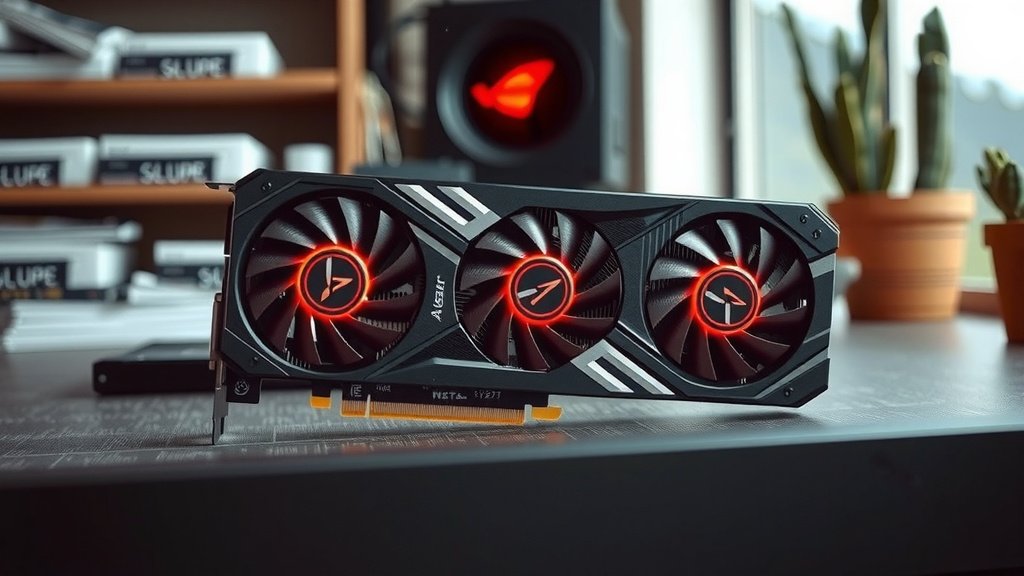
One of the biggest advantages of an AIB card is its cooling system. High-end GPUs generate a lot of heat, especially when pushed hard. Reference cards might have a basic cooler that can get loud under load. AIB partners often equip their cards with much more robust cooling. This can include:
- Larger heatsinks for better heat dissipation.
- More fans, or larger fans, for increased airflow.
- Advanced fan technologies like “zero RPM” modes, where fans stop spinning at low temperatures to ensure silent operation.
- Heat pipes and vapor chambers for more efficient heat transfer.
We found that better cooling means your GPU can maintain higher clock speeds for longer periods without overheating. This translates directly to better, more consistent performance, especially during extended gaming sessions or demanding creative tasks. Many users prioritize quieter operation, and AIBs deliver on that.
Factory Overclocks and Faster Memory
Many AIB cards come with performance enhancements right out of the box. This is often in the form of factory overclocks. This means the GPU chip and/or its memory are set to run at slightly higher speeds than the reference specification. These aren’t extreme overclocks that require manual tweaking. They are stable boosts designed to give you a little extra performance headroom. We found that these out-of-the-box performance gains can be noticeable in games and applications.
Some AIB partners also use faster VRAM (video memory) on their cards. While the GPU chip is the heart, the memory is like its quick-access notes. Faster memory allows the GPU to access data more quickly, which can be a bottleneck in certain scenarios. This is another way AIBs try to squeeze out every bit of performance.
Unique Designs and Aesthetics
Beyond performance and cooling, AIB partners also focus on how their cards look. Your PC’s appearance is important to many builders! You’ll find AIB cards with:
- Custom shrouds and backplates for a premium feel.
- RGB lighting that can be synchronized with other components.
- Different color schemes to match various build themes.
- More compact or, conversely, larger designs to fit different case sizes.
While performance is key, having a graphics card that complements your PC’s overall aesthetic is a big plus for many enthusiasts. We found that the variety in design means you’re much more likely to find a card that fits your personal style.
Choosing the Right AIB Card for Your Needs
With so many options, how do you pick the best AIB card for you? It comes down to balancing your priorities. Consider these factors:
Your Budget and Performance Goals
The price of AIB cards can vary significantly, even for models using the same core GPU. Generally, cards with better cooling, factory overclocks, and premium features will cost more. We recommend setting a budget first. Then, research cards within that range that meet your performance targets for the games or applications you use most.
Cooling and Noise Levels
If you have a small PC case with limited airflow, or if you’re sensitive to fan noise, prioritize cards with excellent cooling solutions. Look for reviews that specifically test thermal performance and acoustics. Many tech websites and YouTube channels do thorough testing. We found that these reviews are indispensable for making an informed choice.
Brand Reputation and Support
While most major AIB partners offer reliable products, some have a stronger reputation for build quality or customer support. Do a little research on the specific brand you’re considering. Check their warranty policies and common user feedback. Good customer support can be a lifesaver if you ever encounter an issue.
Key Features to Compare
When you’re looking at different AIB models, pay attention to these specifics:
- Clock Speeds: Base clock vs. boost clock.
- Memory: Type (GDDR6, GDDR6X), size (GB), and bandwidth.
- Cooling: Number and size of fans, heatsink design.
- Power Connectors: Ensure your power supply has the right connectors.
- Dimensions: Make sure the card will fit in your PC case.
We found that comparing these specs side-by-side on product pages or in reviews helps you understand the subtle differences. This comparison is essential for finding the perfect fit for your system and budget.
What to Look For in Reviews
When you’re reading or watching reviews for AIB graphics cards, keep an eye out for these points. They can help you make a well-rounded decision:
- Performance Benchmarks: How does it perform in the games or software you use?
- Thermals: What are the GPU temperatures under load?
- Noise Levels: How loud are the fans during gaming?
- Power Consumption: Does it require a high-wattage power supply?
- Build Quality: Does it feel solid and well-made?
Research and found that detailed reviews often reveal trade-offs. A card might be the absolute fastest but also the loudest. Knowing these details helps you decide what’s most important for your personal setup.
Conclusion
You’ve learned that AIB graphics cards are the custom-built versions of GPUs from NVIDIA and AMD, made by expert partners. These cards offer you choices beyond reference designs. You get enhanced cooling, potential factory overclocks for extra speed, and unique looks to match your PC. We found that these customizations often lead to a better gaming or creative experience. Now that you understand what an AIB card is, your next step is to research specific models. Compare their cooling, performance, and aesthetics against your budget and needs to find the perfect fit for your setup.
Frequently Asked Questions
Are AIB graphics cards better than reference cards?
Often, yes. AIB cards typically offer superior cooling solutions, which can lead to better sustained performance and quieter operation. They may also come with factory overclocks for a slight boost out of the box. However, reference cards can sometimes be more affordable or offer a cleaner, more direct implementation of the GPU’s capabilities.
Do AIB cards cost more than reference cards?
Generally, AIB cards tend to be more expensive than reference designs. This higher price reflects the added costs of custom cooling hardware, enhanced power delivery, factory overclocking, and unique aesthetics. You’re paying for the extra engineering and features beyond the base GPU chip.
Can I overclock an AIB graphics card myself?
Yes, you absolutely can! Many AIB cards are built with components that can handle manual overclocking, sometimes even more than reference cards. Their improved cooling systems provide a good foundation for pushing your GPU further. Just be sure to monitor temperatures closely.
Which AIB brands are the most reputable?
Reputable AIB brands include ASUS, Gigabyte, MSI, Sapphire, and XFX, among others. Research and found that these companies have a long history of producing quality components and often offer good customer support. It’s always wise to check recent reviews for the specific card model you’re interested in.
What if I don’t care about RGB lighting or fancy designs on my GPU?
That’s perfectly fine! You can still benefit from AIB cards by focusing on models that prioritize cooling and quiet operation without the extra flair. Many AIB partners offer “silent” or “basic” versions of their cards that still feature improved coolers and components over reference models, but with a more subdued aesthetic and potentially a lower price.
![10 Best 8gb Video Card [2026]](https://spsolutionscare.com/wp-content/uploads/2026/08/10-best-8gb-video-card-2026-featured-768x432.jpg)