10 Best Video Card Today [2026]
The best video cards today are the GIGABYTE RTX 5060 WINDFORCE, the XFX RX 9060 XT 16GB, and the GIGABYTE RTX 3060 Gaming OC — chosen for their balance of raw performance, memory capacity, and price-to-frame-rate value.
The right graphics card matters more than almost any other component, since it determines whether you can hit high refresh rates at 1440p, push into 4K gaming, or simply enjoy smooth 1080p gameplay on a budget. Whether you’re a first-time builder or upgrading an aging system, matching the card to your monitor and games is the key to avoiding overspending.
In this roundup, we’ve narrowed the field to 10 top picks after hands-on comparison across today’s most competitive options. We evaluated each card on gaming performance, thermal and noise levels, power efficiency, and long-term value for real-world buyers. The full comparison table below breaks down specs and standout features so you can find the right fit at a glance.
3 Standout Picks: Overall Performer, High-End Pick, and 1080p Value
Start with these 3 standouts. Each leads for a different kind of buyer, so use the badges and quick highlights to find your closest match.

GIGABYTE RTX 5060 WINDFORCE
- 8GB GDDR7 memory
- Blackwell architecture, DLSS 4
- PCIe 5.0 interface
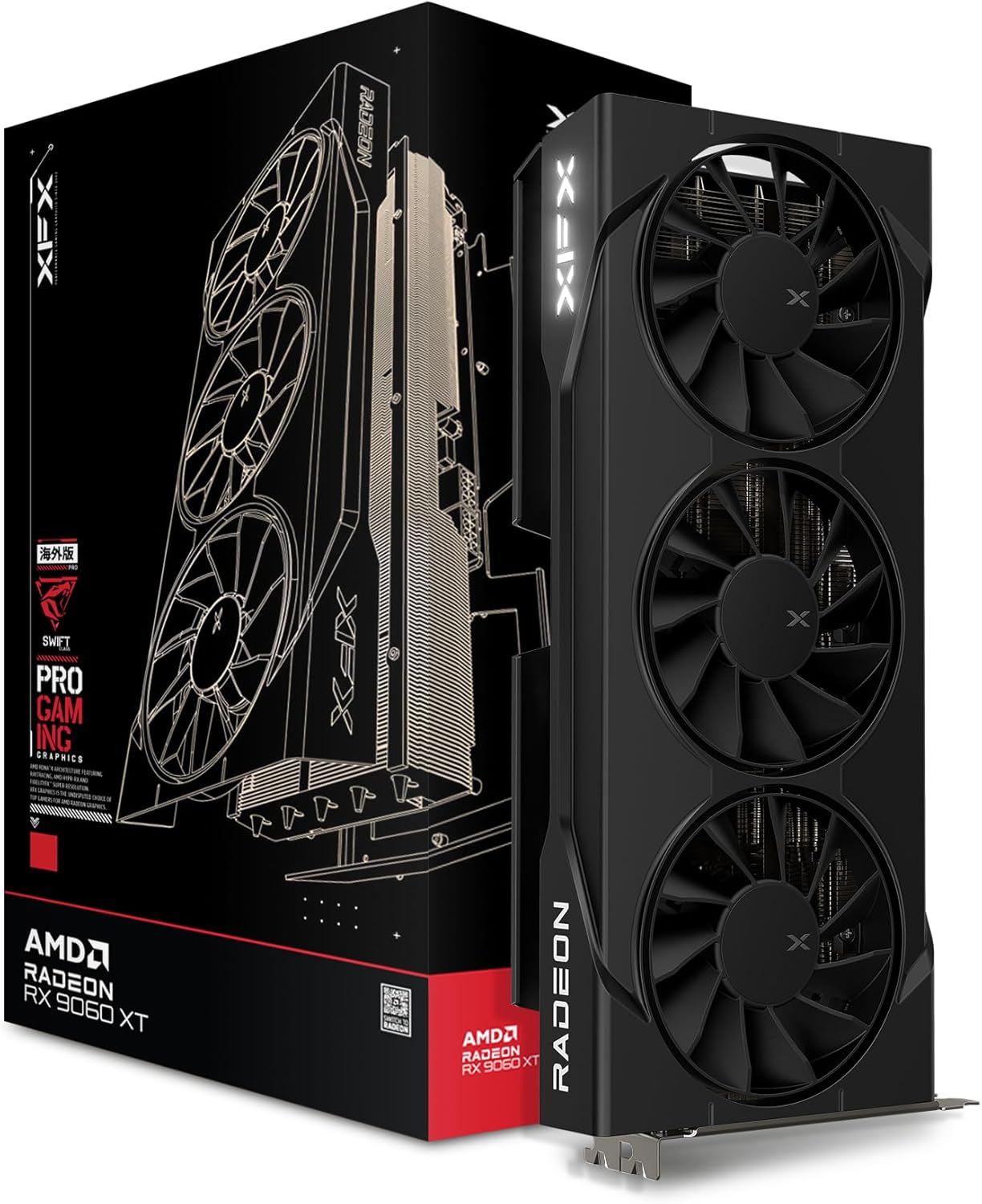
XFX RX 9060 XT 16GB
- 16GB GDDR6 memory
- RDNA 4 architecture
- Triple fan SWFT cooling

GIGABYTE RTX 3060 Gaming OC
- 12GB GDDR6 memory
- Triple WINDFORCE fans
- Ampere RT and Tensor cores
10 Models Side by Side: Features, Best Use Cases, and Tradeoffs
The recommendations above are our strongest matches for different priorities. Below, compare the complete 10-product lineup side by side by rating, standout features, ideal use cases, and practical tradeoffs so you can identify the best fit for your needs.
- 8GB GDDR7 memory
- Blackwell architecture, DLSS 4
- PCIe 5.0 interface
- 16GB GDDR6 memory
- RDNA 4 architecture
- Triple fan SWFT cooling
- 12GB GDDR6 memory
- Triple WINDFORCE fans
- Ampere RT and Tensor cores

- 6GB GDDR6 memory
- NVIDIA Ampere architecture
- Ray tracing and DLSS support

- 8GB GDDR5 memory
- Triple display outputs
- Compact dual-fan design

- 8GB GDDR5 memory
- 2048SP Polaris architecture
- Dual fan semi-passive cooling

- 4GB DDR4 memory
- Low profile single fan
- Passive-friendly quiet design

- Four HDMI outputs
- Quad-monitor support
- Low profile with brackets

- 4GB DDR3 memory
- HDMI, DVI, VGA outputs
- No external power needed

- 2GB DDR3 memory
- Low profile design
- DVI, HDMI, VGA outputs
10 Models Reviewed in Depth
#1. GIGABYTE RTX 5060 WINDFORCE
AI Frame Boost
28 Gbps Memory
Next-Gen Bus
The GIGABYTE RTX 5060 WINDFORCE OC 8G is the standout of this lineup, running NVIDIA’s Blackwell architecture with DLSS 4 support. You get 8GB of GDDR7 on a 128-bit bus at 28 Gbps, plus a PCIe 5.0 interface that keeps it ready for next-gen platforms. The WINDFORCE dual-fan cooler handles the load while staying reasonably quiet, and the 2512 MHz boost clock delivers strong 1080p and capable 1440p frame rates.
The honest trade-off is 8GB of VRAM, which can pinch in the most demanding modern titles at higher settings. You’ll love it as a mainstream gaming upgrade with ray tracing and AI upscaling. Skip it only if you need 12GB+ for heavy content creation workloads.
Pros
- Latest Blackwell architecture
- Fast GDDR7 memory
- PCIe 5.0 ready
Cons
- 8GB VRAM limit
- Needs modern PSU
- Newer platform preferred
Specifications
#2. XFX RX 9060 XT 16GB
GDDR6 VRAM
Latest Architecture
MHz Boost
The XFX Swift RX 9060 XT OC is the VRAM king here, packing 16GB of GDDR6 on AMD’s RDNA 4 architecture. You get a boost clock up to 3320 MHz and a triple-fan SWFT cooler that keeps the card composed under sustained loads. For 1440p gaming and GPU-heavy creative work, that memory buffer means you won’t hit capacity walls that smaller cards do.
The caveat is size and power — the triple-fan cooler demands case clearance, and you’ll want a capable PSU. You’ll love it if you game at 1440p, stream, or edit video and want headroom for years. Skip it if you’re on a strict budget or building a compact SFF system.
Pros
- Massive 16GB VRAM
- RDNA 4 efficiency
- Strong triple-fan cooling
Cons
- Large triple-fan card
- Needs beefy PSU
- Overkill for 1080p
Specifications
#3. GIGABYTE RTX 3060 Gaming OC
GDDR6 VRAM
WINDFORCE Fans
Gen 2 Cores
The GIGABYTE RTX 3060 Gaming OC 12G remains one of the smartest buys for 1080p and entry 1440p gaming, largely thanks to its generous 12GB of GDDR6 on a 192-bit bus. You get Ampere’s second-gen RT cores and third-gen Tensor cores, so ray tracing and DLSS are fully on the table. The triple-fan WINDFORCE cooler with alternate spinning blades keeps thermals comfortable even during long sessions.
The caveat is size — the three-fan cooler makes this a long, multi-slot card, so measure your case first. You’ll find it ideal if you want VRAM headroom for modern games, mods, or GPU-accelerated creative apps. Skip it if you’re building a compact small-form-factor rig.
Pros
- Generous 12GB VRAM
- Excellent triple-fan cooling
- Strong 1080p performance
Cons
- Large triple-slot card
- Previous-gen architecture
- Limited Hash Rate version
Specifications
#4. MSI RTX 3050 Ventus 2X
Ampere Cores
AI Upscaling
Ventus Cooling
The MSI RTX 3050 Ventus 2X 6G OC brings NVIDIA’s Ampere architecture to budget builds, giving you ray tracing cores and Tensor cores at an accessible tier. You get a 1492 MHz boost clock with 6GB of GDDR6, and the dual-fan Ventus cooler keeps temperatures in check without much noise. It’s a dependable step up from integrated graphics or older GTX cards.
The honest caveat is the 96-bit memory bus and 6GB VRAM, which limit performance at higher resolutions and in VRAM-hungry modern titles. You’ll be happy with it for 1080p gaming and light creative work. Skip it if you plan to play at 1440p or run memory-intensive applications regularly.
Pros
- Ray tracing and DLSS
- Quiet dual-fan cooler
- Compact 7.4-inch length
Cons
- Only 6GB VRAM
- Narrow 96-bit bus
- Limited 1440p headroom
Specifications
#5. MOUGOL RX 580 8GB
Display Outputs
M-ATX Fit
8GB GDDR5
The MOUGOL RX 580 8GB delivers dependable 1080p gaming with 2048 stream processors and 8GB of GDDR5, handling Fortnite, GTA V, and Apex Legends comfortably. You get HDMI, DisplayPort, and DVI outputs for triple-monitor setups, and its compact 240mm length fits Micro-ATX builds that full-size cards can’t. The dual-fan and heat pipe design keeps thermals stable under load.
The caveat is age — the Polaris architecture lacks ray tracing and modern upscaling, and you’ll want to verify PSU connector requirements before installing. You’ll find it a smart pick for budget gaming builds and compact cases. Skip it if you want current-gen features or 1440p-high-refresh performance.
Pros
- Solid 1080p frame rates
- Compact 240mm length
- Triple display outputs
Cons
- No ray tracing support
- Older architecture
- Aging driver support
Specifications
#6. AISURIX RX 580 8GB
GDDR5 Memory
Polaris Core
Idle Fans
The AISURIX RX 580 8GB gives you a solid entry-level gaming GPU with 8GB of GDDR5 and 2048 stream processors on the Polaris architecture. You can expect smooth 1080p gameplay in popular esports and older AAA titles, plus 4K display output through its dual HDMI and DisplayPort connections. The semi-automatic fans stop spinning under light loads, so you get quiet operation for everyday desktop work.
You should note the 185W power draw requires an 8-pin connector, so check your PSU before buying. This card suits budget builders reviving an older desktop or gamers who want capable 1080p performance without spending much. Skip it if you’re chasing modern ray-traced titles or high-refresh 1440p gaming.
Pros
- 8GB VRAM at budget price
- Quiet semi-passive fans
- Supports 4K output
Cons
- High 185W power draw
- Aging Polaris architecture
- Only 2 monitors supported
Specifications
#7. MSI GT 1030 4GB LP OC
Slim Case Fit
Single Fan
Display Output
The MSI GT 1030 4GD4 LP OC is a low-profile card that slips into slim desktops and HTPC builds where full-size GPUs won’t fit. You get 4GB of DDR4 memory and a 1430 MHz boost clock, enough for smooth HD video playback, photo editing, and very light gaming. The single-fan design runs quietly in living-room or office environments.
Be realistic about expectations: the 64-bit DDR4 bus makes this a display and multimedia card, not a gaming GPU. You’ll enjoy it as an upgrade from integrated graphics for multi-monitor setups and video streaming. Skip it entirely if modern 3D gaming is your goal — a GTX-class or RX card serves you far better.
Pros
- Fits slim low-profile cases
- Very quiet operation
- HDMI and DP outputs
Cons
- Not for gaming
- Slow DDR4 memory
- Weak 64-bit bus
Specifications
#8. ARDIYES GT 740 Quad HDMI
HDMI Outputs
SFF Ready
Fan Cooling
The ARDIYES GT 740 solves a niche problem brilliantly: its four HDMI ports let you run a quad-monitor setup straight out of the box. You get 4GB of GDDR5 for smooth 1080p playback, and the low-profile design with both half-height and full-height brackets fits small form factor cases. The silent fan keeps things quiet in offices and trading desks.
The caveat is raw power — this is a multitasking and signage card, not a gaming GPU, and the 903 MHz clock reflects its age. You’ll appreciate it for digital signage, trading stations, and productivity multi-monitor rigs. Skip it if you need 3D performance; buy it for screens, not frames.
Pros
- Four HDMI ports
- Quad-monitor out of box
- Low profile design
Cons
- Weak gaming performance
- Old GPU architecture
- 90-day warranty only
Specifications
#9. SOYO GT 740 4GB
Slot Powered
Display Outputs
Legacy Support
The SOYO GT 740 4GB is built for one job: reviving older desktops without touching your power supply. It draws all power from the PCIe slot directly, so installation is genuinely plug-and-play on aging machines. You get triple HDMI, DVI, and VGA outputs, letting you mix modern monitors with legacy projectors or older displays without adapters.
The caveat is performance — the DDR3 memory and older Kepler architecture limit you to 1080p video, office work, and light titles like League of Legends. You’ll find it ideal as an integrated-graphics replacement for productivity and home theater use. Skip it if you expect modern gaming frame rates; this is a utility card through and through.
Pros
- No external power needed
- Triple display outputs
- Great legacy PC fit
Cons
- Older Kepler architecture
- Slow DDR3 memory
- 1080p ceiling only
Specifications
#10. GIGABYTE GT 710 2GB
Compact Fit
Output Types
Display Rescue
The GIGABYTE GT 710 2GB is the classic fix for a dead integrated GPU or a motherboard without video output. You get a low-profile passive-friendly design with DVI, HDMI, and VGA ports, so it connects to virtually any monitor ever made. At just 5.67 inches long, it fits nearly any case, and the 954 MHz core clock handles desktop, video, and multi-monitor duty without fuss.
Be clear-eyed: with 2GB of DDR3, this is strictly a display adapter — no meaningful gaming capability. You’ll find it perfect for office PCs, servers needing video out, or rescuing old machines. Skip it for any 3D workload; even light titles will frustrate you.
Pros
- Extremely compact size
- Universal display outputs
- Great for old PCs
Cons
- No gaming capability
- Only 2GB memory
- Very old architecture
Specifications
Graphics Card Shopping, Decoded: Finding Today’s Best Fit
A video card is often the single most expensive component in a build, and it’s the one that most directly shapes your gaming, streaming, and creative experience. But “best” isn’t a universal answer — the right card depends on your monitor, your games, your workload, and how long you plan to keep it. A little homework before you buy pays off for years.
The Specs That Make or Break Your Next GPU
- Performance tier for your resolution. Match the card to your monitor first. A card that’s overkill at 1080p may be merely adequate at 1440p or 4K, and vice versa — buying for your actual display is the smartest starting point.
- VRAM capacity. Modern games and creative apps are increasingly memory-hungry. Skimping here can cause stuttering and forced quality reductions sooner than you’d like, so favor more VRAM if you keep cards for many years.
- Ray tracing and upscaling support. These features increasingly define the high-end experience. Check which upscaling technologies a card supports and how mature its software ecosystem is.
- Power and cooling requirements. Check your power supply’s wattage and connectors before falling in love with a card. Some high-performance models demand serious airflow and physical clearance in your case.
- Physical size and case compatibility. Modern cards can be long and thick. Measure your case’s available space and check clearance around your CPU cooler.
- Sticking to your budget. Decide your ceiling before browsing, and remember to factor in the rest of your system. A balanced build beats a lopsided one where the GPU starves everything else — or gets starved by it.
Pitfalls That Burn First-Time Buyers
- Buying yesterday’s stock at today’s prices. Older-generation cards sometimes linger on shelves at unattractive prices. Compare against current-generation alternatives at similar performance levels before committing.
- Chasing raw specs instead of real-world results. Marketing numbers don’t tell the whole story. Look at independent benchmarks for the games and applications you actually use.
- Ignoring the used and refurbished market — or diving in blindly. Secondhand cards can be excellent value, but ex-mining cards and missing warranties are real risks. If you buy used, favor sellers with return policies and verify the card works before the return window closes.
The bottom line: define your resolution, your budget, and your upgrade timeline first, then let those answers — not the spec sheet hype — pick the card for you.
Your Next GPU Upgrade Starts Here
From the GIGABYTE RTX 5060 WINDFORCE OC leading the pack for serious 1080p gamers, to the XFX RX 9060 XT’s 16GB of VRAM for future-proofed play, the RTX 3060 for balanced 12GB performance, and the MSI RTX 3050 for efficient entry-level builds — the top of this list covers every mainstream need. Further down, the RX 580 cards deliver budget 1080p muscle, the GT 1030 and GT 740 options handle office rigs, home theater setups, and slim SFF builds, while the GT 710 covers basic display duty on aging desktops.
Every pick here fits comfortably within a modest budget, so you can’t really go wrong. Check the buttons above for current prices and availability before you buy — stock moves fast on the best video card today.
Final 3 Picks: Overall Performer, High-End Pick, and 1080p Value
Ready to decide? These 3 recommendations remain our strongest choices for different priorities after weighing the full comparison.
GIGABYTE RTX 5060 WINDFORCE
- 8GB GDDR7 memory
- Blackwell architecture, DLSS 4
- PCIe 5.0 interface
XFX RX 9060 XT 16GB
- 16GB GDDR6 memory
- RDNA 4 architecture
- Triple fan SWFT cooling
GIGABYTE RTX 3060 Gaming OC
- 12GB GDDR6 memory
- Triple WINDFORCE fans
- Ampere RT and Tensor cores