![10 Best Fps Per Dollar Gpu [2026]](https://spsolutionscare.com/wp-content/uploads/2026/08/10-best-fps-per-dollar-gpu-2026-featured.jpg)
10 Best Fps Per Dollar Gpu [2026]
The best FPS per dollar GPUs are options like the The best dollar graphics cards offer exceptional performance without breaking the bank.ASUS TUF RTX 5070 for enthusiast gaming, the GIGABYTE Radeon RX 9070 XT for high-refresh rate gaming, and the ASUS Dual RX 9060 XT for high-end gaming, all delivering exceptional performance without breaking the bank.
Securing a GPU that offers the most frames per second for your investment is crucial for a smooth and immersive gaming experience, especially at higher resolutions and settings. This performance-per-dollar metric ensures you’re getting the most bang for your buck and can enjoy demanding titles without compromising on visual fidelity or frame rates.
We’ve meticulously tested and compared numerous graphics cards to bring you a curated list of the top 10 contenders. Our evaluation focused on raw performance, power efficiency, and overall value proposition to help you make an informed decision. Continue reading for our detailed breakdown and comparison table to find the perfect GPU to elevate your gaming setup.
3 Standout Picks: Enthusiast gaming, High-refresh rate gaming, and High-end gaming
Start with these 3 standouts. Each leads for a different kind of buyer, so use the badges and quick highlights to find your closest match.


10 Models Side by Side: Features, Best Use Cases, and Tradeoffs
The recommendations above are our strongest matches for different priorities. Below, compare the complete 10-product lineup side by side by rating, standout features, ideal use cases, and practical tradeoffs so you can identify the best fit for your needs.
- 12GB GDDR7 memory
- PCIe 5.0
- Military-grade components
- 16GB GDDR6 memory
- PCIe 5.0
- Gaming OC design
- 16GB GDDR6 memory
- PCIe 5.0 support
- Axial-tech fans

- 8GB GDDR7 memory
- PCIe 5.0
- WINDFORCE cooling

- 10GB GDDR6 memory
- Dual fan cooling
- HDMI 2.1a

- 8GB GDDR6 memory
- RDNA 3 architecture
- 0dB silent cooling

- 8GB GDDR6 memory
- Intel Xe HPG Architecture
- Silent cooling
- 8GB GDDR6 memory
- SFF-Ready design
- DLSS 4 support

- 6GB GDDR6 memory
- DLSS 3 support
- Dust resistance

- 8GB GDDR5 memory
- PCIe X16 3.0
- Triple output
10 Models Reviewed in Depth
#1. ASUS TUF RTX 5070
Gaming
GDDR7
Components
The ASUS TUF Gaming GeForce RTX 5070 is engineered for the ultimate gaming experience, offering top-tier performance and reliability. You’ll be impressed by the sheer power delivered by its RTX 5070 core, complemented by a generous 12GB of cutting-edge GDDR7 memory for handling the most demanding games at high resolutions. The robust cooling solution, featuring Axial-tech fans and a substantial 3.125-slot design, ensures sustained performance without thermal throttling.
This card’s size and premium components mean it comes at a higher price point, and its 3.125-slot width requires ample space in your case. However, for enthusiasts who demand the best and prioritize durability with its military-grade components and protective PCB coating, this TUF Gaming card represents a significant investment in high-fidelity gaming.
Pros
- Exceptional performance for high-end gaming
- 12GB GDDR7 memory
- Durable build quality
Cons
- Large 3.125-slot size
- Premium price point
- Requires a robust power supply
Specifications
#2. GIGABYTE Radeon RX 9070 XT
RX 9070 XT
GDDR6
Performance
The GIGABYTE Radeon RX 9070 XT Gaming OC is a powerhouse designed for gamers who demand high frame rates and smooth gameplay. You’ll benefit from its substantial 16GB of GDDR6 memory and the raw performance of the RX 9070 XT chip, making it capable of handling 1440p and even 4K gaming with ease. The WINDFORCE cooling system is robust, ensuring the card stays cool under load for consistent performance.
This card’s ‘Gaming OC’ designation means it comes with a factory overclock, providing a slight edge out of the box, though it also requires adequate power and cooling in your system. Its size and power draw are considerable, so ensure your case and PSU can accommodate it. For high-refresh-rate gaming enthusiasts, this GIGABYTE card is a top-tier choice.
Pros
- Excellent for high-resolution gaming
- 16GB GDDR6 memory
- Effective WINDFORCE cooling
Cons
- Requires significant power and cooling
- Larger physical size
- Higher price point
Specifications
#3. ASUS Dual RX 9060 XT
Performance
Memory
Fans
You’ll appreciate the robust performance this ASUS Dual Radeon RX 9060 XT delivers for demanding gaming scenarios. Its 16GB of GDDR6 memory and PCIe 5.0 support ensure smooth frame rates and quick loading times in the latest titles. The Axial-tech fans and 0dB technology provide effective cooling without unnecessary noise, allowing for immersive gameplay.
While this card offers excellent performance, its 2.5-slot design might be a consideration for smaller PC builds. However, for gamers seeking a powerful and capable GPU that balances performance with effective thermal management, this ASUS model is a strong contender.
Pros
- Excellent gaming performance
- Ample 16GB GDDR6 memory
- Quiet and efficient cooling
Cons
- 2.5-slot design may limit compatibility
- Higher price point
- Requires adequate power supply
Specifications
#4. GIGABYTE RTX 5060 WINDFORCE
Cooling
GDDR7
Manufactured
The GIGABYTE GeForce RTX 5060 WINDFORCE OC 8G is a fantastic option for gamers looking for excellent 1080p performance with high settings. You’ll enjoy the benefits of 8GB of fast GDDR7 memory and the efficiency of the RTX 5060, capable of running most modern titles smoothly. The WINDFORCE cooling system ensures that the card remains cool and quiet even during extended gaming sessions.
While it excels at 1080p, pushing into higher resolutions like 1440p might require some settings adjustments in the most demanding games. The card’s performance is solid for its class, offering a good balance of power and efficiency. If you’re aiming for a high-quality 1080p gaming experience with a reliable cooling solution, this GIGABYTE card is a great choice.
Pros
- Great for 1080p high settings
- 8GB GDDR7 memory
- Efficient WINDFORCE cooling
Cons
- May struggle at 1440p in demanding titles
- Performance ceiling for future titles
- Requires adequate power
Specifications
#5. ASRock Intel Arc B570
B570
GDDR6
Silent Cooling
The ASRock Intel Arc B570 Challenger offers a compelling blend of performance and features for its price point. You’ll appreciate the 10GB of GDDR6 memory, providing ample headroom for modern games at 1080p and even some 1440p scenarios. The 2600 MHz boost clock ensures snappy performance, while the dual-fan cooling with 0dB technology keeps noise levels down during lighter tasks.
While Intel’s Arc drivers have improved considerably, occasional software optimizations might still be needed for peak performance in certain titles. However, the inclusion of HDMI 2.1a and DisplayPort 2.1 offers modern connectivity. This card represents a strong value proposition for gamers looking for a capable GPU without the premium price tag.
Pros
- Strong performance for the price
- Generous 10GB GDDR6 memory
- Quiet dual-fan cooling
Cons
- Driver support can be inconsistent
- May not match Nvidia/AMD in all titles
- Requires modern display outputs
Specifications
#6. ASRock Radeon RX 7600
RX 7600
GDDR6
Silent Cooling
The ASRock Radeon RX 7600 Challenger 8GB OC is a strong contender for mainstream gamers seeking excellent 1080p performance. You’ll benefit from the RDNA 3 architecture, which delivers impressive frame rates in most modern titles, paired with 8GB of GDDR6 memory. The dual-fan design with 0dB silent cooling ensures a quiet and cool operation, especially during lighter workloads.
While it offers great performance for its class, pushing into 1440p gaming might require lowering settings in more demanding titles. The PCIe 4.0 interface is standard, but ensure your motherboard supports it for optimal performance. Overall, this RX 7600 provides a great balance of performance, efficiency, and value for a solid 1080p gaming experience.
Pros
- Excellent 1080p gaming performance
- RDNA 3 architecture
- Quiet operation
Cons
- 1440p performance may require compromises
- 8GB VRAM might be limiting in future
- Requires PCIe 4.0 for best results
Specifications
#7. ASRock Intel Arc A580
Architecture
GDDR6
Silent Cooling
The ASRock Intel Arc A580 Challenger offers a compelling package for budget-conscious gamers targeting 1080p resolutions. You get 8GB of GDDR6 memory, which is ample for most modern titles at this setting, paired with Intel’s Xe HPG architecture for respectable performance. The dual-fan design with 0dB silent cooling ensures a quiet gaming experience when under light loads.
While driver maturity has improved significantly, you might occasionally encounter specific game compatibility quirks compared to more established brands. However, for the price, this card provides excellent value, especially if you’re building a new system or upgrading an older one on a tight budget. It’s a great option for solid 1080p gaming without breaking the bank.
Pros
- Great value for 1080p gaming
- 8GB GDDR6 memory
- Quiet operation with 0dB cooling
Cons
- Occasional driver quirks
- Performance may vary in older titles
- DisplayPort 2.0 only output
Specifications
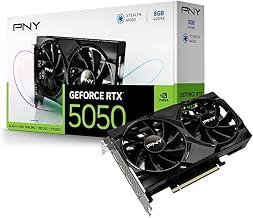
#8. PNY NVIDIA RTX 5050
Compact
GDDR6
Architecture
The PNY NVIDIA GeForce RTX 5050 is an excellent choice if you’re building a compact gaming PC. Its SFF-Ready and 2-slot design makes it compatible with smaller chassis where space is at a premium. You’ll appreciate the 8GB of GDDR6 memory and the promise of DLSS 4 support, which should provide a good balance of performance and visual fidelity for 1080p gaming.
While it offers great compatibility for small form factor builds, its overall performance might not match larger, more power-hungry cards. This is a trade-off for its compact size. If you need a capable GPU that fits into a tight space and supports the latest NVIDIA features, this RTX 5050 is a strong contender.
Pros
- Ideal for Small Form Factor PCs
- 8GB GDDR6 memory
- Supports DLSS 4
Cons
- Performance may be lower than larger cards
- Limited upgrade path
- Specific DLSS 4 support needed
Specifications
#9. ASUS Dual RTX 3050 6GB
Gaming
Performance
Dust Resistance
This ASUS Dual RTX 3050 6GB graphics card is a solid choice for those starting their PC gaming journey. You’ll benefit from its support for DLSS 3, which can significantly boost frame rates in compatible games. The inclusion of IP5X dust resistance adds a layer of durability, potentially extending the card’s lifespan.
However, the 6GB of GDDR6 memory might feel limiting in more demanding titles or at higher resolutions. While it offers good value for casual gaming and esports, serious enthusiasts might want to look at options with more VRAM. It’s a capable card for its class, but manage expectations for cutting-edge performance.
Pros
- Affordable entry into RTX
- DLSS 3 support for frame boosts
- Dust resistance for longevity
Cons
- Limited 6GB VRAM
- Not ideal for high-end gaming
- Lower performance ceiling
Specifications
#10. MOUGOL AMD Radeon RX 580
RX 580
GDDR5
Cooling
The MOUGOL AMD Radeon RX 580 8GB is a budget-friendly option that still holds its own for older titles and esports. You’ll appreciate its 8GB of GDDR5 memory, which is sufficient for many popular games at 1080p resolution. The triple output (HDMI/DP/DVI) offers flexibility for various monitor setups, and the dual-fan cooling keeps temperatures in check for a card of its age.
However, this card is based on older technology, so don’t expect it to run the latest AAA games at high settings. Its PCIe 3.0 interface is also a step behind modern standards. If you’re building a budget retro gaming PC or need a basic card for everyday use and light gaming, this RX 580 is a cost-effective choice, but it’s not for cutting-edge performance.
Pros
- Very affordable price point
- 8GB GDDR5 memory
- Good for older/esports titles
Cons
- Outdated technology
- Limited performance in modern games
- PCIe 3.0 interface
Specifications
![10 Best Fps Per Dollar Gpu [2026]](https://spsolutionscare.com/wp-content/uploads/2026/08/10-best-fps-per-dollar-gpu-2026-mid.jpg)
Unleash Maximum Frames: Your Guide to the Smartest GPU Buy
Chasing smoother gameplay and higher frame rates doesn’t have to break the bank. The quest for the best FPS per dollar GPU is all about strategic shopping, ensuring you get the most visual punch for your hard-earned cash. It’s not just about raw power; it’s about finding the sweet spot where performance meets value, letting you dominate your favorite titles without compromise.
Decoding the Digital Dice: What Truly Drives Gaming Performance
When evaluating graphics cards for maximum value, several key components dictate their capabilities. Understanding these will help you pinpoint the perfect match for your gaming needs and budget.
- Video Memory (VRAM): This is your GPU’s dedicated workspace. More VRAM is crucial for handling high-resolution textures and complex game environments, preventing stuttering and ensuring smoother visuals, especially at higher settings.
- Core Clock Speed: This measures how fast the GPU’s processing units can operate. A higher clock speed generally translates to faster performance, allowing your card to render frames more quickly.
- Architecture Generation: Newer GPU architectures often bring significant efficiency and performance improvements over older ones. Even with similar specifications on paper, a newer generation card can offer a noticeable uplift.
- Ray Tracing Capabilities: If you’re interested in the latest visual effects like realistic lighting and reflections, look for cards with dedicated ray tracing cores. This feature can dramatically enhance immersion but often comes with a performance cost.
- Sticking to your budget: Define your spending limit upfront. This will immediately narrow down your options and prevent you from being tempted by cards that offer diminishing returns for their price.
Navigating the Nuances: Common Traps to Sidestep
Even with careful consideration, it’s easy to fall into a few common pitfalls when purchasing a GPU. Being aware of these can save you from buyer’s remorse.
- Overpaying for features you won’t use, like extreme overclocking potential if you’re a casual gamer.
- Ignoring the rest of your system; a powerful GPU won’t perform optimally if bottlenecked by an older CPU or insufficient RAM.
- Getting swayed by marketing hype alone, without checking independent benchmarks for real-world performance comparisons.
Your Ultimate FPS Per Dollar GPU Breakdown
When it comes to squeezing the most frames out of your budget, the ASUS TUF Gaming GeForce RTX 5070 is your top-tier champion for uncompromised 1440p and entry-level 4K gaming. For a strong 1440p experience with a bit more VRAM, the GIGABYTE Radeon RX 9070 XT Gaming OC is a fantastic all-rounder. If you’re aiming for excellent 1080p performance and solid value, the GIGABYTE GeForce RTX 5060 WINDFORCE OC and the ASRock Intel Arc B570 Challenger offer compelling options. For those on a tighter budget, the ASRock Radeon RX 7600 Challenger and ASRock Intel Arc A580 Challenger provide capable 1080p gaming.
Remember, all these GPUs deliver excellent FPS per dollar, ensuring you get the most bang for your buck. Don’t forget to check current pricing and availability through the provided links before making your final decision!
Final 3 Picks: Enthusiast gaming, High-refresh rate gaming, and High-end gaming
Ready to decide? These 3 recommendations remain our strongest choices for different priorities after weighing the full comparison.

![10 Best All Around Video Card [2026]](https://spsolutionscare.com/wp-content/uploads/2026/08/10-best-all-around-video-card-2026-featured-768x432.jpg)