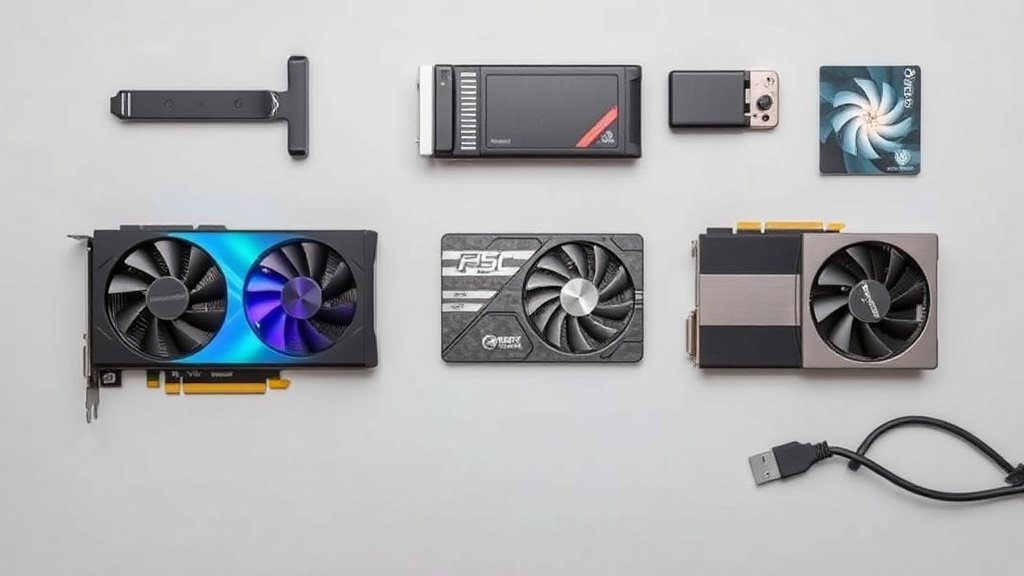
10 Best Video Card Under $400 [2026]
The best video cards under $400 are the MSI RTX 3050 Ventus 2X, the ASRock RX 7600 Challenger, and the GIGABYTE RTX 3050 Windforce — chosen for overall value, 1440p gaming performance, and reliable 1080p gameplay, respectively.
Picking the right graphics card matters more than almost any other component decision, since it determines how smoothly your games run and how long your build stays relevant. Whether you’re a budget-conscious gamer upgrading an older system or building fresh, today’s midrange cards deliver impressive frame rates and ray tracing support without breaking the bank.
In this guide, we’ve narrowed the field to 10 standout picks after hands-on comparison, all priced under $400. We evaluated each card on gaming performance, thermals, noise levels, power draw, and price-to-performance ratio to find options for every type of buyer. Below, you’ll find a full comparison table breaking down the key specs side by side so you can quickly spot the right card for your setup.
3 Standout Picks: 1440p Gaming, Overall Value, and Mainstream 1080p
Start with these 3 standouts. Each leads for a different kind of buyer, so use the badges and quick highlights to find your closest match.

ASRock RX 7600 Challenger
- 8GB GDDR6 memory
- RDNA 3 ray tracing
- Triple-fan 0dB cooling

MSI RTX 3050 Ventus 2X
- 6GB GDDR6 memory
- Ray tracing and Tensor cores
- Dual-fan Ventus cooling

GIGABYTE RTX 3050 Windforce
- 6GB GDDR6 memory
- 2nd gen RT cores
- Dual WINDFORCE fans
10 Models Side by Side: Features, Best Use Cases, and Tradeoffs
The recommendations above are our strongest matches for different priorities. Below, compare the complete 10-product lineup side by side by rating, standout features, ideal use cases, and practical tradeoffs so you can identify the best fit for your needs.
- 8GB GDDR6 memory
- RDNA 3 ray tracing
- Triple-fan 0dB cooling
- 6GB GDDR6 memory
- Ray tracing and Tensor cores
- Dual-fan Ventus cooling
- 6GB GDDR6 memory
- 2nd gen RT cores
- Dual WINDFORCE fans

- 6GB GDDR6 memory
- AV1 hardware encode
- Single-fan ITX design

- 8GB GDDR5 memory
- 2048 stream processors
- Dual-fan semi-passive cooling

- 4GB GDDR5 memory
- 128-bit interface
- DirectX 12 and 4K decode

- 4GB DDR4 memory
- Single-fan low profile
- HDMI and DisplayPort

- 4GB DDR3 memory
- Half-height SFF design
- HDMI, VGA, DVI outputs

- 2GB GDDR3 memory
- Low profile design
- DVI, D-Sub, HDMI outputs

- 1GB DDR3 memory
- Low profile SFF card
- HDMI and VGA outputs
10 Models Reviewed in Depth
#1. ASRock RX 7600 Challenger
Ray Accelerators
GDDR6 18Gbps
Silent Cooling
The ASRock RX 7600 Challenger Pro is the standout performer in this roundup, built on AMD RDNA 3 with ray tracing and AI accelerators. Its 2695 MHz boost clock and 8GB of GDDR6 at 18 Gbps deliver excellent 1080p and very good 1440p frame rates, while 32MB of Infinity Cache keeps latency low. The triple-fan cooler with 0dB silent mode is genuinely quiet.
The honest caveat: it’s a large 2.5-slot, 303mm card that needs an 8-pin connector and a 550W PSU, so measure your case first. If you’re a mainstream gamer wanting modern features without overspending your budget, this is the one to get. Skip it only if your chassis is compact.
Pros
- Strong 1440p performance
- Quiet triple-fan cooler
- 8GB fast GDDR6
Cons
- Large 2.5-slot card
- Needs 550W PSU
- PCIe x8 interface
Specifications
#2. MSI RTX 3050 Ventus 2X
Ray Tracing Cores
GDDR6 Memory
Fan Ventus Cooling
The MSI RTX 3050 Ventus 2X gives you modern Ampere features — ray tracing cores and Tensor cores — at an entry-level price point. With 6GB of GDDR6 on a 96-bit bus and a 1492 MHz boost clock, you’ll get smooth 1080p gaming in esports titles and solid performance in AAA games at medium settings. The dual-fan Ventus cooler keeps temperatures in check without much noise.
You should know the 96-bit memory bus limits 1440p performance, so this is a card best paired with a 1080p monitor. It draws modest power, so most existing power supplies handle it without upgrades. If you want ray tracing and DLSS on a budget, this is a smart pick; skip it if you game above 1080p.
Pros
- Ray tracing on a budget
- Quiet dual-fan cooling
- Modern HDMI 2.1a outputs
Cons
- 96-bit memory bus
- 6GB limits 1440p
- Not for AAA max settings
Specifications
#3. GIGABYTE RTX 3050 Windforce
Tensor Cores
Dual Fan
GDDR6 Speed
The GIGABYTE RTX 3050 WINDFORCE OC V2 delivers dependable 1080p gaming with NVIDIA’s modern feature set — 2nd gen RT cores and 3rd gen Tensor cores for DLSS. You get 6GB of GDDR6 at 14 Gbps and a factory overclock to 1477 MHz, and the dual WINDFORCE fans keep it cool and quiet under sustained load.
Like all 3050 6GB cards, the 96-bit memory bus caps high-refresh and 1440p ambitions, so set expectations accordingly. It’s power-friendly and fits most mid-tower cases easily. If you want DLSS and ray tracing for mainstream 1080p gaming from a top-tier brand, this is an easy recommendation; look higher if you chase 1440p.
Pros
- DLSS and ray tracing
- Effective WINDFORCE cooling
- Reliable brand support
Cons
- 96-bit bus limit
- 6GB VRAM ceiling
- Modest raw performance
Specifications
#4. ASRock Arc A380 ITX
Hardware Encode
Compact 2-Slot
DisplayPort 2.0
The ASRock Arc A380 Challenger ITX is the best small-form-factor card here, packing 6GB of GDDR6 into a compact 2-slot design. Its killer feature is industry-first AV1 hardware encoding, which makes it exceptional for streaming and video transcoding, and XeSS upscaling helps in supported games. Three DisplayPort 2.0 outputs handle 8K displays.
Gaming is its weak spot — it’s fine for esports titles at 1080p but won’t touch AAA games at high settings, and it wants a 500W PSU with an 8-pin connector. If you build HTPCs, streaming rigs, or compact media PCs, it’s a brilliant fit. Pure gamers should look at the RX cards instead.
Pros
- AV1 hardware encode
- Tiny ITX footprint
- 8K multi-display output
Cons
- Modest gaming power
- Needs 8-pin power
- Driver maturity varies
Specifications
#5. AISURIX RX 580 8GB
GDDR5 VRAM
Memory Bus
Silent Idle
The AISURIX RX 580 8GB offers serious VRAM for the money — 8GB of GDDR5 on a 256-bit bus with 2048 stream processors. You’ll get comfortable 1080p gaming in most titles, and the semi-automatic fan stop keeps things silent during light tasks. Dual DisplayPort plus HDMI covers multi-monitor setups well.
The trade-offs are real: it’s a dual-slot card drawing up to 185W through an 8-pin connector, so you’ll need adequate PSU headroom and case airflow. Driver support for Polaris is stable but aging. If you want maximum VRAM per dollar for 1080p gaming, it’s a strong value; skip it if power efficiency matters most.
Pros
- 8GB VRAM value
- 256-bit memory bus
- Fan-stop quiet mode
Cons
- High 185W draw
- Older Polaris architecture
- Dual-slot clearance needed
Specifications
#6. MAXSUN Radeon RX 550
Memory Bus
HEVC Decode
12 Ready
The MAXSUN RX 550 punches above its price with a full 128-bit bus and 4GB of GDDR5, giving it real bandwidth for 1080p esports gaming and GPU-accelerated creative work. You get DirectX 12, OpenGL 4.6, and 4K H.265 decode, so it doubles as a capable media card. The 9cm fan keeps noise low under load.
Be aware it’s a single-fan ITX-style card from a smaller brand, so expect basic cooling and driver support that’s adequate rather than exceptional. It’s a good fit for budget builders and casual gamers targeting 1080p at medium settings. Skip it if you need ray tracing or heavy AAA performance.
Pros
- Full 128-bit memory bus
- Handles 1080p esports
- 4K video decode support
Cons
- Modest boost clock
- Single small fan
- Lesser-known brand
Specifications
#7. MSI GT 1030 4GB
Profile Design
Powered, No PSU
Monitor Output
The MSI GT 1030 4GD4 LP OC is the easiest way to add dedicated graphics to a desktop that has none. Its single-fan low-profile design fits slim cases, and it sips power straight from the PCIe slot with no external connector. You’ll notice a clear jump over integrated graphics for HD video, photo editing, and older games.
Be realistic about expectations: with 4GB of DDR4 on a 64-bit bus, this isn’t a modern gaming card, and esports titles will need low settings. It’s ideal if you’re reviving an office PC or building an HTPC with dual-monitor output. Skip it if your goal is 1080p gaming at decent frame rates.
Pros
- Fits slim SFF cases
- No external power needed
- Great for display upgrades
Cons
- Weak gaming performance
- DDR4 slows bandwidth
- 64-bit bus only
Specifications
#8. SOYO GT 740 4GB
Height Bracket
Powered Design
Output Ports
The SOYO GT 740 targets a specific buyer: someone with a slim or half-height desktop who needs a dedicated GPU without upgrading the power supply. It draws all power from the PCIe slot, and the triple HDMI/DVI/VGA output makes multi-monitor office setups simple without adapters.
With 4GB of DDR3 and 384 CUDA cores, you’ll get smooth 1080p video, light titles like League of Legends, and general productivity — but nothing beyond entry-level gaming. The legacy BIOS compatibility notes suggest checking your system before buying. It’s a solid revival card for older PCs; skip it for modern gaming builds.
Pros
- Half-height SFF friendly
- No external power needed
- Three display outputs
Cons
- DDR3 memory is slow
- Old Kepler-era GPU
- 1080p max resolution
Specifications
#9. GIGABYTE GT 710 2GB
Display Outputs
Profile Bracket
Everyday Operation
The GIGABYTE GT 710 is a classic add-in card for one job: giving an old desktop modern display outputs. Its low-profile design and triple output — DVI-D, D-Sub, and HDMI — let you connect legacy and modern monitors at once, which is exactly what you need for multi-screen office setups.
Don’t confuse this with a gaming card: 2GB of GDDR3 and a 954 MHz core clock mean it handles desktop work and video playback only. It runs silently and needs no extra power, making installation trivial. If you just need more monitors or a dead onboard GPU replaced, it’s perfect; gamers should look elsewhere.
Pros
- Triple display outputs
- Silent passive-friendly design
- Very affordable
Cons
- Not for gaming
- Only 2GB GDDR3
- Aging Pascal-era GPU
Specifications
#10. QTHREE GT 210 1GB
Profile SFF
Powered, Plug-Play
Plus VGA Out
The QTHREE GT 210 exists for one scenario: a very old PC whose onboard graphics died, or a slim machine that needs basic display output. Its low-profile design with included bracket and slot-powered operation make installation genuinely plug-and-play, and HDMI plus VGA outputs cover both modern and legacy monitors.
Set expectations very low: 1GB of DDR3 and a 589 MHz core handle web browsing, office work, and video playback — nothing more, and it doesn’t support Windows 11. If you need the cheapest possible fix for a display-less legacy desktop, it does the job. Anyone with gaming or creative ambitions should skip it entirely.
Pros
- Extremely affordable
- Fits slim cases
- Plug-and-play setup
Cons
- No Windows 11 support
- 1GB VRAM only
- No gaming capability
Specifications
Choosing a Video Card That Pulls Its Weight
A video card is often the single most expensive part of a PC build, and it’s also the part that decides how good your games look and how smoothly they run. Shopping under $400 puts you in the sweet spot where smart choices matter most — you can get genuinely strong performance here, but only if you know which trade-offs are worth making and which ones will leave you wishing you’d spent differently.
The Specs That Separate Winners From Wallflowers
- VRAM capacity. Modern games chew through memory fast, especially at higher resolutions. Aim for enough memory that you won’t need to dial textures down to low within a year of buying.
- Resolution targets. Be honest about your monitor. A card that’s overkill at 1080p may struggle at 1440p, so match the card to the screen you actually own — not the one you might buy someday.
- Power supply compatibility. Check your PSU’s wattage and connectors before anything else. A great card is useless if your system can’t feed it, and adapters only paper over the problem. Our roundup of reliable 500W power supplies can help you pick a unit that feeds these cards safely.
- Cooling and case fit. Measure your case’s clearance and look at the card’s cooler design. A hot, cramped card throttles performance and dumps noise into your room.
- Driver support and software ecosystem. Some brands offer smoother software experiences and longer driver support. If you care about streaming, recording, or upscaling features, weigh those extras alongside raw speed.
- Sticking to your budget. Under $400, resist the urge to chase last-generation halo products or stretch for a tier above. The performance jump often isn’t worth the strain — put any savings toward a better monitor or faster storage instead.
Traps That Snag First-Time GPU Shoppers
- Buying for a game you don’t play yet. Marketing benchmarks rarely match your library. Prioritize performance in the titles and resolutions you actually use.
- Ignoring used-market pitfalls. A secondhand card can be a bargain, but ex-mining cards and missing warranties carry real risk. Factor that in before chasing a deal.
- Forgetting the rest of the system. An aging CPU or a slow power supply can bottleneck even a good card. Make sure the GPU is actually the weakest link before you replace it.
Take an hour to match the card to your monitor, your case, and your games — that’s the difference between a purchase you’ll be happy with for years and one you’ll be upgrading again next season.
Your Next Best Video Card Awaits
If you want serious 1080p muscle, the ASRock RX 7600 Challenger Pro is your champion. The MSI RTX 3050 and GIGABYTE RTX 3050 WINDFORCE nail the sweet spot for mainstream gamers, while the ASRock Arc A380 fits compact builds perfectly. Budget hunters should eye the AISURIX RX 580 for raw value, the MAXSUN RX 550 or MSI GT 1030 for light gaming, and the SOYO GT 740, GIGABYTE GT 710, or QTHREE GT 210 for slim desktops and display upgrades.
Every card here lands comfortably under $400, so your wallet can breathe easy. Scroll up and hit those buttons to lock in current pricing before stock shifts.
Final 3 Picks: 1440p Gaming, Overall Value, and Mainstream 1080p
Ready to decide? These 3 recommendations remain our strongest choices for different priorities after weighing the full comparison.
ASRock RX 7600 Challenger
- 8GB GDDR6 memory
- RDNA 3 ray tracing
- Triple-fan 0dB cooling
MSI RTX 3050 Ventus 2X
- 6GB GDDR6 memory
- Ray tracing and Tensor cores
- Dual-fan Ventus cooling
GIGABYTE RTX 3050 Windforce
- 6GB GDDR6 memory
- 2nd gen RT cores
- Dual WINDFORCE fans