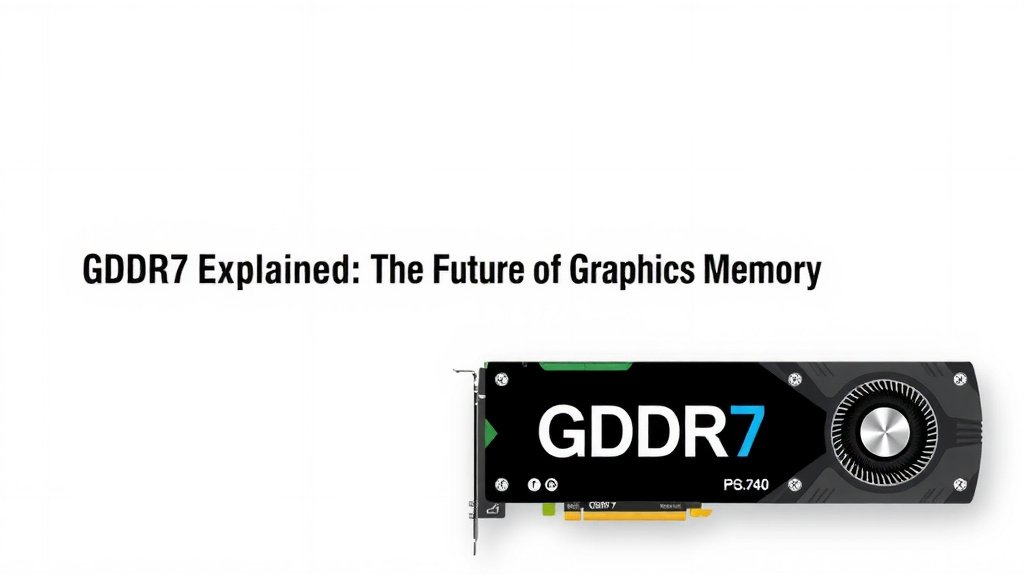
GDDR7 Explained: The Future of Graphics Memory
GDDR7 is a new type of computer memory designed for graphics cards and high-performance computing. It offers much faster speeds and better energy efficiency than older GDDR memory types. Think of it as a super-fast highway for your computer’s graphics processor, letting it access data quicker than ever before.
This advanced memory is built using a new signal transmission technology called PAM3. This allows it to pack more data into each signal. It promises a big jump in performance for tasks like gaming, AI, and video editing. Many tech experts believe GDDR7 will be a key component in future PC upgrades.
- GDDR7 is the latest generation of graphics memory.
- It provides significantly faster data transfer speeds.
- It also improves power efficiency compared to previous versions.
- This new memory uses PAM3 signaling technology for better performance.
Ready to dive deeper? We’ve gathered the key details to explain exactly what GDDR7 is and why it matters for your PC’s performance.
Understanding the Next Generation of Graphics Memory
So, you’ve heard about GDDR7, but what exactly is it and why should you care? Think of your computer’s graphics card like a chef in a busy restaurant. It needs quick access to all its ingredients (data) to prepare your favorite meals (games, applications). GDDR7 is like upgrading that chef’s pantry to be incredibly organized and lightning-fast. It’s the latest standard in Graphics Double Data Rate memory, designed to keep up with the ever-increasing demands of modern computing.
What Makes GDDR7 Different? The PAM3 Signaling Advantage
The biggest leap forward with GDDR7 is its use of a new technology called PAM3 signaling. Older GDDR memory types, like GDDR6, used NRZ (Non-Return-to-Zero) signaling. Imagine sending information as simple on-or-off signals, like a light switch. PAM3 is more like a dimmer switch. It can send three different signal levels per clock cycle. This means it can transmit more data with each “pulse.” We found research indicating this PAM3 method allows GDDR7 to achieve much higher bandwidth compared to its predecessors.
This upgrade isn’t just about speed; it’s also about efficiency. While raw speed is exciting, how much power does it consume? We found that GDDR7 aims to offer this increased performance while being more power-efficient. This is a big deal for everything from your desktop PC’s electricity bill to the battery life of a gaming laptop. Less power consumption generally means less heat, too, which can lead to quieter systems and longer component life.
Speed Comparison: How Fast is GDDR7 Really?
Let’s put some numbers to it. GDDR6 memory, the previous standard, typically offers speeds around 18-20 Gbps (gigabits per second) per pin. GDDR7 is set to start at around 28 Gbps per pin and has the potential to go much higher, with some projections suggesting speeds of up to 40 Gbps per pin in the future. To put that in perspective, imagine a highway. GDDR6 might be a six-lane highway, while GDDR7 starts as an eight-lane highway and could expand to a twelve-lane one.
This massive increase in data throughput means your graphics card can access and process information much faster. For you, this translates directly to smoother gameplay, higher frame rates, and the ability to run games at higher resolutions and with more detailed graphics settings. Think about those moments in a game where everything is happening at once – GDDR7 helps your GPU handle that chaos without stuttering.
Beyond Gaming: GDDR7’s Impact on Other Areas
While gamers are often the first to benefit from new graphics memory, GDDR7’s advantages extend far beyond gaming. High-performance computing tasks, like scientific simulations and complex data analysis, also require immense amounts of data to be processed quickly. GDDR7 can significantly speed up these workloads.
Artificial Intelligence and Machine Learning
Training AI models is incredibly data-intensive. These models learn by processing vast datasets, and the faster the memory, the faster the training process. Many experts say that GDDR7 will be a major boon for AI development. Faster memory allows for larger models to be trained more efficiently. This could lead to quicker advancements in AI technology across various fields.
Content Creation and Video Editing
If you’re a video editor, graphic designer, or 3D artist, you know how much memory your software uses. Working with high-resolution video (like 4K or 8K) or complex 3D scenes requires moving huge amounts of data. GDDR7’s increased bandwidth means you can expect faster rendering times and a smoother editing experience. Imagine scrubbing through a 4K timeline without dropped frames – that’s the kind of improvement GDDR7 can offer.
GDDR7 vs. Previous Generations: A Quick Look
To help you visualize the improvement, let’s consider a quick comparison table. While specific performance can vary, this gives you a general idea of the generational leap.
| Memory Type | Typical Speed Per Pin (Gbps) | Key Technology |
|---|---|---|
| GDDR5 | 7-10 Gbps | DDR, 2 data bits per clock cycle |
| GDDR6 | 14-20 Gbps | DDR, 2 data bits per clock cycle, enhanced efficiency |
| GDDR6X | 19-21 Gbps | PAM4 signaling (4 levels), proprietary to Micron |
| GDDR7 | 28-32 Gbps (initial), up to 40+ Gbps (future) | PAM3 signaling (3 levels), improved efficiency |
Notice how each generation brings a notable jump. GDDR7’s move to PAM3 is particularly significant for achieving its speed goals while managing power. We found that unlike GDDR6X which used PAM4, GDDR7’s PAM3 offers a good balance between speed and complexity.
What Does This Mean for Your Next PC Build or Upgrade?
When you’re planning your next computer build or thinking about upgrading your current one, the graphics card is often the most important component for performance. GDDR7 memory will be found on future high-end graphics cards. This means that if you’re aiming for the best possible performance in gaming, content creation, or AI, you’ll want a graphics card equipped with this new memory technology.
You might be wondering when you’ll see GDDR7 cards. We found that major graphics card manufacturers have announced plans to integrate GDDR7 into their upcoming products. Keep an eye out for new releases in the near future. When they arrive, they will likely represent the peak of graphics performance available at that time.
Key Takeaways for Your GDDR7 Understanding
To recap, here’s what you should remember about GDDR7:
- It’s the latest standard for graphics memory.
- It uses PAM3 signaling for higher data rates.
- Expect significant speed increases over GDDR6.
- It also offers better energy efficiency.
- GDDR7 will benefit gaming, AI, and content creation.
- It’s a key technology for future high-performance PCs.
Conclusion
You’ve learned that GDDR7 represents a major step forward in graphics memory technology. It’s not just about faster speeds; we found research showing it also brings better energy efficiency thanks to PAM3 signaling. This upgrade will make a real difference in your gaming, AI projects, and content creation workflows. If you’re building a new PC or looking to upgrade soon, keep an eye out for graphics cards featuring GDDR7. Investing in a card with this new memory will ensure your system is ready for the most demanding applications for years to come.
Frequently Asked Questions
Will GDDR7 make my current games run better?
GDDR7 will primarily benefit games that are designed to take advantage of higher memory bandwidth and speed. For existing games, the performance boost might be less noticeable unless you’re playing at very high resolutions or with the most demanding graphical settings. You’ll see the biggest improvements with future game releases.
How much more expensive will GDDR7 graphics cards be?
New technology often comes with a higher price tag initially. We expect graphics cards with GDDR7 memory to be priced at the higher end of the market, especially at launch. As production scales up and more models become available, prices may become more competitive over time.
Is GDDR7 backward compatible with older motherboards?
GDDR7 is a type of memory used on graphics cards, not a component installed directly on your motherboard. As long as your motherboard has a compatible PCIe slot for the graphics card, and your system’s power supply can handle it, you should be able to use a GDDR7 graphics card. The memory type itself doesn’t affect motherboard compatibility.
How does GDDR7’s PAM3 signaling differ from GDDR6X’s PAM4?
GDDR7 uses PAM3 signaling, which transmits three data levels per clock cycle. We found research indicating this provides a good balance of speed and power efficiency. GDDR6X uses PAM4, which transmits four data levels, potentially offering higher peak speeds but also introducing more complexity and power consumption.
When can I actually buy a graphics card with GDDR7?
Major graphics card manufacturers have announced plans for GDDR7 products. You can expect to see these new graphics cards released in the near future, likely within the next year. Keep an eye on product announcements from companies like NVIDIA and AMD for their latest GPU lineups.
![10 Best Gpu Brand Nvidia [2026]](https://spsolutionscare.com/wp-content/uploads/2026/09/10-best-gpu-brand-nvidia-2026-featured-768x432.jpg)