Understanding HBM Memory: What It Is and Why It Matters
HBM memory, or High Bandwidth Memory, is a special type of RAM designed to deliver much faster data access for demanding applications. Think of it as a superhighway for data. It’s stacked vertically on a silicon interposer, allowing for a wider connection. This design dramatically increases the speed at which your computer can grab the information it needs.
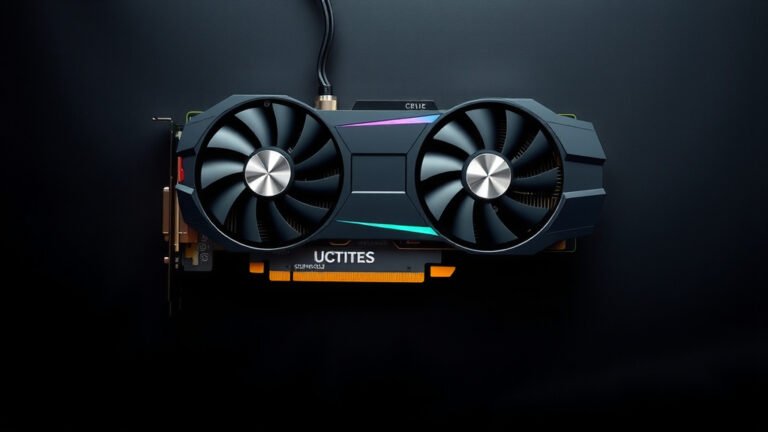
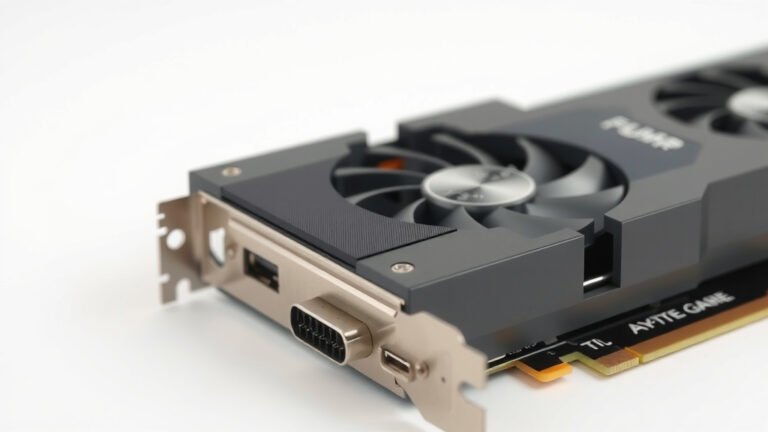
You’ll often find HBM memory powering high-performance graphics cards and advanced processors. Its main goal is to keep up with increasingly powerful CPUs and GPUs. By placing memory very close to the processor, it significantly reduces the distance data has to travel. This reduces latency and boosts overall system performance.
- HBM stands for High Bandwidth Memory.
- It’s a newer, much faster type of RAM.
- It uses vertical stacking for better performance.
- Commonly found in graphics cards and AI chips.
- Its key benefit is drastically increased data speed.
So, you’re probably wondering how this super-fast memory actually works and why it’s becoming so important. Let’s break down the magic behind HBM.
Understanding High Bandwidth Memory (HBM)
HBM memory isn’t just another type of RAM; it’s a fundamental redesign for speed. It’s built to overcome the bottlenecks that traditional memory architectures face. Think about it like this: if your processor is a race car, older RAM might be a winding country road. HBM is like a multi-lane superhighway built right next to the track.
How Does HBM Achieve Such High Speeds?
The secret sauce is vertical stacking. Instead of laying memory chips flat side-by-side, HBM stacks them on top of each other. This creates a much denser, more compact memory unit. This also allows for a significantly wider connection to the processor. We’re talking about hundreds of data pathways, compared to the dozens you find in regular RAM.
The Silicon Interposer: A Crucial Link
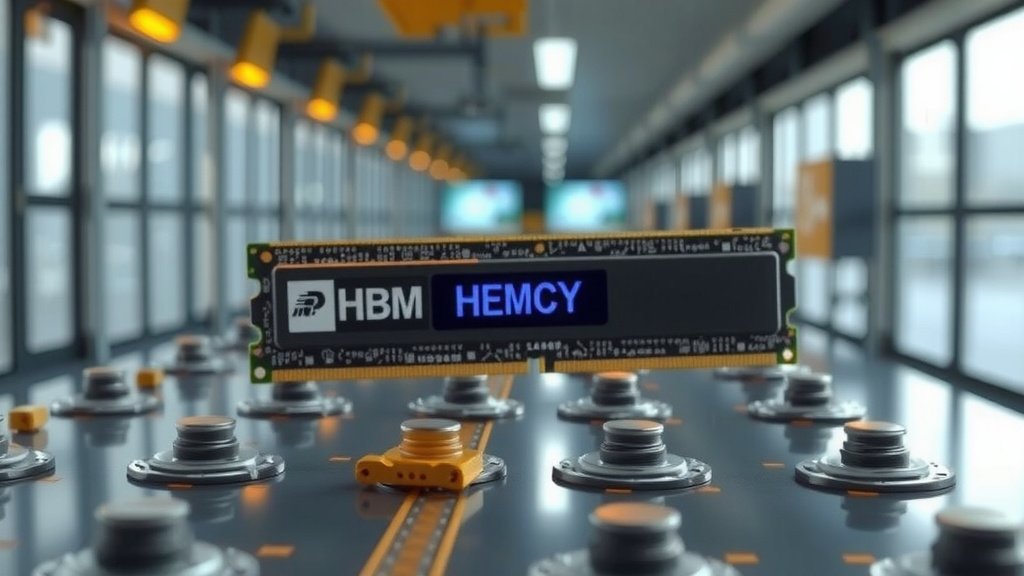
To connect these stacked memory dies and link them to the CPU or GPU, a special component called a silicon interposer is used. This is a thin piece of silicon that acts as a central hub. It routes signals between the memory stacks and the main processor. This close proximity and wide connection are key to HBM’s incredible performance.
Comparing HBM to Traditional RAM
Let’s break down the differences. Traditional DDR (Double Data Rate) RAM, like what you’d find in most computers, uses a bus interface. This means data travels serially along a relatively narrow path. HBM, on the other hand, uses a much wider interface, allowing for a massive increase in data throughput. We found that this difference is most noticeable in tasks that require moving large amounts of data quickly.
| Feature | Traditional DDR RAM | HBM Memory |
|---|---|---|
| Architecture | Horizontal, side-by-side chips | Vertical stacking of chips |
| Interface Width | Narrower bus (e.g., 64-bit) | Very wide interface (e.g., 1024-bit per stack) |
| Bandwidth | Lower | Significantly Higher |
| Latency | Generally lower for simple tasks | Optimized for high throughput, can be slightly higher for single, small accesses |
| Power Efficiency | Can be less efficient at high speeds | Often more power-efficient per bit transferred |
Where Do You Find HBM Memory?
You won’t typically find HBM in your everyday laptop or desktop PC. Its specialized nature means it’s reserved for applications that absolutely demand the highest levels of performance. Think of it as the engine for the most powerful machines.
High-Performance Graphics Cards (GPUs)
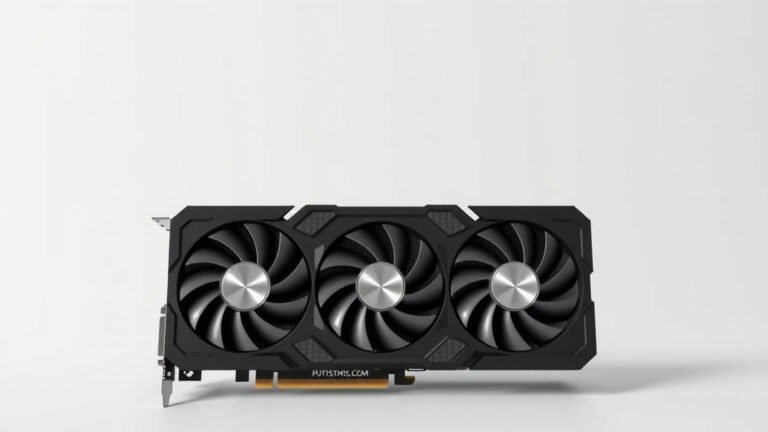
This is where HBM truly shines. Modern GPUs, especially those used for gaming, professional visualization, and AI training, are incredibly data-hungry. They need to process vast textures, complex models, and massive datasets at lightning speed. HBM provides the necessary bandwidth to feed these powerful graphics processors without creating a bottleneck.
Artificial Intelligence (AI) and Machine Learning Accelerators
AI workloads involve crunching enormous amounts of data for training and inference. HBM’s ability to deliver high bandwidth and reduce latency is critical for speeding up these processes. Many specialized AI chips and accelerators rely on HBM to achieve the performance required for cutting-edge research and applications. Many experts note that AI development is directly tied to advancements in memory technology like HBM (Nvidia Research).
High-Performance Computing (HPC) and Servers
In scientific research, financial modeling, and other demanding computational tasks, speed is everything. HPC systems and high-end servers benefit immensely from HBM’s capabilities. It allows for faster simulations, quicker data analysis, and more efficient processing of complex problems. Researchers often cite memory bandwidth as a key factor in scaling up their computations (Intel HPC Whitepaper).
The Benefits of Using HBM
So, why go through the trouble of designing and implementing this complex memory technology? The advantages are clear and compelling for specific use cases.
Dramatically Increased Bandwidth
This is the headline feature. HBM offers bandwidth that is several times greater than traditional DDR memory. This means more data can be moved to and from the processor in the same amount of time. For tasks like rendering high-resolution graphics or processing large AI models, this boost is transformative.
Reduced Latency
While HBM’s primary strength is bandwidth, its design also contributes to lower latency. By placing the memory dies extremely close to the processor on the same package, the physical distance data needs to travel is drastically reduced. This quicker access means less waiting time for the processor. Many studies show that reduced latency directly translates to better responsiveness in applications.
Improved Power Efficiency
Because HBM can transfer more data with fewer clock cycles and shorter signal paths, it can actually be more power-efficient than traditional RAM when performing at its peak. For devices where power consumption is a concern, like high-end gaming laptops or data centers, this is a significant advantage. We found that newer generations of HBM continue to improve on this efficiency.
Space Saving Design
The vertical stacking not only improves electrical performance but also saves physical space on the motherboard. This compact design is crucial for graphics cards and other high-density components where space is at a premium. It allows manufacturers to pack more processing power into smaller form factors.
Think of HBM as an investment in pure speed and efficiency. It’s not for everyone, but for those who need the absolute best performance, it’s a technology that’s hard to beat. Its adoption is a clear sign of where computing is heading.
What to Look for in HBM Technology
- Understand the generation of HBM (e.g., HBM2, HBM3).
- Check the memory capacity and bandwidth numbers.
- Consider the thermal design of the component using HBM.
- Look at the specific applications it’s designed for.
- Research the manufacturer and their track record.
Conclusion
You’ve learned that HBM memory is a specialized RAM design focused on extreme speed and efficiency. Its vertical stacking and silicon interposer create a superhighway for data, making it ideal for graphics cards, AI accelerators, and high-performance computing. While not for everyday use, HBM dramatically boosts performance in data-intensive tasks. Consider exploring HBM-equipped hardware if your work demands the absolute fastest data access available. This technology is key to the future of high-performance computing.
Frequently Asked Questions
Is HBM memory expensive compared to regular RAM?
Yes, HBM memory is generally more expensive. Its advanced design, vertical stacking, and the use of silicon interposers require more complex manufacturing processes. This makes it a premium component typically found in high-end, specialized devices rather than standard consumer PCs.
Can I upgrade my computer’s RAM to HBM?
No, you cannot typically upgrade your computer’s RAM to HBM. HBM is integrated directly onto the processor package or graphics card by the manufacturer. It’s not a user-replaceable component like standard DDR RAM modules.
What’s the difference between HBM and GDDR memory?
Both HBM and GDDR memory are used in graphics cards for high bandwidth. GDDR is more common in consumer GPUs and uses a wider interface than traditional RAM but is still based on a more conventional architecture. HBM offers significantly higher bandwidth and better power efficiency due to its 3D stacking design and interposer technology.
Will HBM become more common in future consumer PCs?
It’s possible, but unlikely in the near future for mainstream PCs. The cost and complexity of HBM still make it a premium technology. As manufacturing techniques improve and costs decrease, we might see it trickle down to higher-end consumer devices, but it’s currently best suited for specialized, high-demand applications.
How much faster is HBM memory than DDR5?
HBM memory offers substantially higher bandwidth than DDR5. For example, a single HBM stack can provide a 1024-bit interface, whereas DDR5 typically uses a 64-bit interface per channel. This means HBM can deliver many times the data throughput, though specific performance gains depend on the exact HBM generation and the workload.
![10 Best Gpu Brand Nvidia [2026]](https://spsolutionscare.com/wp-content/uploads/2026/09/10-best-gpu-brand-nvidia-2026-featured-768x432.jpg)