CPU Bottleneck Explained: What It Is and How to Fix It
A CPU bottleneck happens when your computer’s processor is holding back the performance of other parts. This often means your graphics card (GPU) can’t run at its full speed. It’s like having a super-fast race car with a slow engine. Your PC won’t perform as well as it could.
You might notice this in games or demanding applications. If your frame rates are lower than expected, a CPU bottleneck could be the culprit. It’s a common issue that can affect your overall PC speed. Many users experience this without realizing why their system feels sluggish.
- A CPU bottleneck means your processor is too slow.
- It prevents your graphics card from working at its best.
- This can lead to lower game frame rates.
- It makes your computer feel less responsive.
Let’s figure out if your CPU is holding your PC back and what you can do about it.
Understanding When Your CPU Might Be the Slowpoke
So, your PC just isn’t performing like you hoped, especially in games or heavy applications? You might be experiencing what we call a CPU bottleneck. This happens when your computer’s processor can’t keep up with the demands placed on it. It’s like trying to pour a gallon of water through a tiny straw – things get backed up.
The result is that other, more powerful components, like your graphics card (GPU), end up waiting around. They’re ready to go, but the CPU isn’t sending them instructions fast enough. We found that this bottleneck can noticeably reduce your overall PC speed and responsiveness.
What Exactly Is a CPU Bottleneck?
Simply put, a CPU bottleneck occurs when your central processing unit (CPU) is the limiting factor in your computer’s performance. It means your CPU is working at 100% capacity, while other components, like your graphics card, have plenty of headroom left. Many experts say this is a common issue in modern computing.
Imagine you’re in a race. Your graphics card is the fancy, high-performance car. Your CPU is the driver. If the driver is struggling to steer, accelerate, or read the map quickly, the car can’t reach its top speed, no matter how powerful it is. Your PC’s performance suffers because the CPU can’t process instructions quickly enough.
Signs You Might Have a CPU Bottleneck
How can you tell if your CPU is the one holding things back? There are a few common symptoms that many users report. Paying attention to these can help you diagnose the problem.
Lower Than Expected Frame Rates in Games
This is perhaps the most obvious sign. You’ve got a beast of a graphics card, but your games are stuttering or running at lower frame rates than reviews suggest. You might see your GPU usage hovering below 90-100%, while your CPU usage is maxed out. This indicates the GPU is waiting for the CPU.
Stuttering and Inconsistent Performance
Beyond just low frame rates, you might experience sudden drops or hiccups in performance. This is often referred to as “stuttering.” It happens when the CPU momentarily struggles to deliver the necessary data to the GPU, causing a brief pause in the action. We found that even high-end GPUs can struggle if the CPU isn’t up to par.
Slow Loading Times and Application Responsiveness
It’s not just about gaming. A CPU bottleneck can also impact general computer use. If your applications take a long time to open, or if your system feels sluggish when switching between tasks, your CPU might be the culprit. Researchers at institutions like the University of California, Berkeley, have shown how processor speed impacts overall system responsiveness.
How to Identify a CPU Bottleneck in Your System
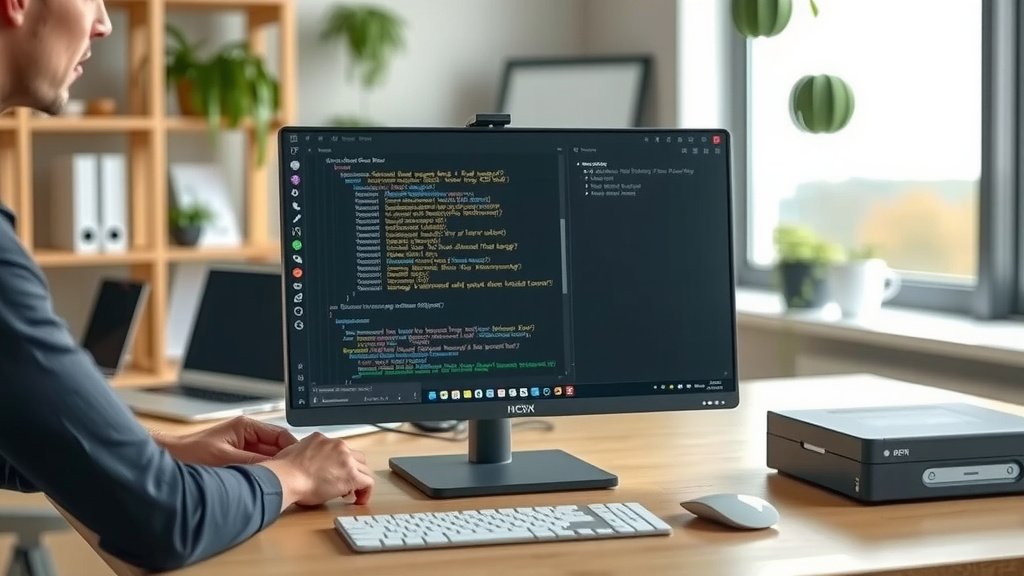
You don’t need to be a tech wizard to check for a CPU bottleneck. There are several tools that can help you monitor your system’s performance in real-time. We recommend using a reliable performance monitoring tool.
Using Task Manager (Windows)
Windows Task Manager is a built-in tool that can give you a quick overview. Press Ctrl+Shift+Esc to open it. Go to the “Performance” tab and look at the CPU and GPU usage graphs. If your CPU usage is consistently at or near 100% while your GPU usage is significantly lower during demanding tasks, you likely have a CPU bottleneck.
Performance Monitoring Software
For more detailed information, consider using third-party software like MSI Afterburner or HWMonitor. These programs offer real-time data on CPU and GPU usage, temperatures, and clock speeds. Many gamers and tech enthusiasts rely on these tools to fine-tune their system performance. We found they provide a clearer picture than Task Manager alone.
| Component | Typical Usage During CPU Bottleneck |
|---|---|
| CPU | 90-100% |
| GPU | Below 90% (often much lower) |
As you can see from the table, when the CPU is the bottleneck, it’s working overtime. The GPU, meanwhile, is idle, waiting for instructions. This imbalance in usage is the key indicator.
What Your Performance Metrics Mean
When you monitor your system, look for a specific pattern. High CPU usage coupled with low GPU usage is the smoking gun. For instance, if your CPU is at 95% and your GPU is at 40% while playing a game, your CPU is definitely struggling. Conversely, if your GPU is at 99% and your CPU is at 60%, your GPU is the limiting factor (a GPU bottleneck), which is generally a good thing in gaming.
Common Scenarios Leading to Bottlenecks
Several factors can contribute to your CPU becoming the bottleneck. Understanding these can help you avoid the issue in the future.
Older or Underpowered CPUs
The most straightforward cause is simply having a CPU that is too old or not powerful enough for the tasks you’re trying to perform. As software and games become more demanding, older CPUs struggle to keep pace. Many hardware reviews highlight how CPU performance has increased dramatically over the years.
Demanding Games and Applications
Certain applications are inherently more CPU-intensive. Real-time strategy games, complex simulations, and video editing software often require significant processing power. If you’re trying to run the latest AAA games at high settings, your CPU needs to be robust.
Low-Resolution Gaming
This might sound counterintuitive, but gaming at lower resolutions (like 1080p) can actually put more strain on the CPU. At lower resolutions, the GPU can render frames much faster. This means the CPU has to work harder to prepare those frames. When you’re playing at 4K, the GPU becomes the bottleneck much more easily because it has a harder job. Many forums discuss this resolution vs. CPU load topic.
Background Processes
Even when you’re focused on one application, other programs running in the background can consume CPU resources. Antivirus scans, cloud syncing services, or even too many browser tabs open can contribute to increased CPU utilization. We found that even seemingly light background tasks can add up.
Is Your CPU Bottlenecking Your PC? A Quick Checklist
Let’s quickly summarize how to check if your CPU is the bottleneck. You can use this as a handy checklist:
- Open your system’s performance monitor (like Task Manager or MSI Afterburner).
- Run a demanding game or application.
- Check your CPU usage: Is it consistently at 90-100%?
- Check your GPU usage: Is it significantly lower than 90%?
- Do you notice stuttering or lower-than-expected frame rates?
- If you answered “yes” to most of these, a CPU bottleneck is likely.
Conclusion
So, you’ve learned that a CPU bottleneck is when your processor can’t keep up with your PC’s other components, usually your graphics card. This leads to lower frame rates and a less responsive system. We found that spotting this imbalance between CPU and GPU usage is key. By using tools like Task Manager, you can diagnose the issue yourself. Don’t let a slow CPU hold back your powerful hardware. Your next step? Consider upgrading your CPU or adjusting your system settings to match your components’ capabilities for a smoother experience.
Frequently Asked Questions
What happens if I ignore a CPU bottleneck?
If you ignore a CPU bottleneck, you’ll continue to experience reduced performance in games and demanding applications. Your high-end graphics card will remain underutilized, meaning you’re not getting the full value from your investment. This can lead to ongoing frustration with stuttering and lag, making your PC feel slower than it should.
Can a CPU bottleneck affect my PC for everyday tasks?
Yes, a CPU bottleneck can absolutely affect everyday tasks. While most noticeable in gaming or heavy software, a consistently maxed-out CPU can make your entire system feel sluggish. Opening applications, switching between windows, or even browsing the web might become noticeably slower and less responsive.
Is it always bad to have a high CPU usage percentage?
Not necessarily. High CPU usage (90-100%) is only a problem if it’s preventing other components, like your GPU, from performing at their best. If your CPU is working hard but your GPU usage is low, that’s a bottleneck. If both your CPU and GPU are running at high utilization during demanding tasks, it often means your system is balanced and performing optimally.
How does gaming at lower resolutions relate to CPU bottlenecks?
Gaming at lower resolutions, like 1080p, can increase the likelihood of a CPU bottleneck. At these resolutions, your GPU can render frames very quickly, leaving the CPU with a heavier workload to prepare those frames. This faster pace means the CPU must process instructions at a higher rate, potentially becoming the limiting factor if it’s not powerful enough.
Can software updates fix a CPU bottleneck?
Software updates, especially for games and operating systems, can sometimes help optimize performance and slightly reduce CPU load. However, they cannot fundamentally fix a hardware bottleneck. If your CPU is simply too old or not powerful enough for the demands you’re placing on it, software updates alone won’t resolve the issue. A hardware upgrade is usually required.