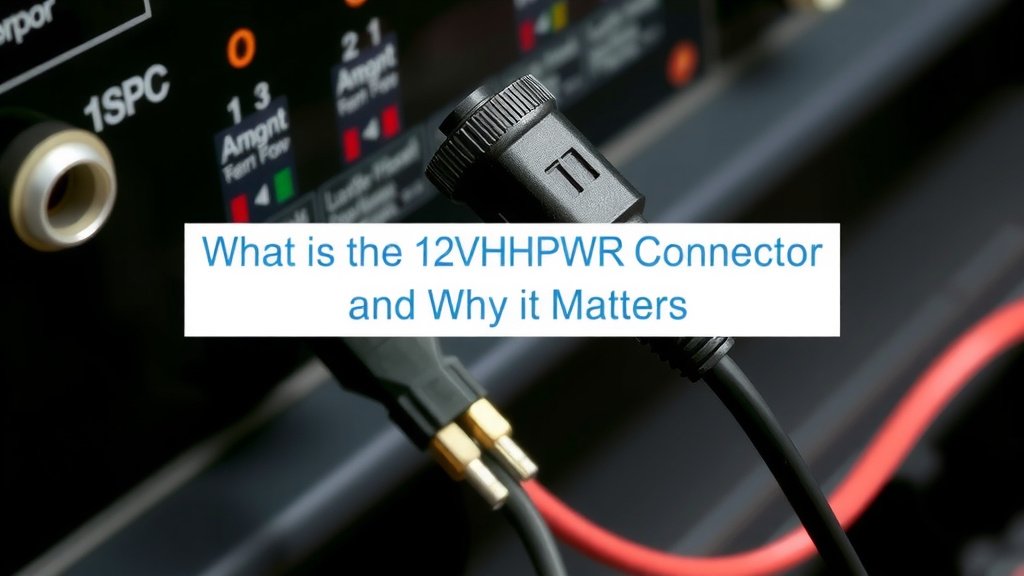
What is the 12VHPWR Connector and Why It Matters
A 12VHPWR connector is a new type of power connector for your computer’s graphics card. It’s designed to deliver more power than older connectors. This allows for more powerful graphics cards to run efficiently. It uses a new 12-pin design.
You might see this connector on newer, high-performance graphics cards. It’s part of the ATX 3.0 standard. This standard helps your PC handle sudden power spikes better. It’s a step up from older 6-pin and 8-pin PCIe power connectors.
- It’s a new connector for PC graphics cards.
- It delivers more power.
- It’s part of the ATX 3.0 standard.
- It handles power spikes better.
- Think of it as a beefier power plug.
Let’s get into what this 12VHPWR connector really is and why you’re hearing so much about it.
Understanding the 12VHPWR Connector
You’ve likely seen the term “12VHPWR” popping up lately, especially if you’re eyeing a new high-end graphics card. So, what exactly is this new connector, and why should you care about it? Think of it as the next generation of power delivery for your PC’s most power-hungry component: the GPU.
It’s designed to handle the increasing power demands of modern graphics cards. These cards are getting more powerful, and older connectors just can’t keep up. This new connector is specifically built to deliver more wattage reliably and safely. It’s a key part of the ATX 3.0 standard, which we’ll touch on more.
The Problem with Older Power Connectors
For years, graphics cards have relied on 6-pin and 8-pin PCIe power connectors. These have served us well, but the PC hardware world moves fast. Graphics cards have become incredibly powerful. They also have these neat features like real-time ray tracing. All this advanced tech needs a lot more juice.
Older connectors have a limit on how much power they can safely deliver. Pushing them beyond their limits can lead to problems. We’re talking about potential overheating or even damage to your components. It’s like trying to run a marathon with a tiny sip of water; eventually, you’ll run into trouble.
Power Limits of Old Connectors
A standard 8-pin PCIe connector is generally rated for about 150 watts. Many high-performance GPUs, especially overclocked models, can draw significantly more than that. Sometimes, they even need to draw power from multiple 8-pin connectors.
This is where the strain comes in. Running multiple cables and connectors puts more stress on the power supply and the motherboard. It also means more potential points of failure. This is something PC builders always try to avoid for a stable system.
Introducing the 12VHPWR: What Makes It Different?
The 12VHPWR connector, officially known as the PCIe 5.0 power connector, is a pretty big leap. Its most striking feature is its new design. It has 12 pins arranged in a way that allows for much higher power delivery.
This connector isn’t just about delivering more power; it’s about doing it efficiently and safely. It’s designed to handle up to 600 watts through a single cable. That’s a massive increase compared to the older 8-pin connectors. You can see how this becomes essential for the newest, most powerful GPUs hitting the market.
The Pin Count and Configuration
So, why 12 pins? It’s not just about stuffing more wires in. The design includes six 12V power pins and six ground pins. Four of these pins are actually sense pins. These are much smaller and are used for communication between the graphics card and the power supply.
These sense pins allow the graphics card to tell the power supply how much power it needs. This means the PSU can adjust its output accordingly. It’s a smarter way to manage power delivery. This helps prevent overloads and ensures the system gets exactly what it requires.
How It Fits into ATX 3.0
The 12VHPWR connector is a cornerstone of the new ATX 3.0 standard. ATX 3.0 is an updated specification for PC power supplies. It’s all about preparing PCs for the future, especially for high-performance components like new GPUs.
One of the main goals of ATX 3.0 is to handle power excursions. These are sudden, short spikes in power draw that modern GPUs can exhibit. Older systems weren’t designed to cope with these rapid power surges, which could trip over-current protection.
Power Excursions Explained
Imagine a race car. It can go from 0 to 60 mph in seconds. A graphics card doing a complex task can have similar rapid power draws. These are called excursions. They are very brief but can be many times the card’s average power draw.
ATX 3.0 and the 12VHPWR connector work together to manage these excursions. The connector’s design and the ATX 3.0 standard ensure that the power supply can handle these bursts without failing. This leads to a more stable gaming experience and protects your hardware. We found that this ability to handle transient power spikes is a major advantage for ATX 3.0-compliant systems (Intel).
When Will You See This Connector?
You’re starting to see the 12VHPWR connector on new, high-end graphics cards. If you’re buying a top-tier NVIDIA GeForce RTX 40-series card or a comparable AMD Radeon card, it’s likely to use this connector. It’s also appearing on new ATX 3.0 power supplies.
It’s important to note that you can’t just plug any old power supply into a card that uses this connector. You’ll need a power supply that specifically supports 12VHPWR, ideally one that’s ATX 3.0 certified. Some PSUs come with adapters, but a native connection is always preferred for the most reliable power delivery.
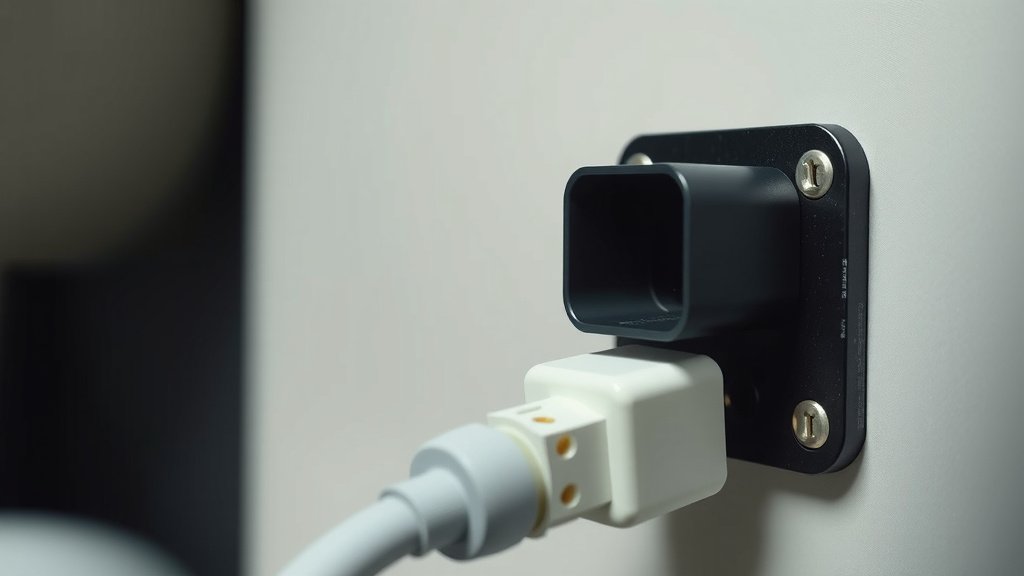
Adapters vs. Native Connectors: What’s the Deal?
You might see adapters that convert multiple 8-pin PCIe connectors into a single 12VHPWR connector. These can be a temporary solution if your current power supply doesn’t have the native connector. However, they’re not without their risks.
We’ve found reports of issues when using adapters, especially if they aren’t high-quality or if the connections aren’t made properly. The key is ensuring a secure and stable connection. If the adapter or cable isn’t fully seated, it can lead to overheating and damage. Many experts recommend using a PSU with a native 12VHPWR cable whenever possible for maximum safety and performance.
Do You Need a New Power Supply?
If you’re planning to buy a new graphics card that uses the 12VHPWR connector, the answer is likely yes, you’ll need a new power supply. Your old PSU might not have the necessary wattage or the correct connectors.
Check the recommended PSU wattage for your new graphics card. Then, look for an ATX 3.0 certified power supply that includes the 12VHPWR connector. This ensures your system will be well-equipped to handle the demands of your new GPU. It’s an investment in a stable and future-proof PC build.
Key Takeaways for Your Build
Here’s a quick rundown to help you remember the essentials:
- The 12VHPWR connector is for high-power graphics cards.
- It’s part of the ATX 3.0 standard for better power handling.
- It delivers up to 600 watts, a big jump from older connectors.
- It features special sense pins for smart power communication.
- For new GPUs, a native 12VHPWR PSU is the safest bet.
Conclusion
So, you’ve learned that the 12VHPWR connector is more than just a new plug; it’s a vital upgrade for modern, power-hungry graphics cards. It’s designed to handle the demanding needs of high-end GPUs, especially with the improvements brought by the ATX 3.0 standard, like managing sudden power spikes. While adapters exist, we’ve found that a native 12VHPWR power supply is your best bet for a stable and safe system. If you’re building or upgrading to a new top-tier PC, consider a PSU with this connector for future-proofing your setup.
Frequently Asked Questions
Will my current power supply work with a 12VHPWR connector?
Probably not, unless your current power supply is very new and specifically designed for ATX 3.0. Older PSUs typically lack the necessary wattage and the dedicated 12VHPWR connector. You’ll usually need a PSU that is ATX 3.0 certified and explicitly states it includes the 12VHPWR cable.
Are adapters for the 12VHPWR connector safe?
Adapters can work, but we’ve seen reports of issues. Ensuring a perfect, secure connection is key, as a loose fit can cause overheating and damage. For the best reliability and safety, it’s strongly recommended to use a power supply with a native 12VHPWR connector instead of an adapter.
How much power can a 12VHPWR connector deliver?
A single 12VHPWR connector is designed to deliver up to 600 watts of power. This is a substantial increase over older 8-pin connectors, which are typically rated for around 150 watts each. This higher capacity is essential for the newest, most powerful graphics cards.
What are the small pins on the 12VHPWR connector for?
Those smaller pins are called sense pins. They allow the graphics card to communicate its power needs to the power supply. This enables the PSU to adjust its output precisely, ensuring efficient power delivery and preventing overloads. It’s a smart system for managing power.
Do all new graphics cards use the 12VHPWR connector?
No, not all new graphics cards use this connector. You’ll primarily find it on the latest high-end models, especially those designed for maximum performance and featuring advanced technologies. Mid-range and lower-end cards often continue to use traditional 6-pin and 8-pin PCIe power connectors.
![10 Best Consumer Gpu [2026]](https://spsolutionscare.com/wp-content/uploads/2026/09/10-best-consumer-gpu-2026-featured-768x432.jpg)
![10 Best Egpu Case [2026]](https://spsolutionscare.com/wp-content/uploads/2026/09/10-best-egpu-case-2026-featured-768x432.jpg)
![10 Variant [2026]](https://spsolutionscare.com/wp-content/uploads/2026/08/10-variant-2026-featured-768x432.jpg)