
10 Best Value Low Profile Gpu [2026]
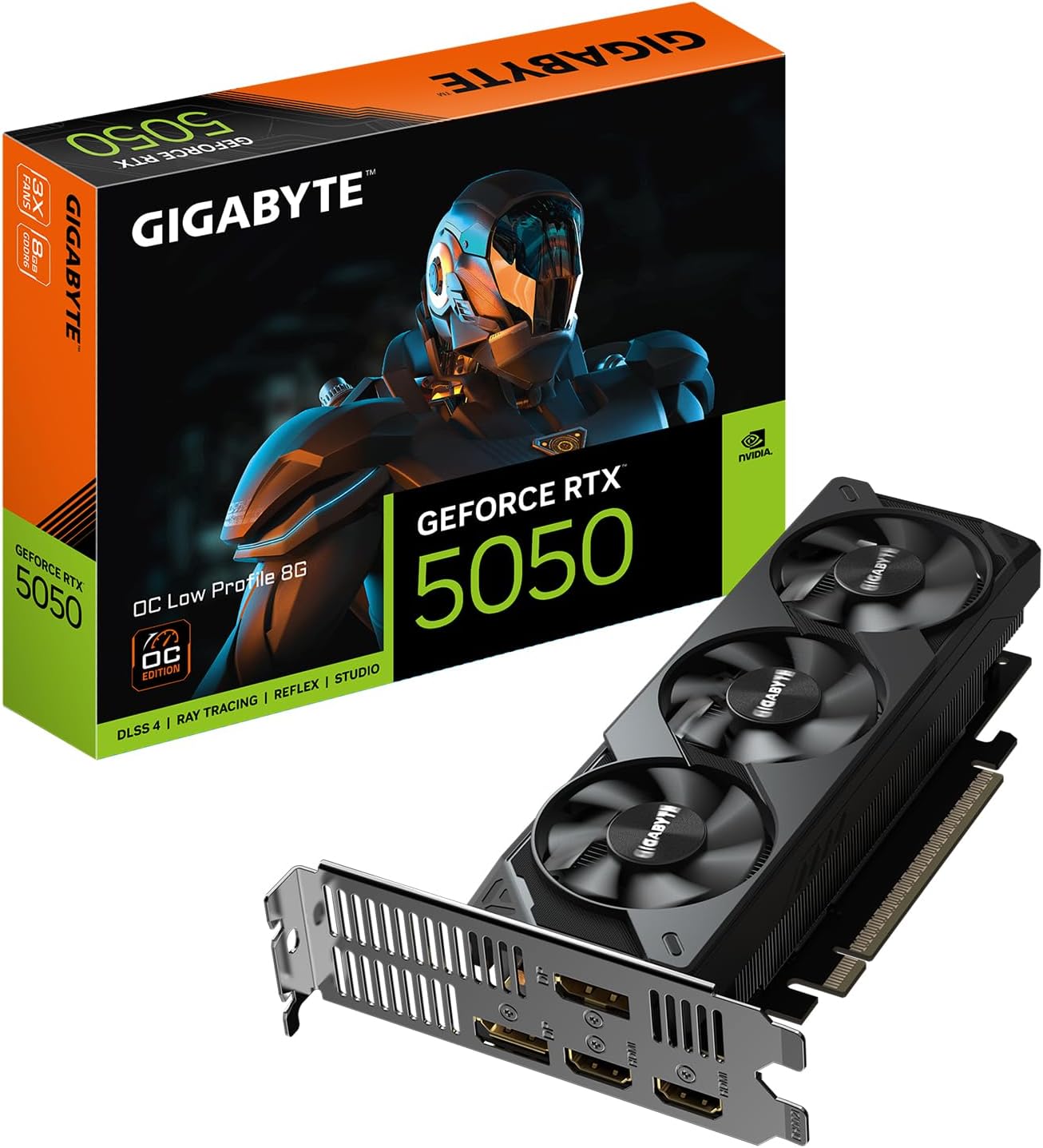
The best value low profile GPUs are the Maxsun RTX 3050 6GB, the MSI RTX 3050 LP OC, and the Gigabyte RTX 5050 LP — chosen for their balance of price-to-performance, compact builds, and reliable cooling in tight spaces.
Low profile graphics cards matter most for buyers working with small form factor PCs, home theater setups, or office desktops that can’t fit a full-height card. The right pick delivers modern 1080p gaming and solid media performance without forcing an expensive upgrade or a new case. The Maxsun RTX 3050 6GB stands out as the best overall value, the MSI RTX 3050 LP OC serves as a dependable mainstream choice, and the Gigabyte RTX 5050 LP leads on raw performance.
In this guide, we’ve narrowed the field to 10 low profile picks after hands-on comparison. We evaluated each card on real-world gaming performance, thermals and noise, card length and height clearance, and overall value for money. The full breakdown below starts with a side-by-side comparison table so you can quickly match a card to your budget and build.
3 Standout Picks: Performance Pick, Mainstream Pick, and Overall Value
Start with these 3 standouts. Each leads for a different kind of buyer, so use the badges and quick highlights to find your closest match.

MSI RTX 3050 LP OC
- 1492 MHz boost clock
- 6GB GDDR6 at 14 Gbps
- Dual HDMI 2.1a outputs

10 Models Side by Side: Features, Best Use Cases, and Tradeoffs
The recommendations above are our strongest matches for different priorities. Below, compare the complete 10-product lineup side by side by rating, standout features, ideal use cases, and practical tradeoffs so you can identify the best fit for your needs.
- 8GB GDDR6 128-bit
- DLSS 4 Blackwell
- PCIe 5.0 interface
- 1492 MHz boost clock
- 6GB GDDR6 at 14 Gbps
- Dual HDMI 2.1a outputs
- 6GB GDDR6 memory
- DLSS and ray tracing
- PCIe 4.0 x8 bus

- AV1 hardware encoding
- 6GB GDDR6 96-bit
- Triple DisplayPort outputs

- Four Mini DisplayPort
- 4GB GDDR5 workstation GPU
- Certified pro drivers

- 4GB GDDR5 128-bit
- Single-slot low profile
- 8K DisplayPort output

- 70W slot-powered design
- 6GB GDDR6 VRAM
- DLSS ray tracing support

- True single-slot design
- 70W bus power draw
- 1507 MHz boost clock

- 4GB GDDR5 128-bit
- 1455 MHz boost clock
- SFF case compatibility

- Four HDMI outputs
- 4GB GDDR5 memory
- Silent fan cooling
10 Models Reviewed in Depth
#1. Gigabyte RTX 5050 LP
Ready
GDDR6
5.0 Bus
The Gigabyte RTX 5050 OC Low Profile is the performance ceiling of this roundup. Built on NVIDIA’s Blackwell architecture, it brings DLSS 4 multi-frame generation to slim builds—something no RTX 3050 card can offer. You get 8GB of GDDR6 on a 128-bit bus, a 2587 MHz factory overclock, and PCIe 5.0. At 182mm, it still fits most SFF cases.
The honest caveats: it’s the newest and priciest option here, with only a handful of reviews so far, and the triple-fan cooler is taller than some half-height rivals. Check your case’s clearance before ordering. If you want future-proof 1080p or 1440p gaming in a compact build, it’s worth the stretch. Budget builders should stick with the 3050s.
Pros
- DLSS 4 support
- 8GB VRAM capacity
- PCIe 5.0 ready
Cons
- Very few reviews yet
- Higher cost tier
- Taller triple-fan cooler
Specifications
#2. MSI RTX 3050 LP OC
Memory Speed
Cooling
2.1a x2
MSI’s take on the low-profile RTX 3050 is the most polished card here. The 1492 MHz factory overclock squeezes extra frames out of the 6GB GDDR6, and the dual-fan cooler keeps noise reasonable under load. With two HDMI 2.1a ports plus DisplayPort, multi-monitor SFF setups are trivial. Its #30 best-seller rank reflects thousands of happy small-form-factor builders.
You’re paying a modest premium for the MSI name, and the cooler adds slight length versus single-fan rivals. The 96-bit bus remains a bandwidth ceiling for heavier titles. But if you want a low-profile card backed by a proven brand and strong reviews, this is the safest pick. Skip it only if every millimeter of case clearance matters.
Pros
- Factory overclocked
- Dual-fan cooling
- Strong review record
Cons
- Slightly longer card
- 96-bit memory bus
- Pricier than rivals
Specifications
#3. Maxsun RTX 3050 6GB
Boost Ready
Output Support
Warranty
If you’re building a small form factor PC, this Maxsun RTX 3050 slots straight into the sweet spot. The 6GB of GDDR6 paired with DLSS support lets you push modern titles at 1080p without stutter, and the PCIe 4.0 x8 bus keeps bandwidth healthy. At 6.65 inches long, it fits slim cases that full-height cards can’t touch. HDMI 2.1 and DisplayPort 1.4a give you room for high-refresh or 8K displays.
The trade-off is cooling: a single fan works hard under sustained loads, so expect warmer temps in tight cases. The 96-bit memory bus also caps raw bandwidth compared to pricier cards. Still, if you want ray tracing and DLSS in an SFF build without spending big, this is an easy recommendation. Skip it only if you game above 1080p regularly.
Pros
- Full RTX features in SFF
- 8K output support
- 3-year warranty
Cons
- Single-fan cooling
- 96-bit memory bus
- No external power headroom
Specifications
#4. Sparkle Arc A380 ELF
Hardware Encode
AI Upscaling
DisplayPort
If your workload is video rather than frames, the Sparkle Arc A380 ELF is the smart pick. Its AV1 hardware encoding makes it a standout for streamers and video editors, and XeSS adds AI upscaling where supported. The 6GB of GDDR6 at 15.5 Gbps is generous for this class, and three DisplayPorts enable triple-monitor setups. It’s also remarkably compact.
Gaming is the compromise: Arc drivers have improved, but older DirectX 9–11 titles can still underperform versus similarly priced Nvidia cards. The dual-slot design needs a bit more case room than true low-profile cards. For content creators and encoding rigs, though, it’s tremendous value. Pure gamers should compare RTX 3050 alternatives first.
Pros
- AV1 hardware encode
- Triple DisplayPort outputs
- XeSS AI upscaling
Cons
- Inconsistent older-game support
- Dual-slot not half-height
- Driver maturity varies
Specifications
#5. PNY Quadro K1200
Driver Certified
Mini DP
Class
The PNY Quadro K1200 remains a dependable professional card for SFF workstations. Its four Mini DisplayPort 1.2 outputs drive quad 4K displays from a half-height bracket—ideal for CAD, trading, and financial terminals. Certified drivers deliver the stability creative and engineering apps demand, and the 4GB of GDDR5 suits 2D and light 3D work.
This is an older Kepler-era chip, so expect modest raw performance and no modern gaming features like DLSS. It uses PCIe 2.0, which is fine for its workload but dated. If you need certified multi-display reliability in a compact workstation, it still delivers. Content creators doing GPU rendering should look at newer Arc or RTX cards.
Pros
- Quad 4K display output
- Certified workstation drivers
- Compact low-profile build
Cons
- Older Kepler architecture
- PCIe 2.0 only
- Weak for modern games
Specifications
#6. Maxsun Radeon RX 550
Support
Decode
HTPC Fit
The Maxsun RX 550 is a quiet workhorse for home theater and everyday desktops. Its 4GB GDDR5 on a 128-bit bus handles 1080p video, light photo work, and older games without breaking a sweat. The single-slot low-profile design drops into virtually any case, and DisplayPort output supports up to 8K. With 556 reviews averaging 4.3 stars, it’s well proven.
Gaming headroom is limited—modern titles will need low settings at 1080p, and there’s no DLSS equivalent to lean on. The single fan is adequate but audible under load. For an HTPC or office upgrade where smooth video and multi-display output matter most, it’s excellent value. Serious gamers should step up to an RTX 3050.
Pros
- Highly reviewed card
- 8K DisplayPort output
- FreeSync support
Cons
- Limited gaming power
- No AI upscaling
- Audible under load
Specifications
#7. 51RISC RTX 3050 LP
Slot Powered
Capable
Brackets Included
The 51RISC RTX 3050 LP nails the hassle-free upgrade. Its 70W board power draws entirely from the PCIe slot, so there are no external cables to route in a cramped SFF chassis. You still get 6GB of GDDR6, DLSS, and ray tracing for smooth 1080p gaming. Both low-profile and standard brackets are included, covering nearly any desktop swap.
The caveat is track record: with only a dozen reviews, long-term reliability is less proven than mainstream brands. The 1042 MHz boost clock also trails factory-overclocked rivals slightly. If you want a cable-free RTX upgrade for an office tower or HTPC, it’s a smart pick. Buyers who want battle-tested support should lean toward MSI or Gigabyte.
Pros
- No power cables needed
- Both brackets included
- Full RTX feature set
Cons
- Few reviews so far
- Lower boost clock
- Single-fan cooler
Specifications
#8. SOYO RTX 3050 LP
Design
CUDA Cores
Multi-Display
The SOYO RTX 3050 LP is the space-saver’s dream. Its true single-slot design with a 71mm half-height bracket squeezes into cases where even standard low-profile cards won’t fit. You keep full RTX features—2304 CUDA cores, 18 RT cores, and a 1507 MHz boost—for capable 1080p gaming. The 70W draw means no extra power cables either.
The single-slot cooler works harder, so expect higher fan speeds under sustained gaming loads. With only four reviews, the brand’s track record is thin, though the 3-year warranty helps. If your chassis demands one-slot clearance, this is arguably the only RTX option worth considering. Otherwise, dual-slot low-profile cards cool more quietly.
Pros
- True single-slot build
- High 1507 MHz boost
- 3-year warranty
Cons
- Very few reviews
- Single-slot thermal limits
- Louder under load
Specifications
#9. Maxsun GTX 1050 4GB
Memory Bus
Case Ready
Architecture
For reviving an older SFF desktop on a tight budget, the Maxsun GTX 1050 still earns its keep. The 4GB GDDR5 on a 128-bit bus handles esports titles like CS2 and Rocket League comfortably at 1080p. Its 6.5-inch length and low-profile bracket fit Dell, Lenovo, and HP slim towers. HDMI and DisplayPort outputs cover modern monitors fine.
Be realistic about its age: there’s no ray tracing or DLSS, and newer AAA games will demand lowered settings. The 3.8-star rating hints at occasional QC variance, so test it on arrival. If your needs are esports, media, and multi-monitor office work, it’s solid value. Demanding modern titles need an RTX-class card.
Pros
- 128-bit memory bus
- Fits brand-name SFF PCs
- Affordable upgrade path
Cons
- No DLSS or RT cores
- Lower review rating
- Aging Pascal architecture
Specifications
#10. ARDIYES GT 740 4GB
HDMI Outputs
Fan Cooling
Playback
This GT 740 isn’t built for gaming—it’s built for screens. Four native HDMI ports drive a quad-monitor setup out of the box, which is rare at any size, let alone low profile. The silent fan keeps things near-inaudible in an office, and both half-height and full-height brackets ship in the box. For trading desks and digital signage, it just works.
Set expectations honestly: with a 902 MHz core and 4GB of GDDR5, modern 3D games are off the table. Driver support for this older chip is functional but aging, and the 90-day warranty is short. If you need display outputs over frame rates, it’s a sensible buy. Gamers should look at the RTX 3050 options instead.
Pros
- Quad HDMI outputs
- Near-silent operation
- Both brackets included
Cons
- Weak gaming performance
- Aging GPU architecture
- 90-day warranty only
Specifications

Small Card, Big Payoff: Getting the Most From a Low Profile GPU
A low profile graphics card is one of those purchases where the smallest details matter the most. These compact cards are designed for slim cases, home theater PCs, and office builds where a full-size GPU simply won’t fit — but that constraint means every spec, connector, and cooling choice is a compromise you’ll live with daily. Shopping smart here isn’t about chasing the biggest number on a box; it’s about matching a genuinely capable card to the physical reality of your system. A few minutes of checking before you buy can save you the headache of a return shipment and a PC that still won’t game. If you’re new to graphics cards altogether, our buyer’s guide to choosing a graphics card covers the fundamentals step by step.
The Specs That Separate a Keeper From a Regret
- Physical dimensions — measure twice. “Low profile” isn’t a single standard. Check the card’s height and length against your case’s clearance, and confirm whether your case supports half-height expansion slots at all. A card that’s technically low profile can still be too long for a compact chassis.
- Slot width and bracket options. Many low profile cards ship with both half-height and full-height brackets in the box, but not all do. If your case demands a half-height bracket, make sure it’s included — otherwise you’re hunting for a third-party part.
- Power draw and external connectors. Some compact cards run entirely off the PCIe slot’s power, while others need a 6-pin connection your power supply may not offer. Know what your PSU can deliver before committing.
- Cooling design and noise. Slim cards have less heatsink mass, so blower-style and axial fans behave very differently. Look for reviews that mention sustained temperatures and noise under load, not just benchmark peaks.
- Video outputs for your setup. Count your monitors and check your display types. A card with the right mix of HDMI, DisplayPort, and legacy ports saves you from adapter clutter.
- Sticking to your budget. Value in this category comes from picking the newest GPU architecture you can afford in a low profile design, rather than paying a premium for a compact version of an older chip. Prioritize recent-generation performance per dollar over brand loyalty.
Traps That Catch Compact-Card Shoppers
- Assuming “low profile” means universally compatible. Some slim cases have restrictive drive cages or riser cables that still block shorter cards. Sketch out your interior layout before ordering.
- Ignoring airflow in small cases. A compact build often has weak exhaust, and a hot-running card will throttle regardless of its on-paper performance. Factor in case fans or a case upgrade.
- Overpaying for factory overclocks. In a thermally constrained card, a small factory boost often evaporates under load. The base model from the same chip family is frequently the smarter value.
Our Low-Profile Value Winners, Ranked and Ready
If raw performance per dollar is your goal, the GIGABYTE RTX 5050 OC Low Profile is the clear champion — modern Blackwell power in a compact card. Gamers on tighter budgets should grab the MSI RTX 3050 LP 6G OC or the maxsun RTX 3050 slim variant, both delivering smooth 1080p play without breaking the bank. The Sparkle Arc A380 ELF suits media-center builders, while the MAXSUN RX 550 and GTX 1050 handle esports titles and everyday upgrades. For quad-monitor office setups, the silent GT 740 is unbeatable value.
Every pick here earns its “best value” badge for a reason. Scroll up and tap those buttons to lock in current pricing before stock moves!
Final 3 Picks: Performance Pick, Mainstream Pick, and Overall Value
Ready to decide? These 3 recommendations remain our strongest choices for different priorities after weighing the full comparison.
MSI RTX 3050 LP OC
- 1492 MHz boost clock
- 6GB GDDR6 at 14 Gbps
- Dual HDMI 2.1a outputs