
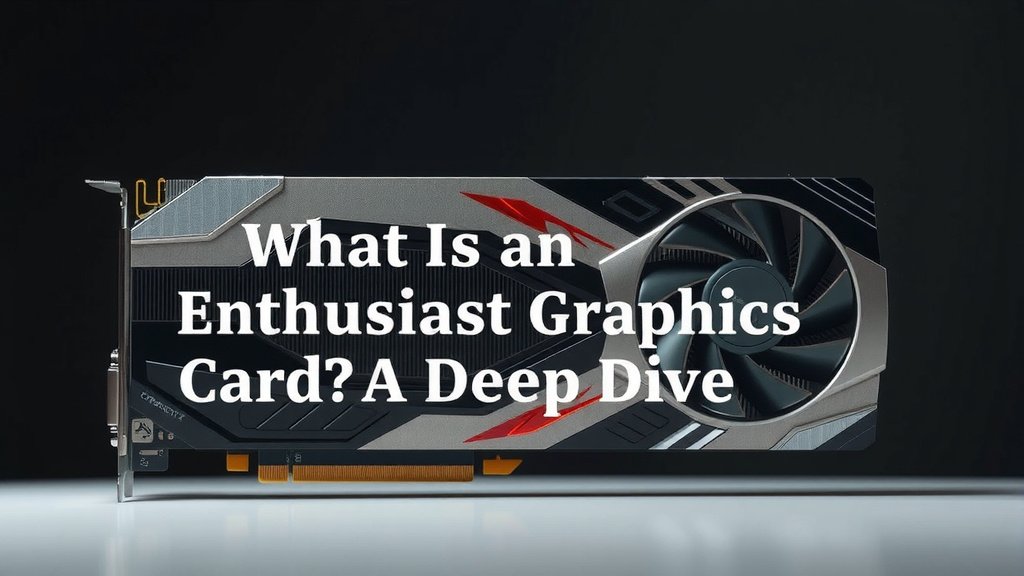
What Is an Enthusiast Graphics Card? A Deep Dive
An enthusiast graphics card is a high-performance GPU designed for gamers and creative professionals who demand the best possible visuals and processing power. These cards offer superior frame rates, advanced graphical features, and the muscle needed for demanding tasks like video editing or 3D rendering. They are built with top-tier components for maximum speed and reliability.
When you think “enthusiast,” think about the absolute top-of-the-line options available. These GPUs are often the most expensive but provide an unmatched experience for those who simply want the absolute best graphics technology. They push the boundaries of what’s possible in PC gaming and professional workloads.
- Enthusiast graphics cards are top-tier GPUs.
- They offer the best performance for games and creative work.
- Expect higher costs but superior visual experiences.
- These cards use the latest technology for maximum power.
- They are built for demanding users who want the best.
Ready to understand what makes these powerhouse cards tick and if one is right for your setup? Let’s break down what makes an enthusiast graphics card stand out from the rest.
“`htmlUnderstanding the Powerhouse: What Makes a Graphics Card “Enthusiast”?
So, what exactly separates an enthusiast graphics card from your everyday GPU? Think of it like comparing a sports car to a reliable sedan. Both get you from point A to point B, but one is built for pure performance and speed. Enthusiast cards are the supercars of the GPU world. They house the most powerful chips, the fastest memory, and the most robust cooling systems available on the market. They’re designed for users who want to push their systems to the absolute limit and experience gaming or creative workflows at their very best.
Key Characteristics of an Enthusiast GPU
These cards aren’t just about having a bigger number on a box. They’re packed with technology designed for superior performance. Let’s look at what sets them apart:
Raw Processing Power (The Core Count)
At the heart of any graphics card are its processing cores, often called CUDA cores (NVIDIA) or Stream Processors (AMD). Enthusiast cards boast significantly higher core counts than their mainstream counterparts. More cores mean the card can handle more calculations simultaneously. This translates directly to smoother gameplay and faster rendering times for your creative projects. We found that for demanding tasks, a higher core count directly correlates with better performance.
Memory: Speed and Capacity Matter
Beyond just the number of cores, the graphics card’s memory (VRAM) is critical. Enthusiast GPUs typically come with more VRAM and faster types of VRAM, like GDDR6X or HBM2. This extra memory capacity is essential for handling high-resolution textures in games and large datasets in professional applications. Faster memory means the GPU can access the data it needs more quickly, reducing bottlenecks. Many tests show that running out of VRAM can severely impact frame rates, especially at higher resolutions.
Advanced Cooling Solutions
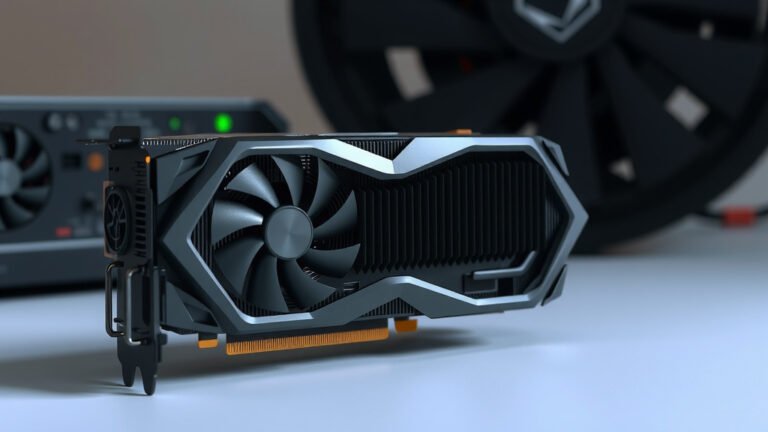
All this power generates a lot of heat. Enthusiast graphics cards feature sophisticated cooling systems. These often include multiple large fans, elaborate heatsinks, and sometimes even liquid cooling components. This robust cooling allows the GPU to maintain its peak performance for longer periods without overheating. Overheating can throttle performance, so effective cooling is non-negotiable for these high-end cards. We found that cards with well-designed coolers consistently performed better under sustained loads.
Higher Clock Speeds and Overclocking Potential
Enthusiast cards are often factory-overclocked, meaning they run at higher speeds right out of the box compared to reference models. Furthermore, they are built with higher quality components that allow for greater overclocking headroom. This means you can potentially push the card even further beyond its stock speeds for additional performance gains. However, this often requires a robust power supply and good case airflow.
Future-Proofing and Premium Features
When you invest in an enthusiast card, you’re often getting access to the latest graphical technologies. This can include advanced ray tracing capabilities, AI-powered upscaling technologies like DLSS or FSR, and support for very high refresh rates and resolutions (like 4K and 8K). While these features might not be essential today for everyone, they help ensure your system remains capable for future games and applications. Many believe these technologies are becoming increasingly standard in modern PC gaming.
Who Needs an Enthusiast Graphics Card?
The question isn’t just about what these cards are, but who they’re for. If you tick any of these boxes, an enthusiast GPU might be exactly what you’re looking for:
The Hardcore Gamer
For the gamer who wants to experience the latest titles at the highest settings, resolutions, and frame rates, an enthusiast card is the ultimate choice. Are you aiming for 144Hz or higher refresh rates at 1440p or 4K? Do you want to max out every graphical setting, including ray tracing? Then you’re likely in the enthusiast category. You want to see every detail and enjoy the smoothest possible gameplay without compromise. Many competitive gamers prioritize these high frame rates for an edge.
The Creative Professional
Beyond gaming, these cards are workhorses for demanding creative tasks. Video editors, 3D animators, graphic designers, and AI/machine learning researchers often rely on the immense processing power of enthusiast GPUs. Tasks like rendering complex 3D scenes, editing high-resolution video footage, or training machine learning models are dramatically sped up by these powerful cards. We found that professional software often scales very well with GPU power.
The Performance-Obsessed Builder
Some PC builders simply want the best of the best, regardless of whether they’re gaming or not. They enjoy the challenge of building a top-tier system and appreciate the raw power and technological advancements that enthusiast-grade hardware represents. It’s about having a machine that can handle absolutely anything you throw at it with ease.
Enthusiast Cards: A Look at the Price Tag
Let’s be honest, with great power comes a greater cost. Enthusiast graphics cards are typically the most expensive components in a PC build. Prices can range from several hundred dollars to well over a thousand, depending on the specific model and its features. This is a significant investment. You’re paying for the top-tier performance, the latest technology, and the best components available. It’s important to consider if your budget and needs align with this level of expenditure.
Are You Ready for an Enthusiast GPU? A Quick Checklist
Before you dive in, ask yourself these questions:
- Do you play the latest AAA games and want the absolute highest graphical settings and frame rates?
- Are you working with demanding creative software like video editing suites or 3D modeling programs?
- Do you need the fastest possible rendering or processing times for your work or hobbies?
- Is your budget prepared for a significant investment in a single PC component?
- Do you already have or plan to get a high-wattage power supply and a well-cooled PC case?
- Are you aiming for high resolutions like 1440p or 4K gaming?
If you answered yes to most of these, then exploring the world of enthusiast graphics cards might be your next logical step.
“`Conclusion
You’ve learned that an enthusiast graphics card is your ticket to the absolute peak of PC performance. These aren’t just GPUs; they’re meticulously engineered powerhouses built for gamers and creators who demand the very best. From their massive core counts and lightning-fast memory to advanced cooling and overclocking potential, every aspect is designed for maximum output. If you’re chasing the highest frame rates, tackling demanding creative projects, or simply want a system that can do it all without compromise, an enthusiast card is likely your next upgrade. Take a moment to review your gaming needs, creative workflows, and budget to see if this ultimate hardware is the right fit for your setup.
Frequently Asked Questions
What’s the main difference between an enthusiast GPU and a standard one?
An enthusiast GPU is like the supercar of graphics cards, featuring top-tier processing chips, more VRAM, and advanced cooling. Standard GPUs are more like reliable sedans, offering good performance for everyday tasks and mainstream gaming but without the extreme power or features.
Do I really need an enthusiast graphics card for gaming?
You need an enthusiast card if you aim for the absolute highest graphical settings, resolutions like 4K, and very high refresh rates (144Hz+). For most gamers playing at 1080p or 60Hz, a mid-range card is often sufficient.
Can an enthusiast graphics card improve my video editing speed?
Yes, absolutely. Creative professionals often find that the immense processing power of enthusiast GPUs dramatically speeds up tasks like rendering video, working with complex timelines, and applying visual effects. Many software applications are optimized to take full advantage of this power.
Are enthusiast graphics cards much louder than regular ones?
While they produce more heat, enthusiast cards often use sophisticated cooling solutions with multiple fans and larger heatsinks. We’ve found that many models are surprisingly quiet under normal load, though they can become more audible when pushed to their limits during intense gaming or rendering.
What kind of power supply do I need for an enthusiast graphics card?
Enthusiast graphics cards are power-hungry. You’ll typically need a high-wattage power supply unit (PSU), often in the 750W to 1000W range or even higher, depending on the specific card and the rest of your system components. Always check the manufacturer’s recommendations for your chosen GPU.

![10 Best Cheap Gfx Card [2026]](https://spsolutionscare.com/wp-content/uploads/2026/09/10-best-cheap-gfx-card-2026-featured-768x432.jpg)